
Gray kitchen cabinets are the compromise candidate that won the election. Not as stark as white, not as dark as black, not as committal as blue — gray sits in the middle and pleases almost everyone. It’s been a top-three cabinet color for over a decade, and unlike some trends, it earned its place through sheer practicality.
This guide covers the shades of gray (warm vs cool matters enormously), light vs dark gray, the best countertop and hardware pairings, how to keep gray from feeling cold or flat, and where gray works best.
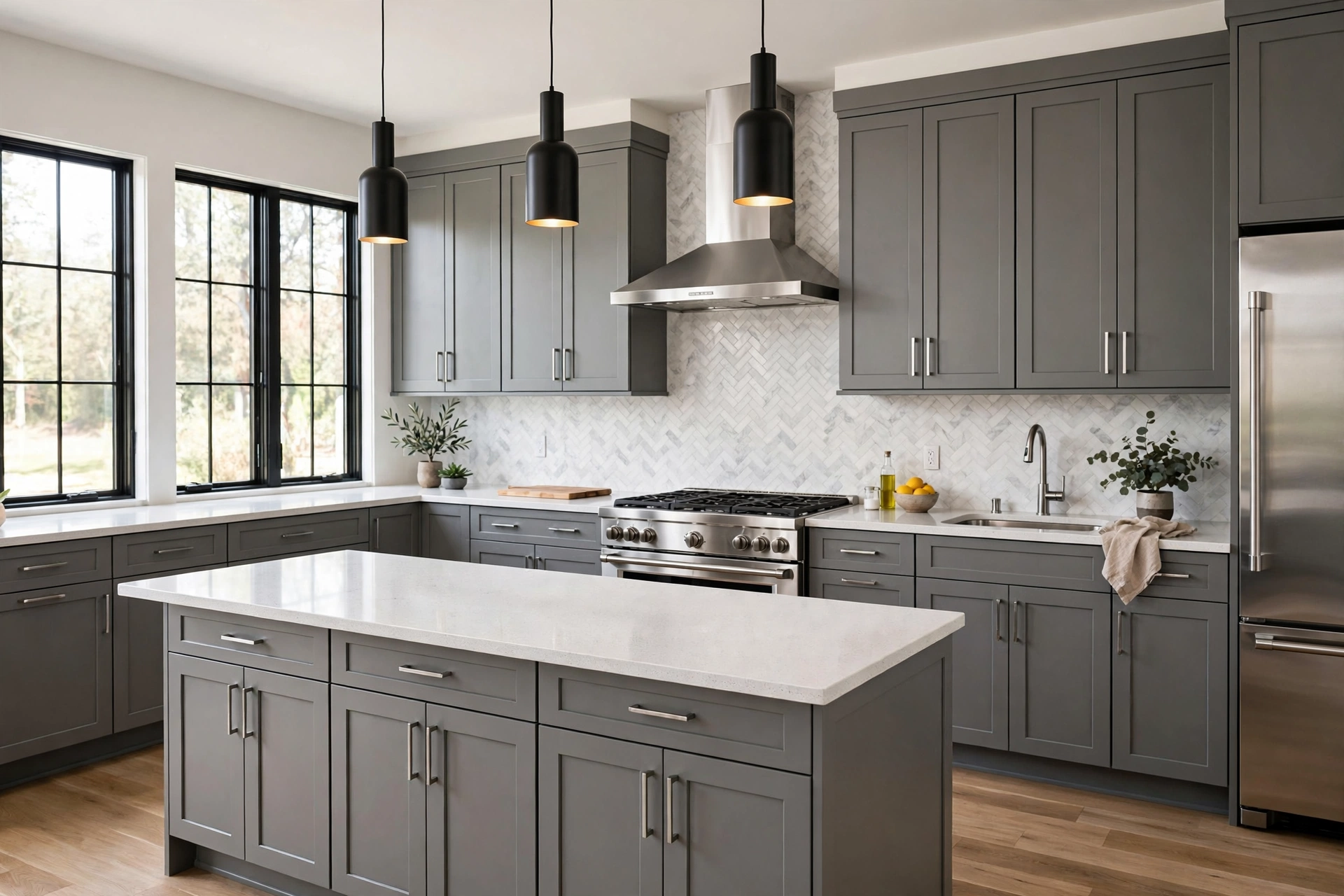
Why Gray Became a Kitchen Staple
Gray’s rise tracks directly with the decline of the all-white kitchen’s monopoly and the beige era before it. Homeowners wanted something softer than white but less trendy than bold color, and gray was sitting right there.
The practical case is strong: gray hides dirt, smudges, and everyday wear dramatically better than white — a gray cabinet near the stove looks presentable for weeks where white needs wiping every few days. It’s neutral enough to work with any countertop, any flooring, any appliance finish. And it photographs beautifully, which matters more than we’d like to admit in the real-estate-listing era.
My honest take: gray is the “I don’t want to think too hard about this” choice, and I mean that as a compliment. Some decisions deserve agonizing; cabinet color for a busy family kitchen isn’t always one of them. Gray gives you 90% of white’s versatility with 50% of the maintenance anxiety. The only real risk is picking a gray that’s wrong for your light — which we’ll fix below.
Warm Gray vs Cool Gray: The Decision That Matters Most
This is the single most important gray decision, and getting it wrong is the #1 gray kitchen mistake.
Cool grays have blue or green undertones. They feel modern, crisp, and sophisticated. They pair naturally with white counters, stainless appliances, marble-look surfaces, and chrome or nickel hardware. In north-facing rooms or under cool LED lighting, cool grays can feel icy — which is either sleek or sterile depending on your taste and your textiles.
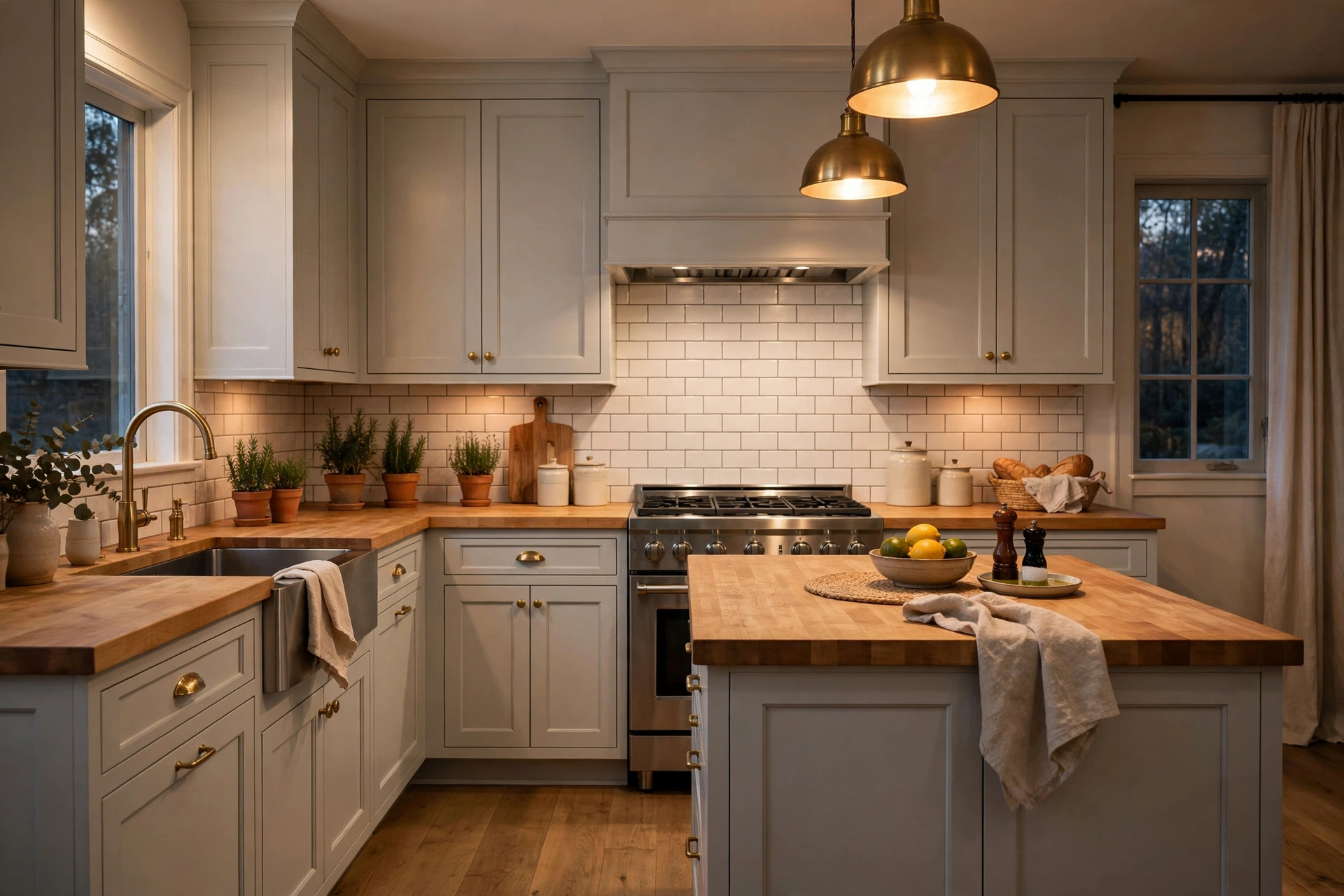
Warm grays (greige) have brown or beige undertones — “greige” being the industry’s portmanteau of gray and beige. They feel welcoming, earthy, and soft. They pair beautifully with warm wood floors, butcher block, brass hardware, and cream tones. In warm lighting, greige glows; in cool lighting, it can look muddy, so check your bulbs.
The matching rule: your gray’s undertone must agree with your fixed elements. Cool gray cabinets + warm beige tile = both look wrong. Warm greige cabinets + cool gray counters = muddy mess. Pick your countertop and flooring first, then choose the gray that harmonizes — not the gray you liked in a photo of someone else’s kitchen.
The light test (non-negotiable): get large samples of your finalist grays and tape them to your actual cabinets. Look at them in morning light, afternoon light, and at night under your kitchen’s bulbs. Gray is the most light-sensitive cabinet color — a gray that looks perfect at noon can go purple-ish under warm LEDs at night. (Yes, really. Undertones do strange things after dark.)
Light Gray Kitchen Cabinets
Light gray is the white alternative — all the brightness, half the maintenance stress.
Why it works: keeps small kitchens feeling open, pairs with everything, hides smudges far better than white. It’s the safest gray choice and the best one for resale.
Best shades: soft warm grays and light greiges for traditional/farmhouse kitchens; pale cool grays for modern spaces. Avoid going too pale — a gray so light it reads as “dirty white” is worse than committing to actual white.
Pairings: white quartz counters (classic), butcher block (warmth), light wood floors, brushed nickel or matte black hardware. Light gray + white marble-look quartz + matte black hardware is one of the most reliably attractive kitchen formulas in existence.
Watch out for: light gray in a room with no warm elements can feel flat and lifeless. If your floors are gray tile, your counters are white, and your cabinets are light gray — add wood (open shelving, butcher block section, wood stools) or the kitchen will feel like a fog bank.
Dark Gray Kitchen Cabinets
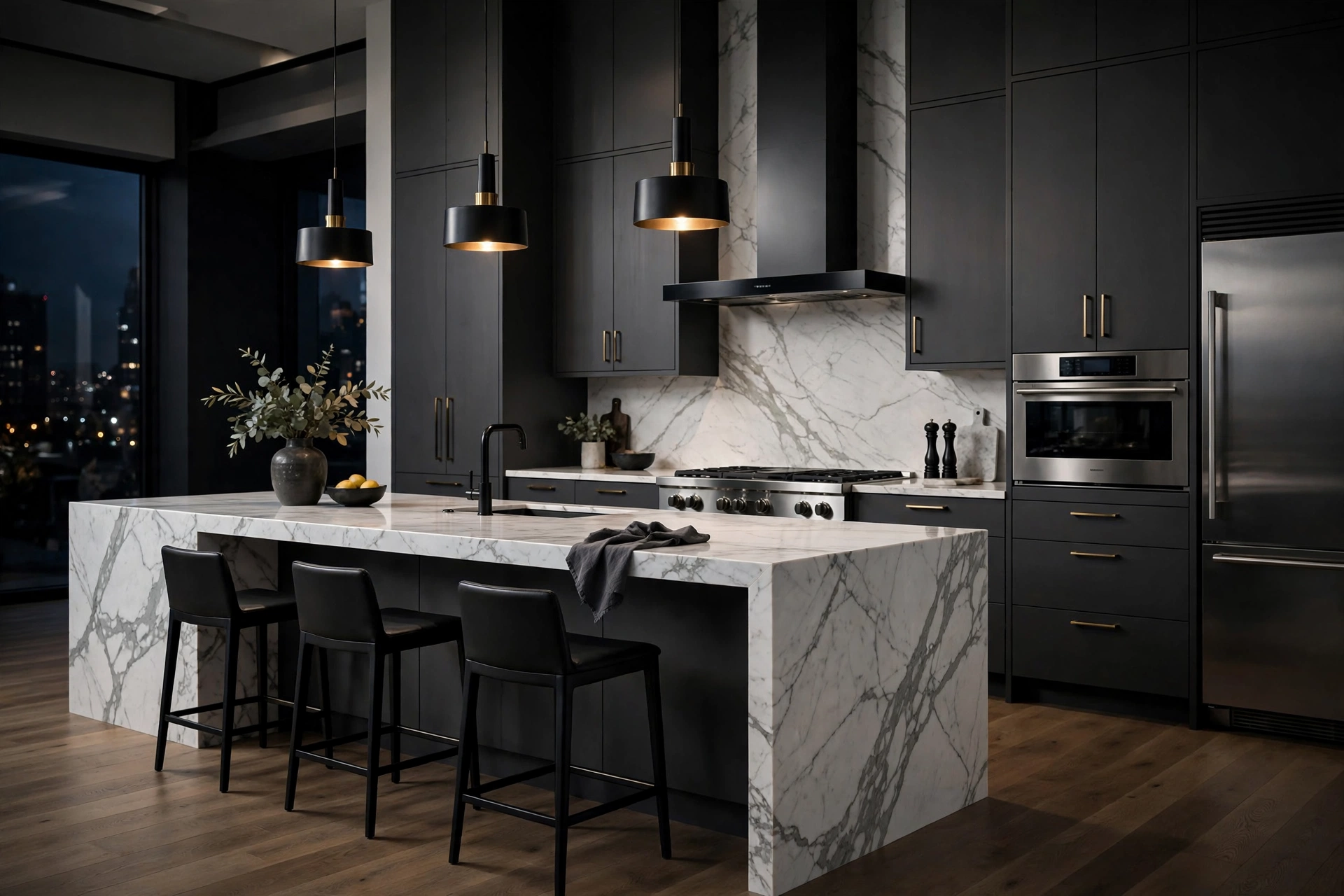
Dark gray — charcoal, slate, graphite — is gray with ambition. Dramatic like black but softer, more livable, less severe.
Why it works: creates real contrast and sophistication, hides everything, makes brass and gold hardware absolutely sing. A charcoal island with white perimeter cabinets is a stunning focal point.
The light requirement: dark gray needs good light — natural light ideally, supplemented with strong under-cabinet and ceiling lighting. In a dark kitchen, charcoal cabinets will absorb what little light exists. If your kitchen has one small window, do dark gray as an accent (island or lowers), not the whole room.
Best pairings: white or light marble-look counters (contrast is essential — dark cabinets need light surfaces), warm wood floors (non-negotiable for warmth balance), brass/gold hardware (the luxury combination), light backsplash.
My honest take: dark gray is underrated. Everyone debates navy vs black for dramatic kitchens, and charcoal sits between them with the best qualities of both — black’s drama without its severity, navy’s depth without its color commitment. If you want a dark kitchen but aren’t sure about navy, charcoal is your answer.
Modern Gray Kitchen Cabinets
“Modern gray” usually means one of two things: flat-panel/slab gray doors in a minimalist kitchen, or gray shaker with modern styling. Both are popular, and gray is arguably the best color for modern cabinet styles.
Flat-panel gray: the slab door’s clean lines + gray’s neutrality = the minimalist sweet spot. Light gray slabs feel Scandinavian; dark gray slabs feel urban-sophisticated. Handleless (push-to-open or integrated channel pulls) completes the look. Fingerprints show on dark glossy slabs — go matte if that bothers you.
Gray shaker, styled modern: shaker doors in gray with slim matte-black bar pulls, white quartz counters, minimal backsplash. Transitional-modern — the most popular “modern” kitchen in America, really.
What makes gray read “modern”: minimal hardware (or none), simple backsplash (large-format tile or full-height quartz), uncluttered counters, and consistent cool tones throughout. Gray does the heavy lifting; restraint does the rest.
Best Countertop Pairings for Gray Cabinets
Gray’s neutrality means almost everything works, but some pairings are genuinely better:
- White quartz/marble-look: the #1 pairing for both light and dark gray. Clean, classic, foolproof.
- Butcher block: the warmth gray needs, especially with cool grays. Beautiful with light gray shaker.
- Dark granite/soapstone with light gray cabinets: striking contrast, hides stains, sophisticated.
- Concrete-look: industrial-modern, great with flat-panel gray.
- Avoid: gray counters in the same tone as gray cabinets (monotone mush — if you go gray-on-gray, separate the tones significantly), and busy patterned stones that compete with nothing (gray’s simplicity is its strength; don’t clutter it).
Hardware and Finishes for Gray Cabinets
Hardware:
- Matte black: the modern default — crisp contrast on light gray, subtle on dark gray
- Brushed brass/gold: warmth and luxury, spectacular on dark gray
- Polished nickel/chrome: classic brightness, works with every gray
- Stainless bar pulls: clean and contemporary
Cabinet finish: satin is the sweet spot for gray — sophisticated without shine. Matte for modern flat-panel. Avoid high gloss unless you’re deliberately going for a sleek contemporary look; glossy gray can read as plasticky in traditional styles.
How to Keep Gray From Feeling Cold
This is gray’s real vulnerability. An all-gray kitchen with cool tones, stainless appliances, and gray floors can feel like a laboratory. The fixes:
- Add wood. The single most effective warmth injection — wood floors, butcher block counters, open wood shelving, wood bar stools. Warm wood against cool gray is one of design’s great pairings.
- Add warm metals. Brass or gold hardware, a brass faucet, copper accents. Warm metal against gray is transformative.
- Layer lighting. Warm-white bulbs (2700–3000K), under-cabinet LEDs, pendant lights over the island. Light temperature changes how gray feels more than almost anything else.
- Add textiles and life. A runner rug, plants, wooden cutting boards left out, cookbooks on open shelves. Gray kitchens need signs of life more than white ones do.
- Consider greige. If you’re choosing gray now and warmth matters to you, a warm greige sidesteps the cold problem at the source.
Gray and White Kitchen Cabinets
The gray-white combination is worth addressing directly since it’s so popular: gray lowers + white uppers, gray island + white perimeter, or full gray with white counters and backsplash.
It works because the contrast adds depth while both colors stay neutral and bright. The rules: keep the white bright enough to actually contrast (dingy white + gray = sad), add one warm element (wood or brass), and don’t add a third cabinet color — gray + white is already the whole palette.
More ideas in our white kitchen cabinets guide and the design rules in our two-tone kitchen cabinets guide.
Gray Cabinet Costs
Gray is a standard painted finish — no premium over white or other paints:
- RTA gray: $1,500–$5,000 for a 10×10 kitchen
- Stock gray: $3,000–$8,000 (light gray is widely stocked; dark charcoal less so)
- Semi-custom gray: $8,000–$18,000 (any shade, any door style)
- Custom gray: $18,000–$35,000+ (exact color matching)
One cost note: if you’re repainting existing cabinets gray, it’s one of the most forgiving colors for DIY — gray hides brush marks and imperfections better than white or dark colors. Still, factory finishes outperform DIY; see our kitchen cabinet remodel guide for the repaint-vs-reface breakdown.
Full pricing in our kitchen cabinet costs guide.
Frequently Asked Questions
Is gray still popular for kitchen cabinets? Yes. Gray has been a top cabinet color for over a decade and has settled into “modern neutral” status alongside white. The specific trendy execution (all-gray everything) has cooled, but gray as a cabinet color — especially in two-tone designs and as an island color — remains thoroughly current.
What is the most popular gray for kitchen cabinets? Warm greiges (gray-beige blends) currently lead — they’re the most forgiving across lighting conditions and styles. Light warm grays for full kitchens, charcoal for islands and accents. The exact “most popular” shade shifts yearly, which is itself an argument for choosing what suits your kitchen over what’s trending.
Do gray cabinets go with stainless steel appliances? Beautifully — especially cool grays. Gray + stainless is a natural pairing with consistent undertones. With warm greige cabinets, stainless still works, but black stainless or panel-ready appliances can harmonize better.
What flooring goes with gray kitchen cabinets? Warm wood floors are the best answer — they balance gray’s coolness. Light tile works for a bright modern feel; dark floors add drama with light gray cabinets. Avoid gray floors in the same tone as the cabinets. Our kitchen flooring options guide covers the options.
Are dark gray cabinets too dark for a small kitchen? For the whole kitchen, usually yes — dark colors absorb light and can make small spaces feel cramped. But a dark gray island or dark gray lowers with white uppers works fine in small kitchens. It’s about placement, not prohibition.
Warm gray or cool gray — which is better? Neither is better; they’re for different kitchens. Cool gray suits modern kitchens with white/stainless elements. Warm greige suits traditional, farmhouse, and transitional kitchens with wood tones. Match to your fixed elements (flooring, counters) and your lighting — that’s the whole decision.
The Bottom Line
Gray kitchen cabinets are the safe choice that doesn’t feel like settling — versatile, forgiving, practical, and genuinely attractive when the undertone matches the kitchen. Choose warm or cool deliberately (not by accident), test in your light, add wood and warm metals to keep it from feeling cold, and you’ll have a kitchen that looks good for decades.
Compare with white kitchen cabinets for maximum brightness, blue kitchen cabinets for more personality, or mix them in our two-tone kitchen cabinets guide. Start with the complete buying guide if you’re still choosing your tier.