
Blue kitchen cabinets have gone from “bold choice” to mainstream in less than a decade. Navy blue is now the most popular non-neutral cabinet color in America, and lighter blues are right behind it. It’s easy to see why: blue brings depth and personality to a kitchen without the commitment issues of red or the coldness of black.
But blue is a wide spectrum — navy, slate, powder blue, teal-leaning blues — and each one behaves differently in a kitchen. This guide covers the shades, the best pairings, finishes, costs, and where blue cabinets genuinely work (plus where they’ll fight your kitchen).
Why Blue Works in Kitchens
Blue hits a sweet spot that few colors manage. It’s colorful enough to feel intentional and designed, but familiar enough to feel safe — we’ve all lived with blue jeans and blue skies our whole lives. Psychologically, blue reads as calm and trustworthy, which is a nice backdrop for the most social room in the house.
Practically speaking, blue has real advantages over white: it hides everyday grime, fingerprints, and cooking splatter far better. A navy cabinet near the stove will look cleaner on day 30 than a white one looks on day 3. That’s not a small thing in a working kitchen.
My honest take: blue’s rise isn’t a fad — it’s a correction. For years the only “acceptable” choices were white, wood, or gray, and blue is simply what happens when people realize they can have color without chaos. Navy in particular has proven it can age gracefully. The powder blues and teals are a bit more trend-sensitive, so choose those with your eyes open.
Navy Blue Kitchen Cabinets: The Star of the Show
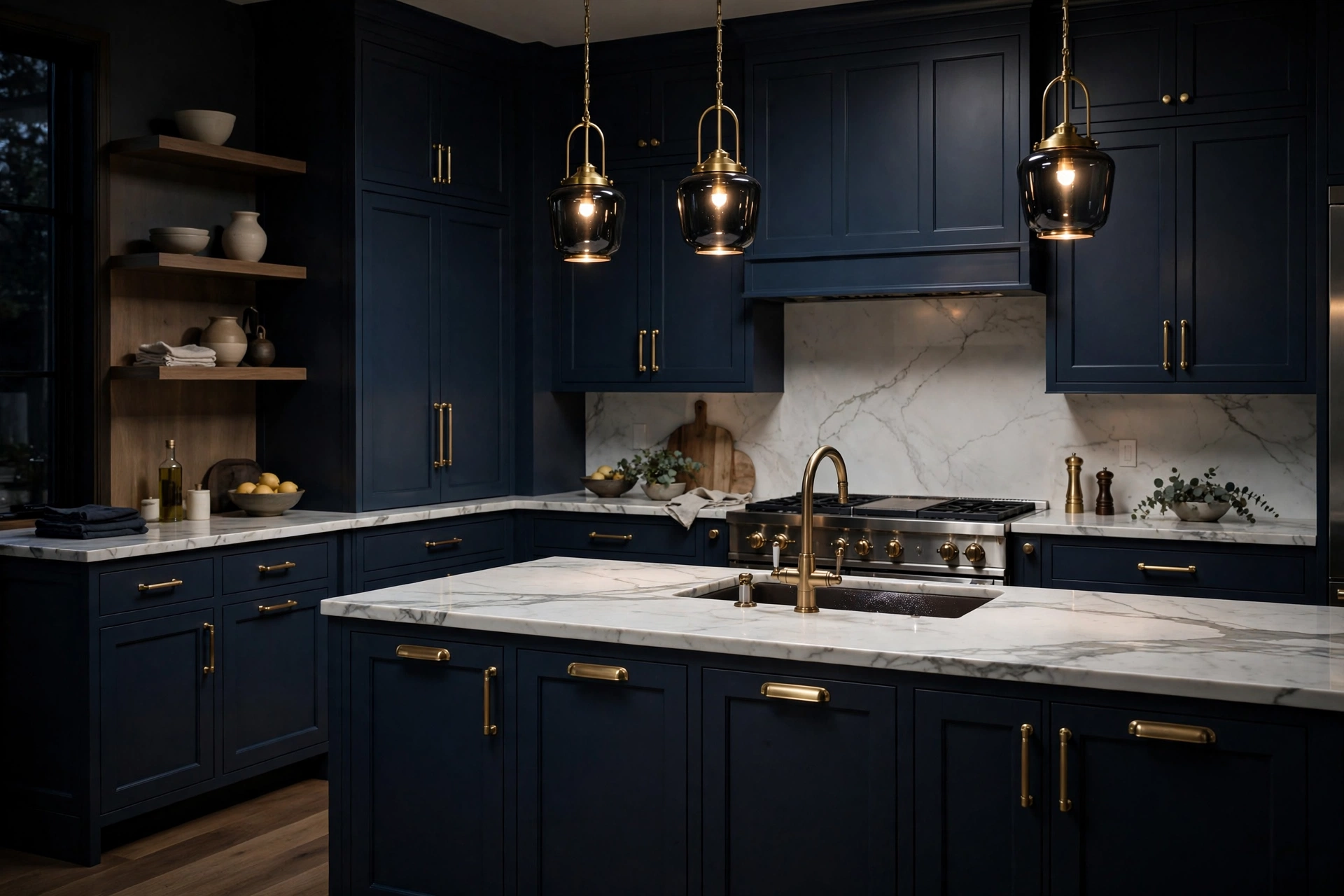
Navy is the blue that converted the skeptics. Deep, rich, almost-neutral — navy reads as sophisticated rather than colorful, which is why it works in traditional, transitional, farmhouse, and even modern kitchens.
What makes navy special: it’s dark enough to create real contrast with light counters and walls, but it doesn’t have black’s heaviness. In good light, navy shows beautiful depth; in dim light, it reads as a rich neutral. It’s dramatic without being loud.
Best navy applications:
- Full navy kitchen: works in medium to large kitchens with good natural light. Keep counters and backsplash light to balance the darkness.
- Navy island + white perimeter: the single most popular blue cabinet application, and for good reason — you get the drama as a focal point without committing the whole room.
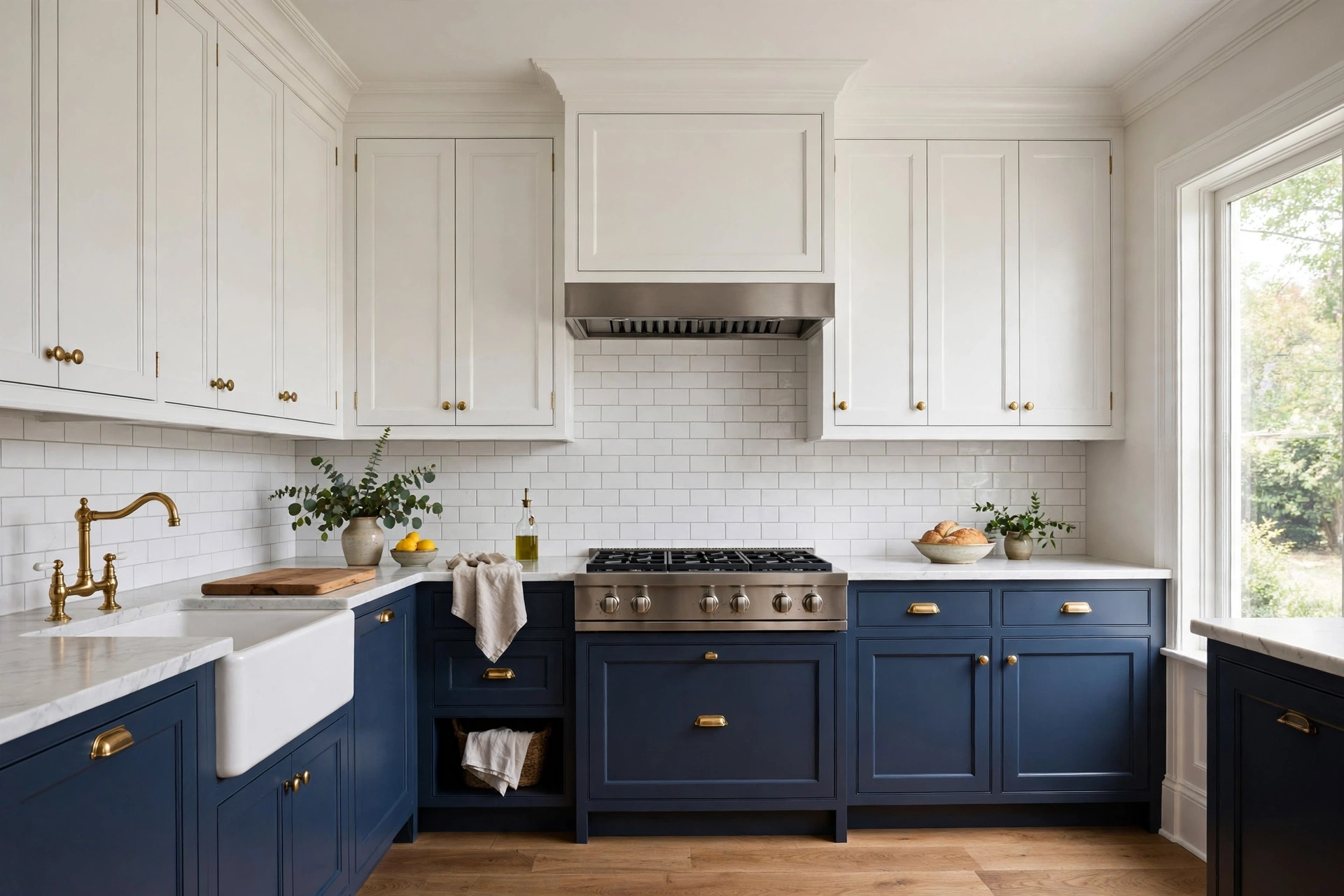
- Navy lower cabinets + white uppers: grounds the kitchen, keeps the upper half bright. Excellent in kitchens with lower ceilings.
Navy’s one real risk: in a small kitchen with poor natural light, full navy on all cabinets can feel oppressive. If your kitchen is under 120 square feet or has one small window, use navy as an accent (island or lowers) rather than everywhere.
Dark Blue vs Light Blue: Choosing Your Shade
Dark blues (navy, midnight, ink): sophisticated, dramatic, hide dirt well, pair beautifully with brass and marble-look surfaces. Best in kitchens with decent natural light. They make a kitchen feel intentional and designed — like someone made decisions here.
Medium blues (slate blue, denim, steel blue): the middle ground. More color personality than navy, less commitment than bright blue. Slate blue with a gray undertone is particularly versatile — it bridges blue and gray, working with both warm and cool palettes.
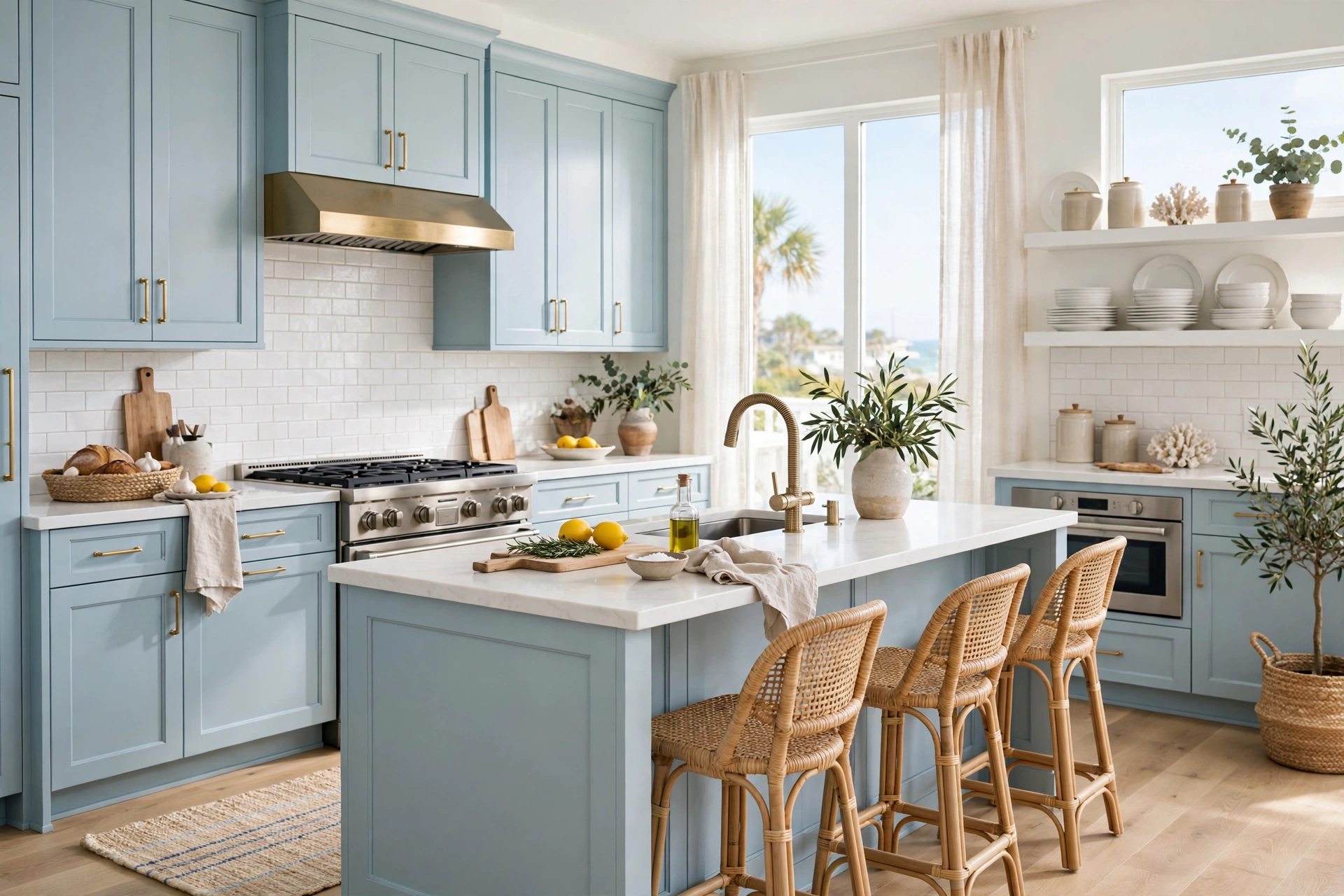
Light blues (powder blue, sky blue, pale aqua): airy, cheerful, coastal. Beautiful in beach houses, cottages, and farmhouse kitchens. The trade-off: light blues show dirt more like white does, and they can feel less “serious” — which is either charming or wrong depending on your home’s style. They also date faster than navy; the powder-blue-everything kitchen is more trend-exposed.
Blue-greens and teals: worth a mention as the adventurous edge — teal and deep peacock blue make stunning statement islands. Higher risk, higher reward. I’d do these as accents, not whole kitchens, unless you’re confident in your design instincts.
Blue and White Kitchen Cabinets: The Classic Combination
Blue and white is a combination with centuries of history — Delft pottery, Chinese porcelain, coastal New England — and it works in kitchens for the same reason it works everywhere: the contrast is crisp, clean, and balanced.
Executions that work:
- White perimeter + navy island (the modern classic)
- Navy lowers + white uppers (grounded but bright)
- All-navy with white marble-look counters and white subway backsplash (dramatic but classic)
- Powder blue cabinets with white counters in a cottage kitchen (sweet, not saccharine, if you keep hardware simple)
The contrast rule: blue and white needs a third element to avoid looking flat — wood tones (butcher block counters, wood floors, open wood shelving), brass hardware, or textured tile. Two colors alone can feel stark; the third material adds warmth and depth.
Our white kitchen cabinets guide covers the white side of this pairing in detail.
Farmhouse Blue Kitchen Cabinets
Farmhouse style and blue cabinets are natural partners — the combination shows up constantly in modern farmhouse design, and it works because blue softens farmhouse’s sometimes-stark black-and-white palette.
The farmhouse blue formula: muted, dusty blues (not bright or saturated) + shaker doors + butcher block or wood-tone counters + black or bronze hardware + apron-front sink. The blue should feel like faded denim or old painted furniture, not like a sports team.
Best farmhouse blues: dusty slate blue, muted denim, sage-tinted blue-gray. Avoid anything too bright or too dark — farmhouse blue lives in the middle of the value range.
Pairing notes: shiplap or beadboard backsplash in white, warm wood floors, and simple black hardware complete the look. An apron-front (farmhouse) sink is practically mandatory — it’s in the name.
Best Pairings: Countertops, Hardware, and Finishes
Countertops with blue cabinets:
- White quartz or marble-look quartz: the #1 pairing — crisp contrast, timeless
- Butcher block: warmth against cool blue, especially beautiful with navy
- Light granite with movement: adds pattern without competing
- Dark soapstone with navy: moody and sophisticated (for the bold)
- Avoid: busy dark granites that fight the blue for attention
Hardware finishes:
- Brass/gold: the luxury pairing — navy + brass is genuinely one of the best-looking combinations in kitchen design
- Matte black: modern contrast, especially with shaker doors
- Polished nickel/chrome: classic, bright, works with every blue
- Copper: unexpected and gorgeous with medium blues
- Avoid: oil-rubbed bronze can disappear against dark navy; it needs lighter blues to show up
Backsplash: white subway tile is the safe classic. For more character: handmade zellige in white or pale blue (the variation plays beautifully with blue cabinets), marble-look tile, or simple white square tile in a stacked pattern for a modern feel.
Flooring: warm wood floors balance blue’s coolness — this pairing is almost mandatory for navy kitchens to avoid a cold feel. Light tile works for coastal blues. Our kitchen flooring options guide has the full rundown.
Finishes: How Blue Cabinets Should Look
Satin/matte: the modern choice — sophisticated, hides imperfections, doesn’t compete with the color. Most blue kitchens look best in satin.
Semi-gloss: more traditional, slightly more durable and wipeable, but shows every flaw in the paint application. On dark blue, semi-gloss can look almost lacquered — striking in modern kitchens, too flashy in traditional ones.
Distressed/antiqued: for farmhouse and cottage styles — edges rubbed to show wood beneath. Charming when done by a pro; DIY distressing usually looks like damage, not patina.
My honest take: factory-applied catalyzed lacquer in satin is the finish to beat. It’s hard, smooth, consistent, and repairable. If you’re painting existing cabinets blue, invest in the prep — blue shows brush marks and drips more than most colors because the dark color creates high contrast with any flaw.
Blue Cabinet Costs
Blue costs the same as any other painted color — the pigment doesn’t change the price. What matters is the tier:
- RTA blue: $1,500–$5,000 for a 10×10 kitchen (navy RTA shaker is widely available)
- Stock blue: $3,000–$8,000 (fewer color options than white, but navy is common now)
- Semi-custom blue: $8,000–$18,000 (custom blue shades, any door style)
- Custom blue: $18,000–$35,000+ (exact color matching, specialty finishes)
Cost-saving tip: if your dream is a navy island with white perimeter, price it as two finishes — some manufacturers charge a per-finish upcharge for two-tone orders ($200–$500). Still far cheaper than going full custom for the whole kitchen. Our two-tone kitchen cabinets guide covers the strategy.
Full numbers in our kitchen cabinet costs guide.
Where Blue Cabinets Work Best
Blue shines in: kitchens with good natural light (dark blues need light to show their depth), homes with warm wood floors (the warm-cool balance), coastal and farmhouse styles (light and dusty blues), transitional and modern kitchens (navy as a sophisticated neutral), and any kitchen where white feels too safe but you don’t want anything wild.
Think twice when: the kitchen is small and dark (use blue as an accent, not everywhere), your home’s style is ultra-traditional formal (cherry and cream suit it better), or you’re selling within a year in a conservative market (navy is broadly appealing, but powder blue narrows the buyer pool).
Resale reality check: navy blue has proven resale-friendly — it’s now familiar enough that most buyers see it as a feature, not a risk. Lighter and brighter blues are more polarizing. If resale is a near-term concern, navy island + white perimeter is the safest blue move you can make.
Frequently Asked Questions
Are blue kitchen cabinets going out of style? Navy blue has been popular for the better part of a decade and shows no sign of fading — it’s crossed into “modern classic” territory. Lighter blues cycle in and out of fashion more noticeably. If longevity worries you, navy is the safe blue; powder blue is the fashionable one.
What color goes with navy blue kitchen cabinets? White (counters, backsplash, uppers), warm wood tones (floors, butcher block), brass or gold hardware, and light warm grays. The winning formula is navy + white + one warm element (wood or brass) to keep it from feeling cold.
Do blue cabinets make a kitchen look smaller? Dark blues can make a small, poorly-lit kitchen feel smaller — dark colors absorb light. In a small kitchen, use blue on the island or lower cabinets only, keep uppers white, and maximize lighting. Light blues don’t have this problem.
What backsplash goes with blue cabinets? White subway tile (timeless), handmade-look white zellige (character), marble-look tile (elegance), or pale blue tile (monochromatic, coastal). Avoid busy patterns that compete with the blue — let the cabinets be the star.
Are navy cabinets hard to keep clean? Easier than white, harder than medium wood tones. Navy hides everyday grime well but shows dust and light-colored crumbs. A quick wipe with a damp microfiber cloth handles it. The finish matters more than the color — quality satin lacquer wipes clean easily.
Can I mix blue cabinets with wood cabinets? Yes — navy island with natural wood perimeter (or vice versa) is a stunning combination. Keep the wood tone warm (white oak, walnut) to balance blue’s coolness, and keep hardware consistent across both for cohesion.
The Bottom Line
Blue kitchen cabinets — especially navy — offer something rare: real personality with broad appeal. They’re more forgiving than white, more interesting than gray, and more timeless than most colors. Pick your shade by your light (dark blues need good light), pair with white and one warm element, and don’t be afraid of the navy island — it’s popular because it works.
Compare with white kitchen cabinets for the classic alternative, gray kitchen cabinets for a more neutral take, or go bolder with our two-tone kitchen cabinets guide. And run the numbers first in our kitchen cabinet costs guide.
Pingback: Two-Tone Kitchen Cabinets: Ideas & Guide - Seen Scale