
The kitchen floor takes more abuse than any other floor in the house. Dropped knives, spilled pasta water, the refrigerator leaking at 2 AM, hours of standing while you cook, chairs scraping at the breakfast bar — and it all needs to look good while doing it. Kitchen flooring is where durability, water resistance, and comfort collide, and the “best” choice depends on which of those you weight most.
This guide compares the real contenders honestly, covers what kitchens specifically demand, and helps you pick the right floor for how you actually cook and live.
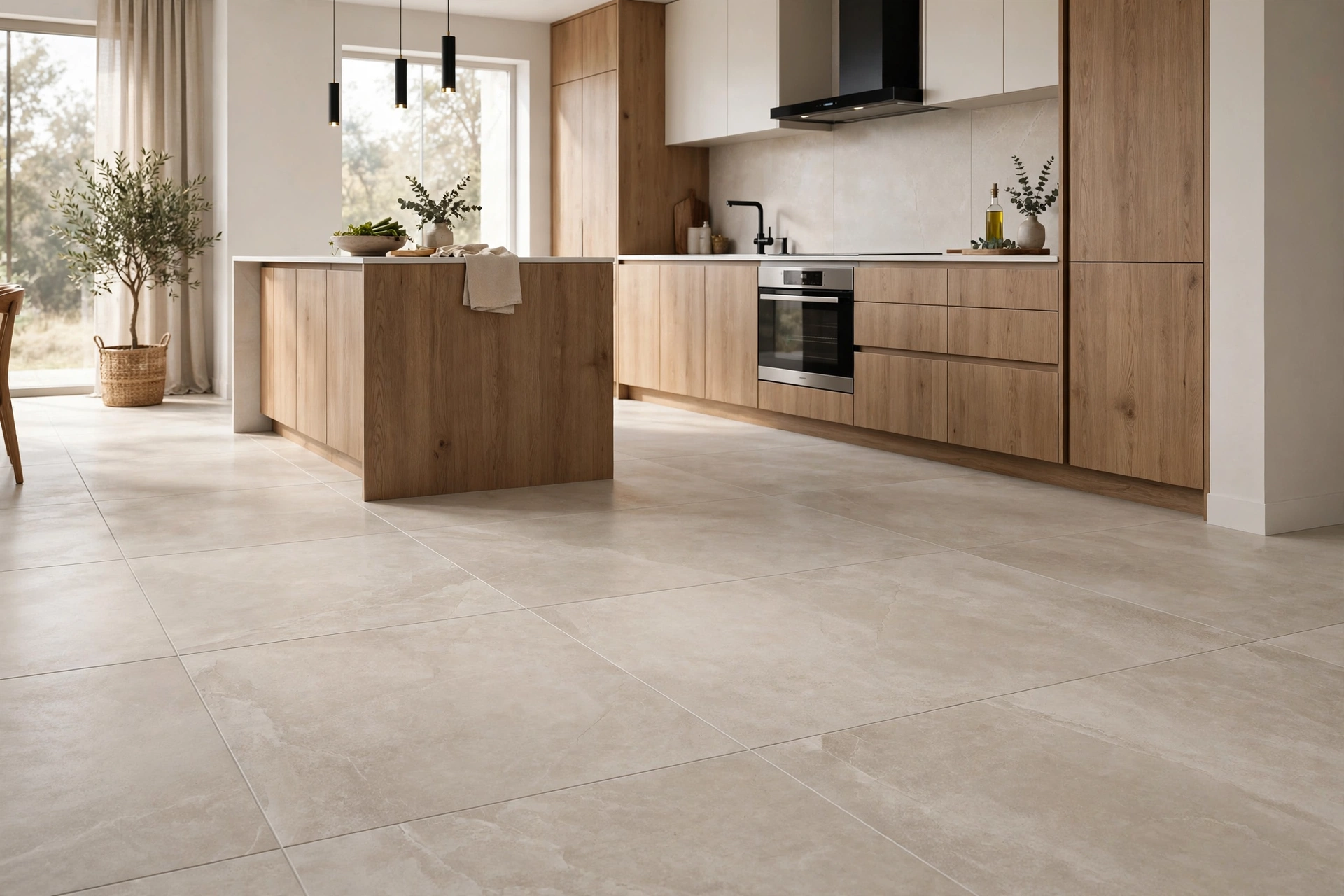
What Kitchen Floors Must Handle
Water and spills. Not occasional — constant. Sink splashes, dishwasher leaks, ice maker lines, dropped drinks. Every kitchen floor will get wet regularly.
Impact. Dropped pots, cans, knives. The floor needs to survive impacts that would crack lesser materials.
Standing comfort. If you cook seriously, you’re standing on this floor for an hour or more at a time. Hardness matters over long sessions.
Stains. Turmeric, tomato sauce, red wine, grease. The floor needs to resist staining or clean easily.
Traffic. Kitchens are high-traffic by nature — the path between fridge, sink, and stove gets pounded daily.
Cleaning. Grease film, crumbs, sticky spots. The floor should clean with a quick mop, not a project.
The Best Kitchen Flooring Options, Ranked
1. Luxury Vinyl Plank (LVP/SPC) — The All-Rounder
The best kitchen floor for most people, and it’s not particularly close. Waterproof, comfortable underfoot, handles dropped items without cracking, easy to clean, and looks excellent in wood or stone designs.
Why it wins: it’s the only option that’s genuinely good at everything kitchens demand. Waterproof like tile, comfortable like wood, affordable, DIY-friendly.
The catches: can dent under very heavy appliances (use appliance cups), and it doesn’t add resale value like hardwood or tile.
Cost: $3–$7/sq ft installed.
Related: Vinyl Flooring Guide — LVP, LVT, and SPC in full detail.
2. Porcelain Tile — The Indestructible Pick
Waterproof, stain-proof, impossible to wear out. Dropped a cast iron skillet? The skillet might chip; the tile won’t care. If your kitchen sees serious cooking, tile is the tank option.
Why people choose it: maximum durability and water protection. Nothing beats tile for a kitchen that gets genuinely abused.
The catches: hard and cold — brutal on feet and backs during long cooking sessions (anti-fatigue mats help enormously). Dropped dishes shatter. Installation is skilled and pricey.
Cost: $5–$12/sq ft installed.
3. Hardwood — The Beautiful Compromise
Site-finished hardwood in kitchens is a classic for a reason — it looks incredible and feels warm. It handles kitchen life fine if you’re diligent: wipe spills promptly, use rugs at the sink and dishwasher.
Why people choose it: beauty and continuity. In open-plan homes, running the same hardwood from living room through kitchen looks seamless and adds value.
The catches: it’s the highest-maintenance kitchen option. Standing water damages it. Dishwasher leaks are its nightmare scenario. Be honest about your habits — if spills sit, choose something else.
Cost: $8–$15/sq ft installed.
4. Linoleum — The Natural Workhorse
Comfortable, antimicrobial, handles kitchen spills well with prompt wiping, and the color-through construction hides wear beautifully. A genuinely excellent kitchen floor that most people overlook.
Why people choose it: natural materials, comfort, and durability. Great for serious cooks who stand for hours.
The catches: not waterproof (water-resistant only), and fewer installers do it.
Cost: $4–$8/sq ft installed.
5. Laminate — The Budget Pick
Modern laminate looks good and costs little. In a kitchen with prompt spill cleanup, it performs fine. But one dishwasher leak can destroy it — the risk is real and worth weighing.
Verdict: acceptable on a tight budget if you’re careful. LVP costs only slightly more and eliminates the water anxiety entirely.
Comfort: The Underrated Factor
Nobody thinks about this until their back hurts. Kitchen flooring hardness, ranked from softest to hardest:
- Cork / cushioned vinyl — softest, kindest to feet
- LVP / linoleum — comfortable for long sessions
- Hardwood — moderate, with some give
- Tile / stone — hard. Great durability, punishing on joints.
If you cook for hours: prioritize LVP, linoleum, or hardwood, and add an anti-fatigue mat at the main prep area regardless of floor type. A $40 mat does more for comfort than any flooring upgrade.
Water: Kitchens Are Wet Rooms (Admit It)
Every kitchen has water events. The question is severity:
- Daily: sink splashes, mopping, spilled drinks → any decent floor handles this
- Occasional: dishwasher leak, fridge water line drip, overflowing pot → waterproof floors (vinyl, tile) shrug; wood-based floors (hardwood, laminate) suffer
- Rare but catastrophic: burst supply line, major appliance failure → only tile and vinyl survive unscathed
This is why LVP dominates kitchen recommendations: it handles all three tiers without drama.
Related: Waterproof Flooring Guide — which floors are truly waterproof and why it matters.
What to Avoid in Kitchens
Carpet. Grease, food, moisture — carpet in a kitchen is a hygiene problem. (Yes, people still do this. No, you shouldn’t.)
Standard laminate in a leak-prone kitchen. If your dishwasher is 15 years old and your fridge has a water line, laminate is living dangerously.
Polished stone. Slippery when wet, stains without religious sealing, and cold. Kitchen floors get wet and greasy — polished stone is a fall risk.
Cheap peel-and-stick. The heat near ovens softens adhesive, and heavy appliances dent it. Fine for a pantry; not for the main kitchen.
Open-Plan Kitchens: The Continuity Question
In open-plan homes, the kitchen floor flows into the living area. You have two philosophies:
One floor throughout. Same material everywhere = spacious, cohesive, modern. LVP and hardwood both do this beautifully. This is the current design preference and it photographs well.
Defined zones. Different floor in the kitchen (tile) vs living area (wood). Defines the spaces, lets you optimize each — tile’s durability where cooking happens, wood’s warmth where living happens. Needs a clean transition line.
My honest take: one floor throughout is simpler, looks bigger, and avoids awkward transitions. If you love tile in kitchens, the zone approach works — just make the transition intentional (a straight line at the natural boundary, not a wavy afterthought).
What Does Kitchen Flooring Cost?
For a typical 200 sq ft kitchen:
- Laminate: $600–$1,200 installed
- LVP/SPC: $800–$1,800 installed
- Linoleum: $800–$1,600 installed
- Porcelain tile: $1,200–$2,800 installed
- Hardwood: $1,600–$3,000 installed
Kitchens are mid-sized rooms, so the total stays manageable even for premium materials. This is worth spending on — you’ll interact with this floor more than any other.
Kitchen Flooring with Pets and Kids
If your kitchen doubles as a playground and a dog run, the calculus changes. Here’s what actually matters:
Scratch resistance becomes priority #1. Dog nails on hardwood leave trails. Look for the thickest wear layer you can afford (20+ mil in vinyl), textured finishes that hide micro-scratches, and medium tones that camouflage wear. Matte finishes hide scratches far better than gloss.
Slip resistance for everyone. Dogs slip on glossy floors (and injure hips scrambling). Toddlers slip on everything. Textured LVP or tile with grip beats polished surfaces — for the humans and the animals.
Stain-proofing for real life. Juice boxes, pet food, muddy paws. Non-porous floors (vinyl, porcelain) wipe clean. Grout lines in tile collect grime — use epoxy grout or large-format tile with minimal grout if you go the tile route.
The pet-hair factor: dark floors show light pet hair; light floors show dark pet hair. Medium tones are the pragmatic choice. Textured surfaces trap less visible hair than smooth glossy ones.
My honest take for chaos households: SPC vinyl with a 20+ mil wear layer, textured matte finish, medium wood tone. It’s the closest thing to a kid-and-pet-proof kitchen floor that exists. Save the hardwood dreams for the formal dining room.
Frequently Asked Questions
What’s the best flooring for a kitchen?
Luxury vinyl plank — waterproof, comfortable, durable, affordable, and great-looking. Porcelain tile if maximum durability matters more than comfort.
Is hardwood flooring good in kitchens?
Yes, with diligence. Wipe spills promptly, use mats at water sources, and accept higher maintenance. It’s beautiful and adds value, but it’s not the low-worry choice.
What’s the most durable kitchen flooring?
Porcelain tile — waterproof, stain-proof, impact-resistant, essentially unwearable in residential use. The trade-off is hardness and cold.
Can you put laminate in a kitchen?
Yes, but it’s the riskiest common choice. Modern laminate handles surface spills fine, but appliance leaks destroy it. LVP costs little more and removes the risk.
What’s the easiest kitchen floor to clean?
Sheet vinyl and LVP — smooth, non-porous, no grout lines to scrub. Tile with large format and epoxy grout is close behind.
The Bottom Line
Kitchen flooring is a three-way tug between water resistance, comfort, and looks — and luxury vinyl plank is the rare option that delivers all three without major compromise. Tile wins on pure durability, hardwood wins on beauty and value, but LVP is the choice I’d recommend to most people without hesitation. Pick the floor that matches how you actually cook: careful and tidy (hardwood’s fine), chaotic with kids (vinyl, definitely vinyl), or serious daily cooking (tile or vinyl, plus that anti-fatigue mat).
Pingback: White Kitchen Cabinets: Complete Guide