
Wood kitchen cabinets are the original — every kitchen had them before paint took over — and they’re in the middle of a genuine comeback. After two decades of white-everything, natural wood tones are back in a big way: white oak, walnut, warm hickory. Turns out people missed the warmth, the character, and the fact that wood cabinets don’t show every fingerprint in the house.
This guide compares the species (oak, cherry, hickory, maple, pine, walnut, and more), covers stains and finishes, gives you the honest pros and cons, talks costs, and — for everyone staring at 1990s honey oak wondering what to do — covers how to make oak kitchen cabinets look modern.
Why Wood Cabinets Are Back
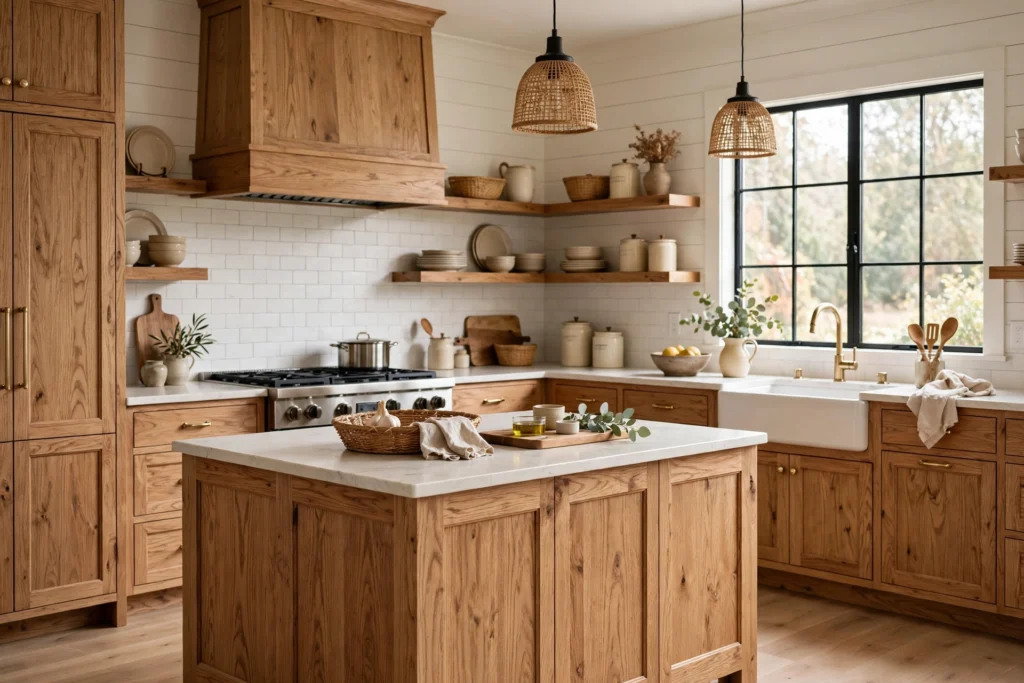
The white kitchen era isn’t over, but it’s no longer the only answer. Design has swung toward warmth, texture, and natural materials — and wood cabinets deliver all three. White oak in particular has become the “it” cabinet material, showing up in high-end remodels and design magazines constantly.
Beyond fashion, wood has practical arguments: it hides wear and small dings better than paint (no paint layer to chip), it develops character rather than just aging, and quality wood cabinets can be refinished — sanded and restained — giving them a second life that painted cabinets don’t get as gracefully.
My honest take: the wood comeback is the healthiest trend in kitchen design right now. Not because white was bad, but because the best kitchens have material contrast — and wood brings warmth that paint simply can’t. A kitchen with wood cabinets, or even just a wood island, feels alive in a way that all-painted kitchens sometimes don’t.
Oak Kitchen Cabinets: The Classic
Oak is the most common cabinet wood in America, and it comes in two very different personalities.
Red oak was the 1990s-2000s default — strong grain, warm reddish tone, usually finished in honey or golden oak stain. Millions of kitchens still have it. It’s durable and affordable, but the heavy grain and orange tone read as dated to many buyers.
White oak is the current favorite — tighter, subtler grain than red oak, neutral tan tone that takes stain evenly and looks modern. White oak with a light natural finish might be the single most requested cabinet look in high-end remodels right now. It’s more expensive than red oak but worth it for the refined look.
Oak pros: very durable and hard-wearing, affordable (red oak especially), takes stain well, widely available in every cabinet tier including RTA.
Oak cons: strong grain isn’t for everyone (red oak’s grain is bold), red oak’s orange tone needs the right stain to look current, heavy grain can look busy in small kitchens.
How to Make Oak Kitchen Cabinets Look Modern
This deserves its own section because so many people ask. You have 90s honey oak cabinets and you don’t want to replace them — what actually works?
What works:
- Restain darker. A dark walnut or espresso stain over oak transforms it — the grain becomes rich and dramatic instead of dated-orange. This is the highest-impact change.
- Update the hardware. Swap dated brass knobs for matte black bar pulls. $100–$300 in hardware can visually modernize a whole kitchen.
- Paint the uppers, stain the lowers. Or paint the island. Breaking up the oak reduces the “oak overload” that makes 90s kitchens feel dated.
- Update counters and backsplash. Oak + busy 90s granite + 4-inch granite backsplash = time capsule. Oak + white quartz + simple subway tile = current.
- New lighting. Dated oak under dated lighting looks worse. Bright, modern lighting changes how the wood reads.
What doesn’t work:
- Glazing or antiquing (doubles down on the dated look)
- Trying to go lighter — bleaching oak is difficult and often blotchy
- Ignoring the orange: the fastest way to modernize oak is killing the orange tone, either with stain or paint
If the boxes are solid, refinishing or refacing oak cabinets costs 30–50% less than replacing. Our kitchen cabinet remodel guide walks through the options.
Honey Oak and Light Oak: Specifically
Honey oak (the golden-orange 90s finish) is the most “dated” reputation in cabinetry. But the wood underneath is solid — honey oak cabinets are usually well-built. Restain, paint, or reface; don’t demolish good boxes over a finish.
Light oak (natural or lightly stained) is a different story — it’s essentially what white oak looks like, and it’s fashionable right now. If your oak is light rather than orange, you may already be closer to current style than you think. New hardware and updated surroundings might be all you need.
Cherry Kitchen Cabinets
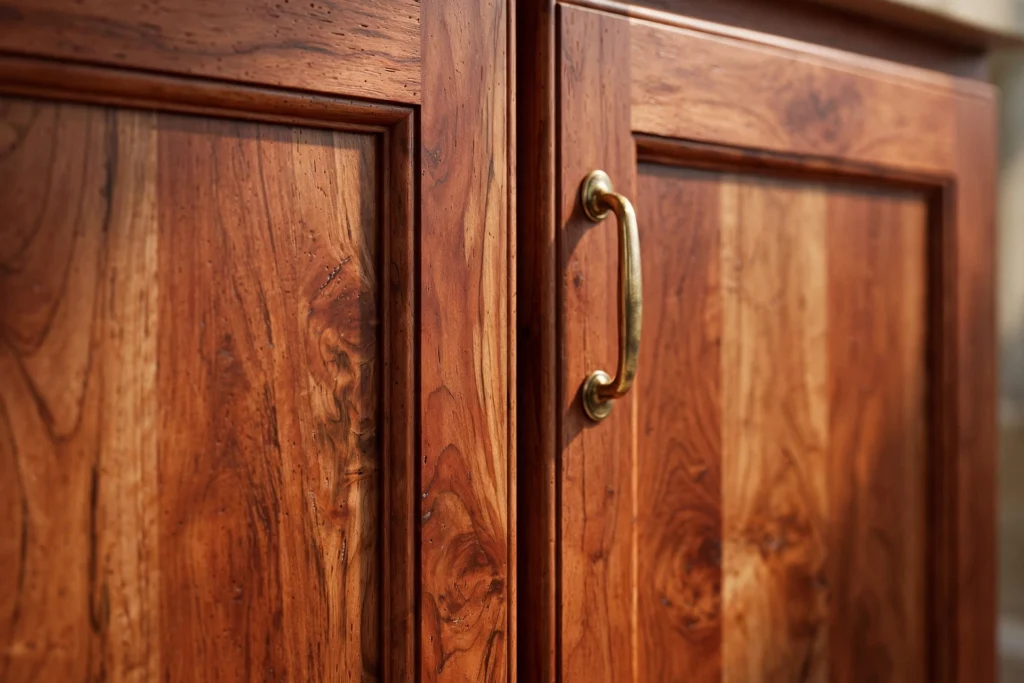
Cherry is the luxury traditionalist’s wood — rich reddish-brown, smooth fine grain, and it darkens beautifully with age and light exposure. A cherry kitchen mellows over the first couple of years into something deeper and richer than the day it was installed.
Cherry pros: gorgeous natural color that needs minimal stain, fine grain (less busy than oak), ages gracefully, unmistakably high-end feel.
Cherry cons: expensive (among the priciest domestic woods), darkens over time (which some people don’t expect — that bright new cherry will deepen), shows scratches a bit more than oak, and the formal look doesn’t suit ultra-modern kitchens.
Best for: traditional, craftsman, and transitional kitchens; anyone who wants wood with richness and formality. Cherry + oil-rubbed bronze + granite is the classic early-2000s luxury kitchen — still handsome, though the specific styling around it has evolved.
Hickory Kitchen Cabinets
Hickory is the character actor of cabinet woods — dramatic grain, wild color variation from light tan to dark brown, sometimes within a single door. It’s the hardest domestic cabinet wood (great for durability) and the most rustic-looking.
Hickory pros: extremely durable, distinctive character that no other wood matches, more affordable than cherry or walnut, fantastic in rustic, farmhouse, and lodge styles.
Hickory cons: the color variation is polarizing — some call it character, some call it chaotic. It can overwhelm small kitchens. Staining hickory evenly is tricky because the light and dark areas absorb stain differently.
Best for: rustic, country, and farmhouse kitchens; cabins and lodges; anyone who wants their cabinets to have personality. If you like calm and uniform, hickory will stress you out.
Maple, Pine, Walnut & More: Quick Comparisons
Maple — fine, subtle grain, light color. The chameleon: takes light stains for a Scandinavian look, dark stains for a cherry-like richness, and paint beautifully. Harder than oak, very durable. If you want wood but subtle, maple is your answer. Slightly pricier than oak.
Pine — soft, knotty, casual. The country-cottage wood. Affordable and charming, but it dents easily (it’s genuinely soft) and the knots aren’t everyone’s taste. Best in rustic and country kitchens where dents add character rather than looking like damage.
Walnut — deep chocolate brown, subtle straight grain, unmistakably luxurious. The premium modern wood — walnut flat-panel cabinets are a high-end contemporary staple. Expensive, but a little goes a long way (walnut island + painted perimeter is stunning).
Alder — cherry-like appearance at a lower price, softer than cherry. A good value pick for the cherry look without the cherry price. Dents more easily.
Birch — similar to maple, slightly less expensive, fine grain. Common in RTA and stock lines as the affordable light wood.
Species quick-rank by cost (stained, roughly): pine/birch (most affordable) → red oak → maple → alder → hickory → cherry → white oak → walnut (premium).
Natural, Light & Dark Wood: Choosing Your Tone
Natural wood kitchen cabinets (clear finish, no stain) show the wood exactly as it is. Beautiful when the wood is good — white oak and walnut are stunning natural. Risky with lower-grade wood where flaws and color inconsistencies show.
Light wood cabinets (natural maple, light oak, pale stains) — bright, airy, Scandinavian-leaning. Make kitchens feel larger, pair beautifully with white counters and black hardware. The most current wood look.
Dark wood cabinets (walnut, dark-stained oak/cherry, espresso) — dramatic, sophisticated, hide wear well. Need good lighting and work best in medium-to-large kitchens. Dark wood + brass + marble-look = luxury formula.
Medium wood tones (natural cherry, medium oak stains) — the traditional comfort zone. Warm, classic, broadly appealing. Can read as dated if the surrounding style is stuck in the 2000s — update hardware, counters, and lighting to keep medium wood current.
Brown, beige, and cream cabinets: brown stained cabinets span the medium-dark range; beige and cream are essentially warm off-whites that read as painted rather than wood — they belong more to the painted world. If you want the warmth of wood without visible grain, a warm beige paint over maple gives you the tone without the texture.
Stained vs Painted vs Natural: Finish Options for Wood
Stained — enhances the grain, adds color, still reads as wood. The classic wood cabinet finish. Stain + protective topcoat (conversion varnish or catalyzed lacquer from the factory) is durable and repairable.
Painted wood — the grain mostly disappears (especially with maple or MDF), you get color instead. Many “painted” cabinets are wood underneath. There’s no rule against painting good wood, whatever purists say — it’s your kitchen.
Natural/clear-coated — just protective clear coat over the raw wood. Shows everything, beautiful or flawed. Best reserved for high-grade wood.
My honest take: the finish matters as much as the species. A mediocre oak with a great stain job beats a premium cherry with a bad finish. When comparing cabinets, look at the finish quality — even color, smooth feel, no drips or orange-peel texture — as closely as you look at the wood itself.
Solid Wood vs Plywood: What “Real Wood” Means
Marketing throws around “solid wood,” “real wood,” and “all wood” loosely. Here’s the translation:
- Solid wood = boards cut from actual lumber. Used in face frames, door frames, and drawer boxes. Rarely used for large panels (it warps).
- Plywood = layers of real wood veneer glued cross-grain. This IS real wood, and it’s the best cabinet box material — stronger and more stable than solid lumber for boxes.
- “All wood” / “real wood cabinets” = typically plywood boxes + solid wood frames and doors. This is good construction, not a marketing trick.
- Particleboard/MDF = wood fibers/particles pressed with resin. Not “fake” exactly, but not what people mean by real wood.
When a listing says “solid wood kitchen cabinets,” it usually means solid wood doors and face frames with plywood boxes — which is exactly what you want. True all-solid-wood boxes would be worse (warping), not better.
Rustic & Country Kitchen Cabinets
Rustic and country styles lean hard on wood — hickory, knotty pine, distressed oak, reclaimed-look finishes. The aesthetic is warmth, texture, and imperfection-as-charm.
Keys to the look: visible grain and knots (hickory, knotty alder, pine), medium-to-dark stains, matte or satin finishes, black or oil-rubbed bronze hardware, often paired with stone or butcher-block counters.
The line between rustic and dated: intentional texture vs. neglected finish. A professionally applied distressed hickory looks rustic; worn-out 90s oak just looks worn. If you’re going rustic, commit — half-measures read as “old” rather than “rustic.”
Wood Cabinet Costs
Wood species affects price, but the cabinet tier matters more:
- RTA wood (oak, birch): $2,000–$6,000 for a 10×10 kitchen — the affordable entry to real wood
- Stock wood: $4,000–$10,000 (oak and maple widely available; cherry in better lines)
- Semi-custom wood: $10,000–$22,000 (full species range, custom stains)
- Custom wood: $20,000–$45,000+ (walnut, exotic species, hand-applied finishes)
Species premiums (rough): red oak and birch are baseline; maple +10–15%; hickory +15–20%; cherry +25–40%; white oak +30–45%; walnut +50–75% over baseline. Painted cabinets dodge all of this — worth remembering if you love a species’ look but not its price (a dark stain on maple approximates cherry for less).
Full breakdown in our kitchen cabinet costs guide.
Caring for Wood Cabinets
Wood cabinets are lower-maintenance than their reputation suggests:
- Dust regularly; wipe with a damp (not wet) cloth and mild soap for grime
- Never soak — standing water damages every wood finish eventually
- Use cutting boards and trivets; don’t set steaming pots against cabinet doors
- Re-oil natural oil-finished wood yearly; lacquered finishes need no oiling
- Touch up scratches with a stain marker matched to your finish — five-minute fix
- Control humidity extremes — wood expands and contracts; huge swings can crack finishes over years
Frequently Asked Questions
What is the most popular wood for kitchen cabinets? White oak currently leads in new high-end kitchens; red oak and maple dominate the mid-range by volume. Cherry was the 2000s favorite. For painted cabinets, maple is the most common wood underneath.
Are wood cabinets coming back in style? Yes — natural wood tones, especially white oak and walnut, are one of the strongest current kitchen trends. It’s a shift toward warmth and natural materials rather than a rejection of painted cabinets; the most fashionable kitchens now mix wood and paint.
Do wood cabinets look dated? Some do — specifically 90s honey oak with orange tones and the heavy Tuscan styling of the 2000s. But wood itself isn’t dated; the finish and styling date. Current wood looks (light natural oak, walnut, dark stains) are thoroughly modern. See our modern kitchen cabinets guide for how wood fits contemporary design.
Can you paint wood kitchen cabinets? Absolutely — painting oak cabinets is one of the most common kitchen updates. Proper prep (cleaning, degreasing, sanding, primer) is everything; the paint job is only as good as the prep. Or consider refacing if the style is also dated. Details in our kitchen cabinet remodel guide.
What wood is best for kitchen cabinets? For durability: hickory and maple (hardest). For value: red oak and birch. For beauty on a budget: maple with a good stain. For luxury: walnut and cherry. For current style: white oak. There’s no single best — there’s the best for your budget, style, and tolerance for grain character.
How do I update honey oak cabinets without replacing them? Restain darker, paint them (or paint just the uppers/island), replace hardware and lighting, and update counters and backsplash. The orange tone is the dated part — kill the orange and the oak underneath is usually fine. Full playbook in the “How to Make Oak Look Modern” section above and our remodel guide.
The Bottom Line
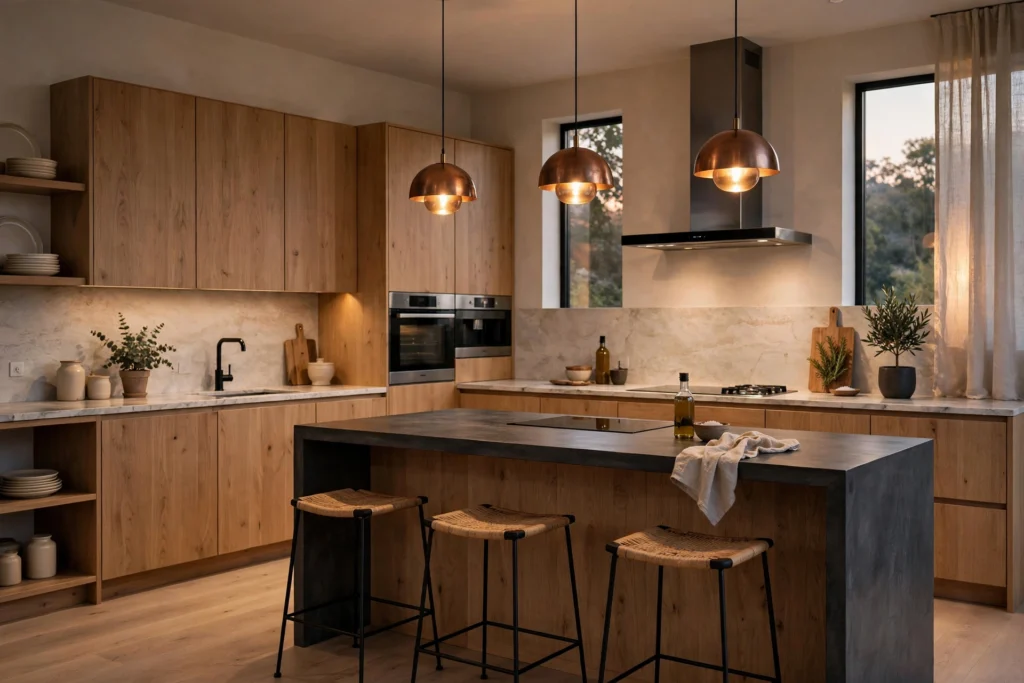
Wood kitchen cabinets offer something paint can’t: warmth, character, and a material that ages with dignity instead of just wearing out. Whether you go light white oak for a modern feel, rich walnut for luxury, or restain the honey oak you already own, the species and finish decisions here shape your kitchen’s personality more than any other choice.
Start with our kitchen cabinets buying guide for tier and construction basics, see how wood fits contemporary design in our modern kitchen cabinets guide, and if you’re working with existing cabinets, our kitchen cabinet remodel guide covers refacing, refinishing, and repainting.