
White kitchen cabinets are the most popular choice in America, and it’s not close. Walk through any new-build neighborhood and you’ll see them through every window. There’s a reason: white cabinets make kitchens feel bigger, brighter, and cleaner, they match literally everything, and they’ve survived every trend cycle for decades.
But “white” isn’t one color — it’s about fifty — and white cabinets come with real trade-offs that the showroom photos don’t show. This guide covers the shades worth knowing, what pairs with white cabinets, the honest pros and cons, and how to keep them looking clean without losing your mind.
Why White Cabinets Dominate (and Whether They Should)
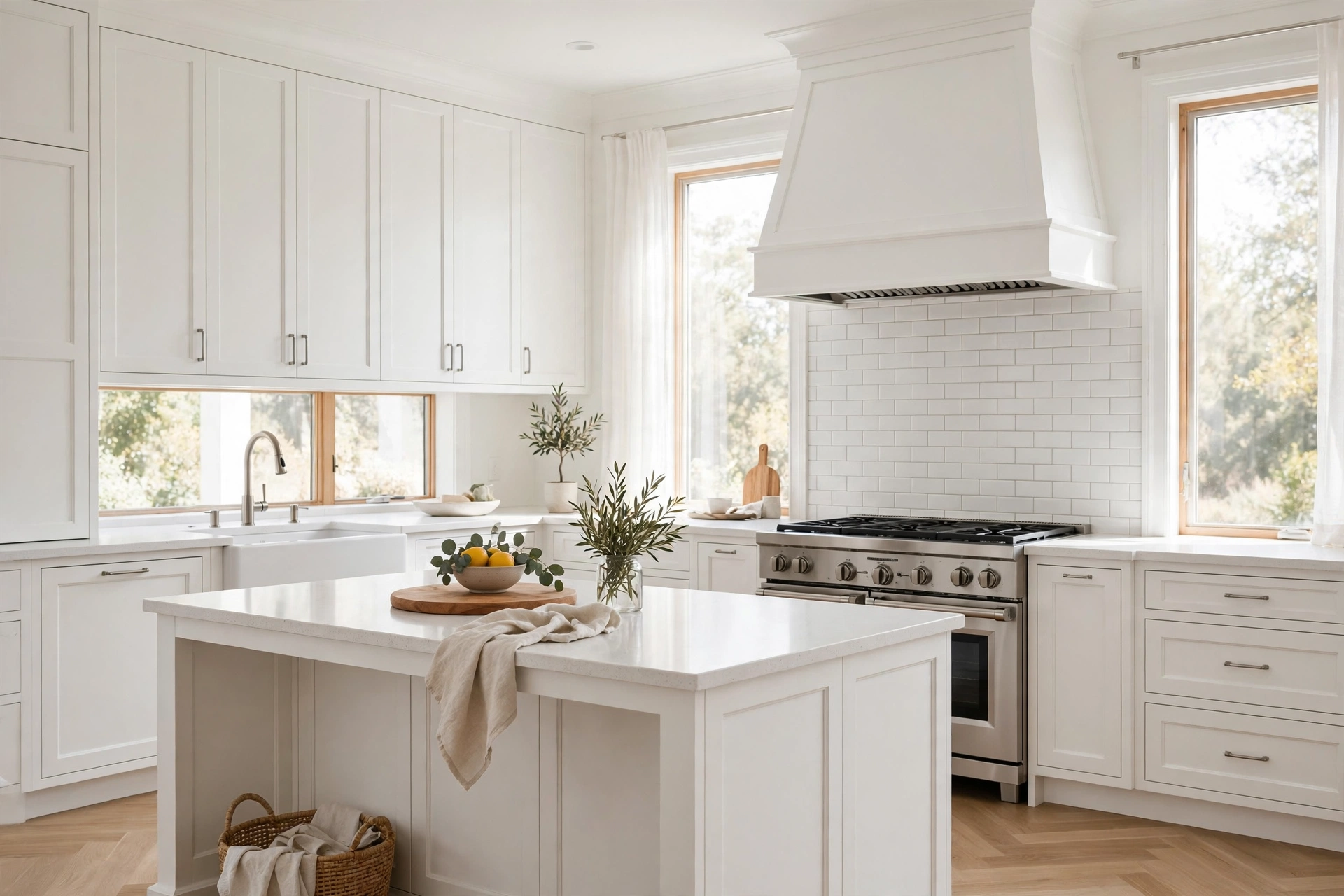
Let’s be fair about why white won. White reflects light, which makes small or dark kitchens feel larger and more open — that’s physics, not fashion. White is a neutral that works with every countertop material, every flooring type, every appliance finish. And white has never had a true “out” era: even when wood tones dominated the 2000s, white kitchens were still being built.
My honest take: white’s dominance is about 70% merit, 30% safety. It’s genuinely the most versatile choice, but it’s also the choice people make when they’re afraid of choosing wrong. If you truly love white, it’s perfect. If you’re choosing it because it feels like the “safe” option, at least consider whether a soft gray, warm greige, or natural wood might make you happier — safe and happy aren’t the same thing.
Shades of White: They’re Not All the Same
This is where white cabinet shopping gets tricky. “White” spans a spectrum, and the wrong undertone can make your kitchen feel cold, dingy, or mismatched.
Bright/pure white — crisp, clean, almost blue-white. Maximum brightness, very modern. Can feel stark or clinical in a kitchen with cool lighting; gorgeous with warm wood floors to balance it.
Soft white / off-white — white with a whisper of warmth. The most forgiving white — hides minor imperfections, feels welcoming rather than sterile. If you’re unsure which white to pick, start here.
Warm white / creamy white — noticeable yellow or beige undertones. Beautiful in traditional and farmhouse kitchens, especially with warm wood tones and brass hardware. Can look dingy next to cool gray countertops, so mind your pairings.
Gray-white — white with a cool gray undertone. Modern, sophisticated, pairs beautifully with gray counters and stainless appliances. In north-facing rooms with cool light, it can read as genuinely gray.
The undertone rule: match your white’s undertone to your fixed elements. Warm floors and warm counters → warm white. Cool gray counters and stainless → cooler white. Mixing warm white cabinets with cool gray counters is the most common white-kitchen mistake I see, and it makes both look dirty.
Lighting changes everything. Always — always — look at white samples in your kitchen, in daylight and at night under your actual bulbs. A white that looks perfect in the showroom can go yellow under warm LEDs or blue under daylight bulbs. This is the single most important step in choosing white cabinets, and it costs nothing.
White Kitchen Cabinet Ideas and Pairings
White cabinets are a canvas. Here’s how to paint on it:
Countertops: white quartz or marble-look quartz is the classic — clean, bright, timeless. Butcher block warms up white cabinets beautifully and adds texture. Dark granite or soapstone creates striking contrast (and hides stains). Honestly, white cabinets work with every countertop material; the question is what mood you want.
Backsplash: white subway tile is the default for a reason — it just works. For more interest: handmade-look zellige tile (subtle variation, gorgeous light play), patterned cement tile (for a focal wall), or a full-height quartz slab (seamless, modern, easy to clean).
Flooring: warm wood floors are white cabinets’ best friend — the contrast keeps the kitchen from feeling sterile. Light tile keeps things bright and airy. Dark floors create drama. Our kitchen flooring options guide covers what works best with light cabinetry.
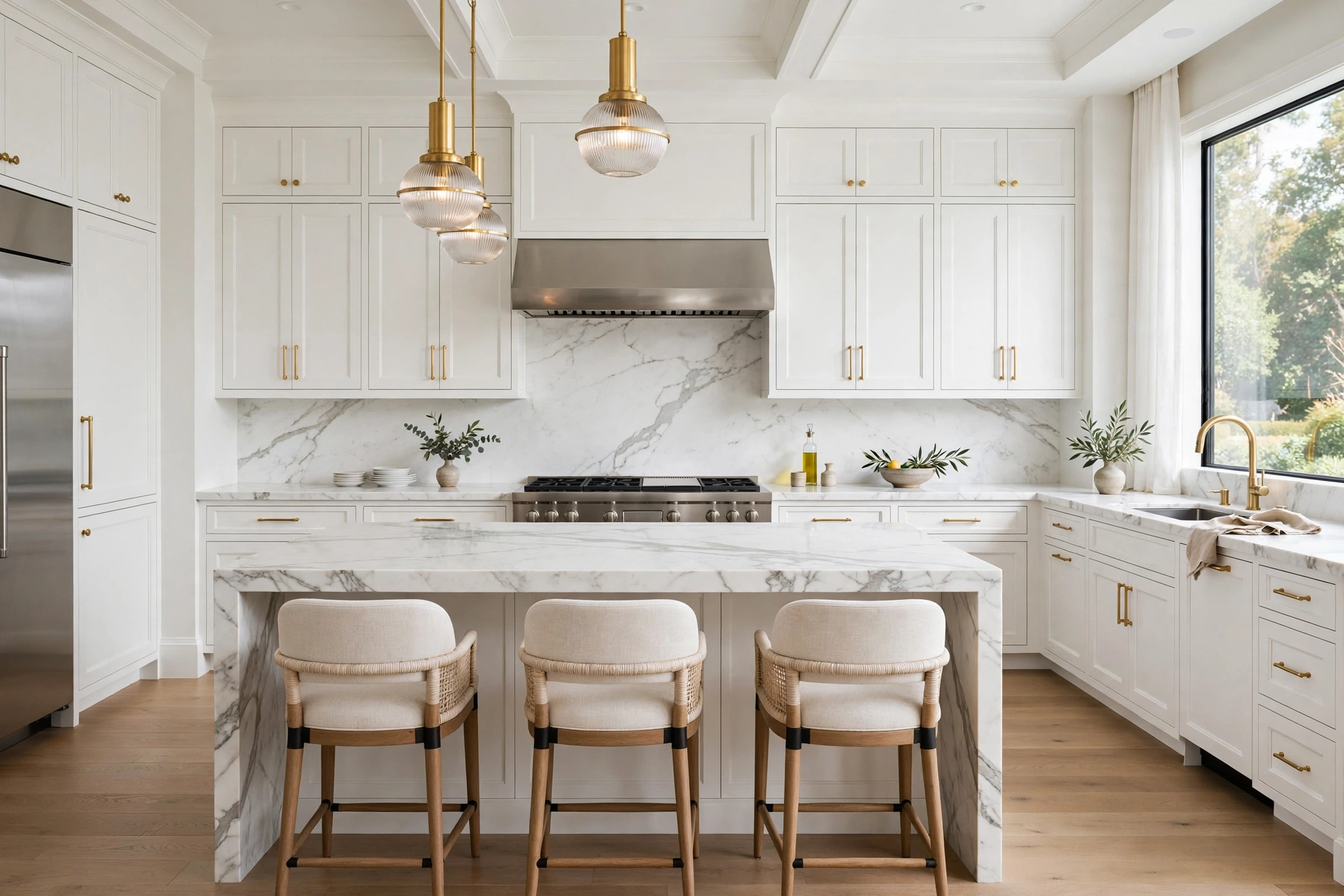
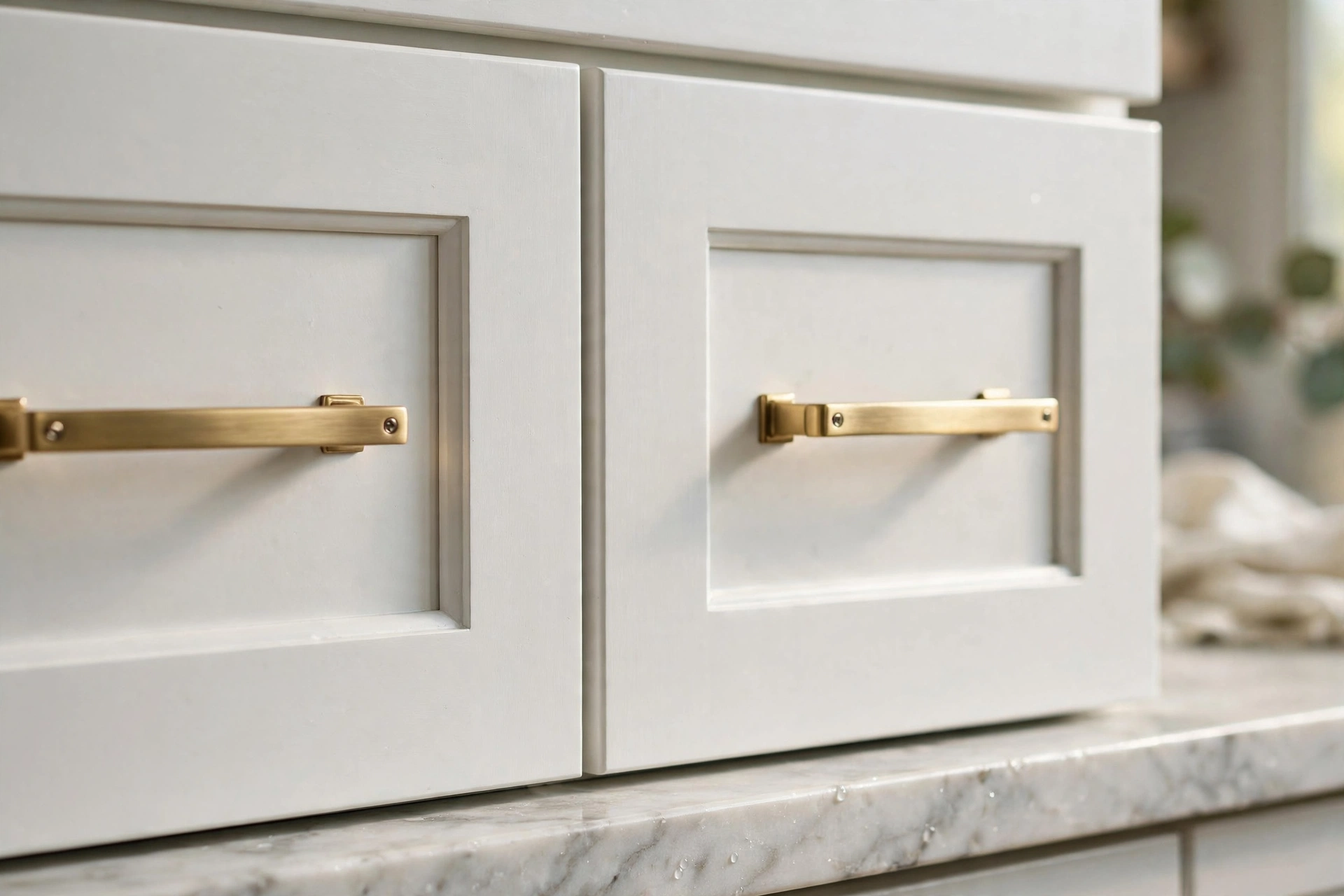
Hardware: this is where white kitchens get personality. Matte black hardware = modern contrast. Brushed brass or champagne bronze = warmth and elegance. Polished nickel = classic. Glass knobs = vintage charm. Don’t underestimate hardware — on white cabinets, it’s the jewelry.
Wall colors with white cabinets: the walls are your chance to add color without commitment. Soft gray, greige, pale blue, sage green — all beautiful with white cabinets. Warm white walls with white cabinets can work if the undertones match, but identical whites on cabinets and walls can feel flat; a slight contrast is usually better.
Gray and White Kitchen Cabinets
The gray-and-white combination deserves its own section because it’s practically a genre at this point.
Light gray lower cabinets with white uppers (or vice versa) adds depth while keeping the kitchen bright. It’s the training-wheels version of a two-tone kitchen — subtle, safe, and genuinely attractive.
Gray island with white perimeter cabinets is the most popular execution: the island becomes a furniture-like focal point, the perimeter stays bright and clean. This works in almost any kitchen with an island.
All-gray-and-white mixing — gray lowers, white uppers, gray island — can work in large kitchens but risks looking busy in small ones. Pick two placements max.
For the full gray story, see our gray kitchen cabinets guide and our two-tone kitchen cabinets guide for the design rules that make mixed colors work.
White Shaker Kitchen Cabinets: The Default (For Good Reason)
White shaker is the single most popular cabinet in the country — the versatile shaker door style in the versatile white color. It’s the choice that works in farmhouse, transitional, coastal, and even modern kitchens. If you want the deep dive on the door style itself, our shaker kitchen cabinets guide has you covered.
The combination works because shaker’s simple frame adds just enough detail to keep white from feeling flat, while white keeps shaker feeling fresh rather than traditional. It’s a genuinely great pairing, not just a popular one.
That said — if your whole neighborhood is white shaker, consider white shaker with an interesting twist: a contrasting island (navy, black, or wood tone), statement hardware, or a bold backsplash. Same timeless bones, less déjà vu.
The Honest Pros and Cons
Pros:
- Makes small/dark kitchens feel bigger and brighter
- Matches everything — counters, floors, appliances, present and future
- Timeless; never truly goes out of style
- Best resale appeal of any cabinet color
- Shows off hardware, backsplash, and decor beautifully
Cons:
- Shows dirt, grease, and fingerprints more than any other color
- Can feel stark or cold without warm accents
- Yellowing: oil-based finishes and sun exposure can yellow white cabinets over time (quality factory finishes resist this much better than DIY paint jobs)
- Every imperfection — dings, chips, uneven paint — is visible
- So popular it can feel generic without personal touches
My honest take on the cons: they’re all manageable except the “generic” one, and that’s solved with hardware, lighting, and styling — not by abandoning white. The maintenance is real but it’s wiping, not repairing. White cabinets don’t fail; they just ask to be cleaned.
How to Keep White Cabinets Looking Clean
White cabinets aren’t actually harder to maintain — they just show what other colors hide. A few habits keep them pristine:
Daily: wipe the cabinets around the stove and sink with a damp microfiber cloth. Thirty seconds prevents grease from building up into a project.
Weekly: wipe all door fronts and drawer fronts with warm water and a drop of dish soap. Dry immediately — standing water is the enemy of every finish.
For grease buildup: a paste of baking soda and water, applied gently with a soft cloth, cuts through kitchen grease without harming the finish. Avoid abrasive scrubbers and harsh chemicals — they’ll dull the finish faster than the grease would.
What NOT to do: don’t use bleach, ammonia-based cleaners, or abrasive pads on painted white cabinets. Don’t steam-clean them (moisture + heat can soften finishes). And don’t ignore chips — touch up paint chips promptly with the manufacturer’s touch-up kit before moisture gets underneath.
The yellowing question: quality factory-applied catalyzed finishes resist yellowing well. The yellowing horror stories almost always involve DIY latex paint jobs, oil-based paints, or heavy cooking grease + cigarette smoke over years. If your white cabinets are yellowing, it’s usually grease film, not the finish — a thorough degreasing often fixes it.
White Cabinet Costs
White doesn’t inherently cost more or less than other painted colors — paint is paint. What affects cost:
- RTA white shaker: $1,500–$5,000 for a 10×10 kitchen — the budget champion.
- Stock white: $3,000–$8,000 — widely available, easy to find.
- Semi-custom white: $8,000–$18,000 — custom white shades and finishes.
- Custom white: $18,000–$35,000+ — including furniture-grade painted finishes.
One cost note: white shows application flaws mercilessly, so cheap paint jobs look cheaper in white than in any other color. If you’re painting existing cabinets white (rather than buying factory-finished), the prep work matters enormously — or consider refacing. Our kitchen cabinet remodel guide covers the repaint-vs-reface decision.
Full pricing details in our kitchen cabinet costs guide.
Frequently Asked Questions
What is the most popular white for kitchen cabinets? Soft, slightly warm whites dominate — think shades like Benjamin Moore’s White Dove or Simply White (to name the type, not to prescribe a brand). Bright stark whites are popular in modern kitchens; creamy whites in farmhouse and traditional spaces. The “best” white depends entirely on your lighting and fixed elements.
Do white kitchen cabinets go out of style? White cabinets have been popular for decades and have never had a true downturn — they’re a neutral, not a trend. Specific executions date (the all-white-everything kitchen of 2015 feels a bit sterile now), but white cabinets themselves remain perpetually current, especially when paired with current hardware and styling.
Are white cabinets hard to keep clean? They show dirt more than darker colors, but they’re not harder to clean — a wipe with a damp cloth handles daily grime. The maintenance is about frequency, not difficulty. Families with young kids sometimes prefer light gray or wood tones purely to reduce visible smudges between cleanings.
What wall color goes with white kitchen cabinets? Almost anything. Safe bets: light gray, greige, pale blue, sage green. Bold options: navy accent wall, deep green, even black in the right space. Avoid: stark white walls in the exact same shade (feels flat) and colors that clash with your white’s undertone.
Should all my kitchen cabinets be white? Not necessarily. A contrasting island — navy blue, black, or natural wood — with white perimeter cabinets is one of the most attractive and popular kitchen designs going. Our two-tone kitchen cabinets guide and blue kitchen cabinets guide have ideas.
Do white cabinets make a kitchen look bigger? Yes — white reflects more light than any other color, which genuinely makes spaces feel larger and more open. It’s the most effective color choice for small or poorly-lit kitchens, though it can’t compensate for bad lighting on its own.
The Bottom Line
White kitchen cabinets are popular because they work — bright, versatile, timeless, great for resale. The trade-off is maintenance visibility and the risk of feeling generic, both solvable with good hardware, thoughtful pairings, and honest cleaning habits. Choose your white by undertone, check it in your lighting, and don’t be afraid to break up the white with a contrasting island or bold backsplash.
Explore the alternatives: blue kitchen cabinets for drama, gray kitchen cabinets for forgiving neutrality, or two-tone kitchen cabinets for the best of both worlds. And start any cabinet project with our complete buying guide.
Pingback: Blue Kitchen Cabinets: Complete Guide