
Shaker kitchen cabinets are the plain white t-shirt of kitchen design. Simple, goes with everything, never really goes out of style — and like the white t-shirt, the simplicity is deceptive. There’s a reason shaker has been the best-selling cabinet style in America for over a decade, and it’s not just herd mentality.
This guide covers what shaker cabinets actually are, why they work in so many kitchens, the colors and wood options worth considering, what they cost, and where the style shines (plus the one kitchen where I’d talk you out of it).
What Are Shaker Kitchen Cabinets?
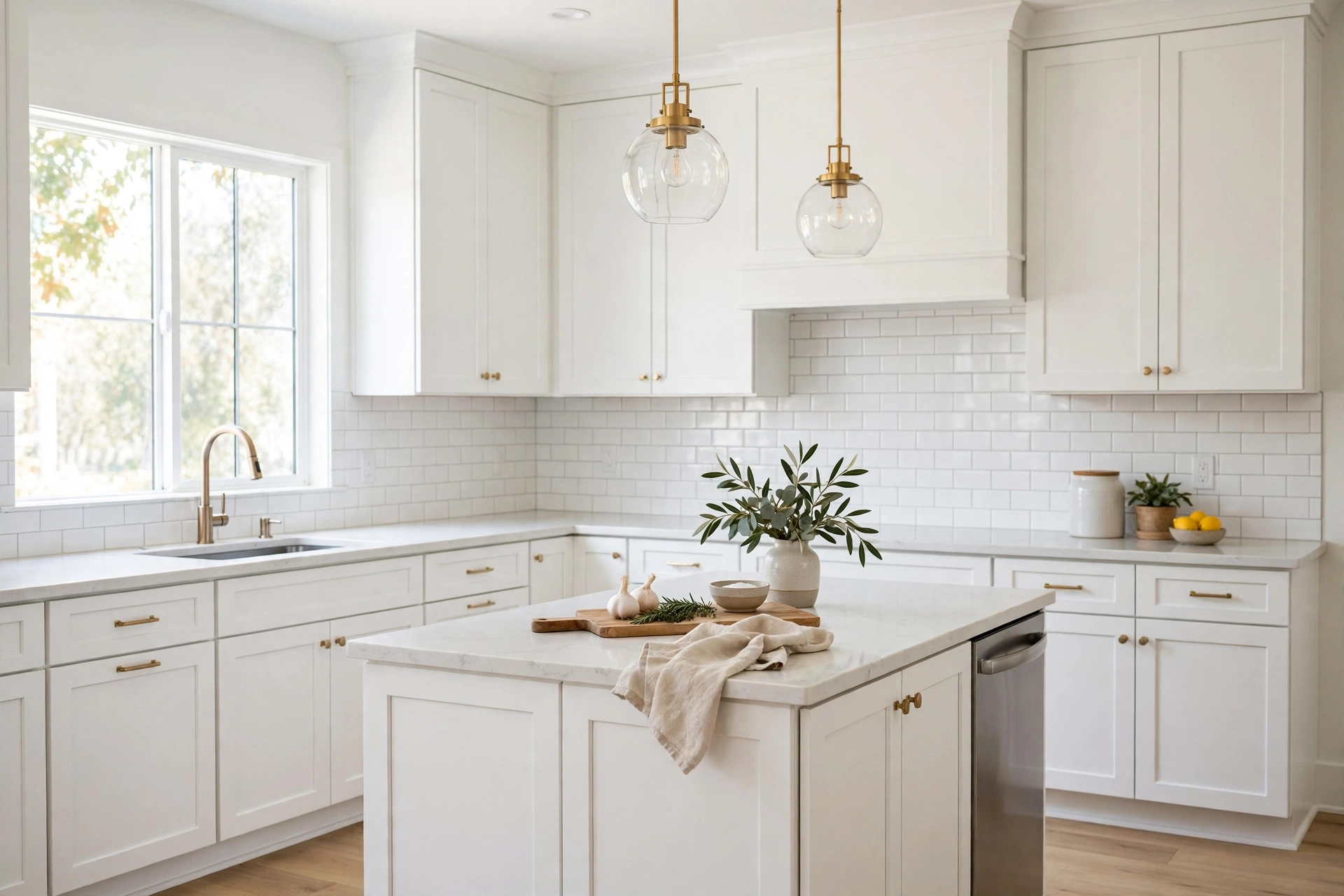
A shaker cabinet door is almost aggressively simple: a flat center panel recessed inside a four-piece frame, with clean square edges and no ornamentation. That’s it. No raised panels, no carvings, no curves — just a frame and a panel.
The style comes from the Shakers, an 18th-century religious sect famous for furniture built on principles of simplicity, utility, and honest craftsmanship. Their aesthetic — clean lines, no decoration, everything serving a purpose — translates to cabinet doors almost perfectly. The irony that a style born from religious austerity became the default choice of suburban America is not lost on me, but here we are.
The anatomy: the frame consists of two vertical stiles and two horizontal rails joined at square corners, surrounding a flat recessed center panel. The frame is typically 2 to 2.5 inches wide. On quality shaker doors, the center panel “floats” inside grooves in the frame, which lets the wood expand and contract with humidity without cracking — a small engineering detail that separates good shaker doors from cheap ones.
Why Shaker Cabinets Became So Popular
Three reasons, and they’re all practical:
1. They match everything. Shaker’s clean lines sit comfortably in farmhouse kitchens, transitional spaces, coastal designs, and even modern kitchens (especially in flat, matte finishes). It’s the only door style I’d confidently recommend without seeing the kitchen first. Try that with raised-panel cherry.
2. They’re easy to clean. No crevices, no carvings, no routed details for grease to hide in. A quick wipe and you’re done. Anyone who’s scrubbed grease out of ornate raised-panel grooves near a stove understands this viscerally.
3. They don’t date. Trendy styles have a 7-to-10-year fashion cycle. Shaker has been dominant since roughly 2010 with no sign of fading, because it’s not really a trend — it’s a neutral. It’s the cabinet equivalent of hardwood floors: always acceptable, rarely the thing that dates a kitchen.
My honest take: shaker’s popularity is 80% deserved and 20% default-choice laziness. It’s genuinely versatile and practical. But if everyone on your street has white shaker cabinets, there’s a real argument for doing shaker in an interesting color or wood tone instead of default white — same timeless bones, less cookie-cutter.
Shaker Cabinet Colors: Beyond Basic White
White shaker is the default, but it’s far from the only option — and honestly, some of the best-looking shaker kitchens aren’t white at all.
White shaker kitchen cabinets remain the most popular choice for good reason: they brighten small kitchens, match any countertop, and make resale easy. Our full white kitchen cabinets guide covers shades, pairings, and maintenance in detail. The one caveat: white shows everything — grease splatter, fingerprints, coffee drips. Beautiful, but high-maintenance near the cooktop.
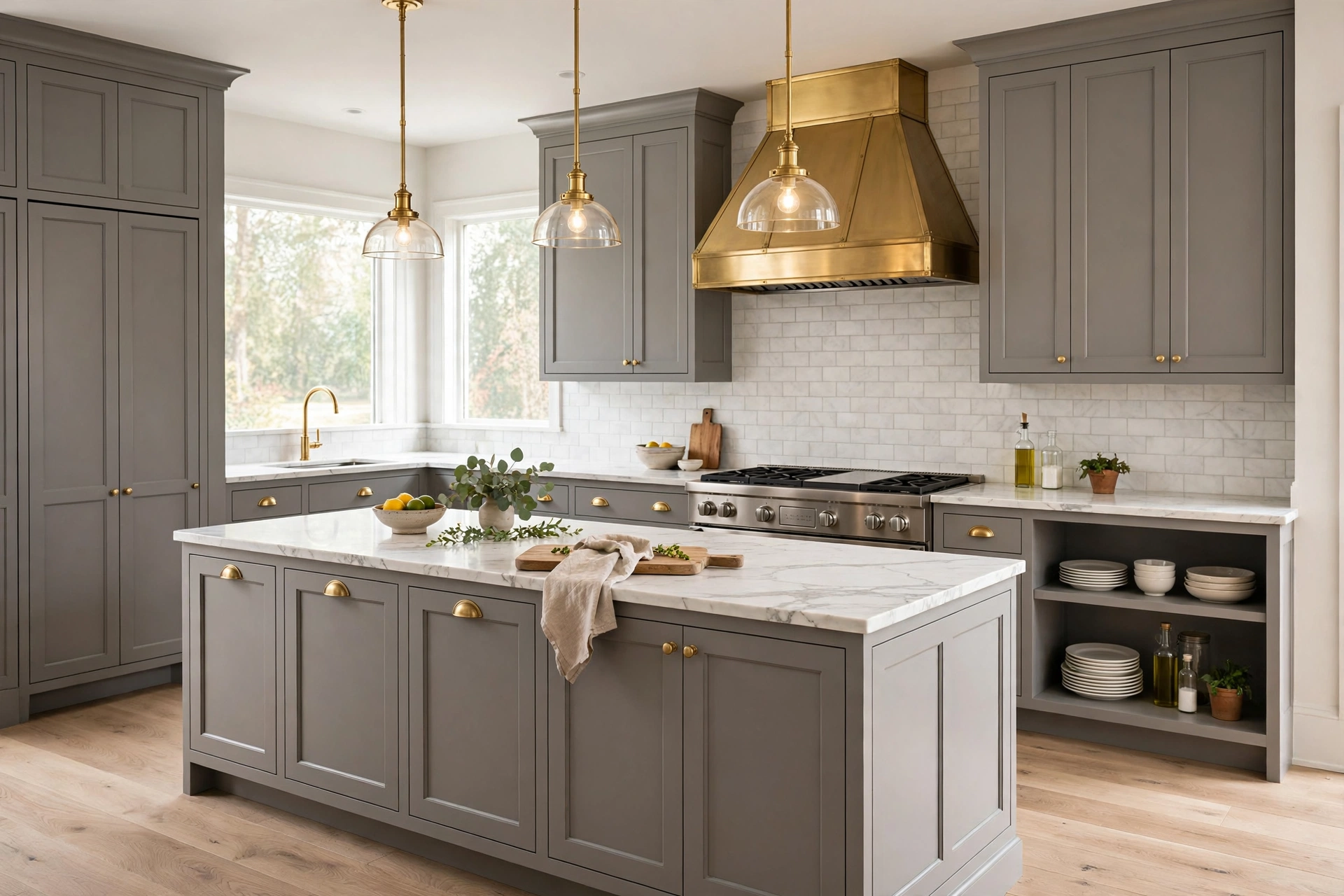
Gray shaker is white’s slightly more forgiving sibling. Light gray hides smudges better while keeping the airy feel. Dark gray (almost charcoal) shaker looks stunning with brass hardware and marble-look counters. See our gray kitchen cabinets guide for the full breakdown.
Navy blue shaker has been the “interesting but safe” choice for years now — dramatic without being weird, classic enough to age well. It pairs beautifully with white uppers in a two-tone setup (more on that in our two-tone kitchen cabinets guide).
Sage green and muted greens are the current moment’s favorite — earthy, calm, and surprisingly neutral. They work especially well with butcher-block counters and brass hardware.
Black shaker is bold and modern-farmhouse. It demands good lighting and a big enough kitchen — in a small dark kitchen, black shaker will feel like a cave. In the right space, it’s spectacular.
Natural wood shaker (white oak, maple, walnut) is having a real moment. The simple shaker frame lets the wood grain be the star. White oak shaker with a clear finish might be the single best-looking cabinet option on the market right now, in my opinion.
Wood Options for Shaker Cabinets
Since shaker doors are so simple, the material choice matters more than with ornate styles — there’s nowhere for cheap materials to hide.
Painted shaker (MDF or maple frame): the most common. MDF center panels with solid wood frames are standard in mid-range lines — the MDF takes paint smoothly and won’t crack like a solid wood panel might. For painted shaker, this is actually the better construction, not a cheap-out.
Maple shaker: the workhorse. Fine, subtle grain that takes both paint and stain beautifully. If you’re staining shaker doors, maple gives you a clean, contemporary wood look.
Oak shaker: strong grain character, very traditional. Red oak was the 90s default; white oak is the current favorite — tighter grain, takes stain more evenly, looks modern in a way red oak doesn’t.
Cherry shaker: rich, darkens with age, gorgeous — and expensive. Cherry shaker in a craftsman-style home is about as classic as kitchens get.
Hickory shaker: dramatic grain with lots of color variation. Rustic and full of character; too busy for some tastes, perfect for others.
Walnut shaker: the luxury pick. Deep brown, subtle grain, unmistakably high-end. Priced accordingly.
For a deeper comparison of every species — cost, durability, how each takes stain — see our wood kitchen cabinets guide.
What Do Shaker Kitchen Cabinets Cost?
Shaker sits in the middle of the pricing spectrum — not the cheapest door style, not the priciest. The simple construction keeps manufacturing costs reasonable.
- RTA shaker: $1,500–$5,000 for a 10×10 kitchen. White shaker RTA is probably the single best value in all of cabinetry — decent plywood boxes, solid shaker doors, soft-close hardware, for the price of a used car.
- Stock shaker: $3,000–$8,000. Available everywhere; quality varies by line, so check the box construction.
- Semi-custom shaker: $8,000–$18,000. Where you get the interesting colors and modifications.
- Custom shaker: $18,000–$35,000+. Inset shaker (doors flush with the frame) lives here and costs 30–50% more than overlay shaker for the precision labor.
Price factors specific to shaker: painted finishes add cost over stained (more labor); inset construction adds a lot; wider stiles/rails (a chunkier shaker look) can add a bit. The kitchen cabinet costs guide has the full pricing picture.
Shaker Cabinet Door Details Worth Knowing
Not all shaker doors are created equal. When you’re comparing, look at:
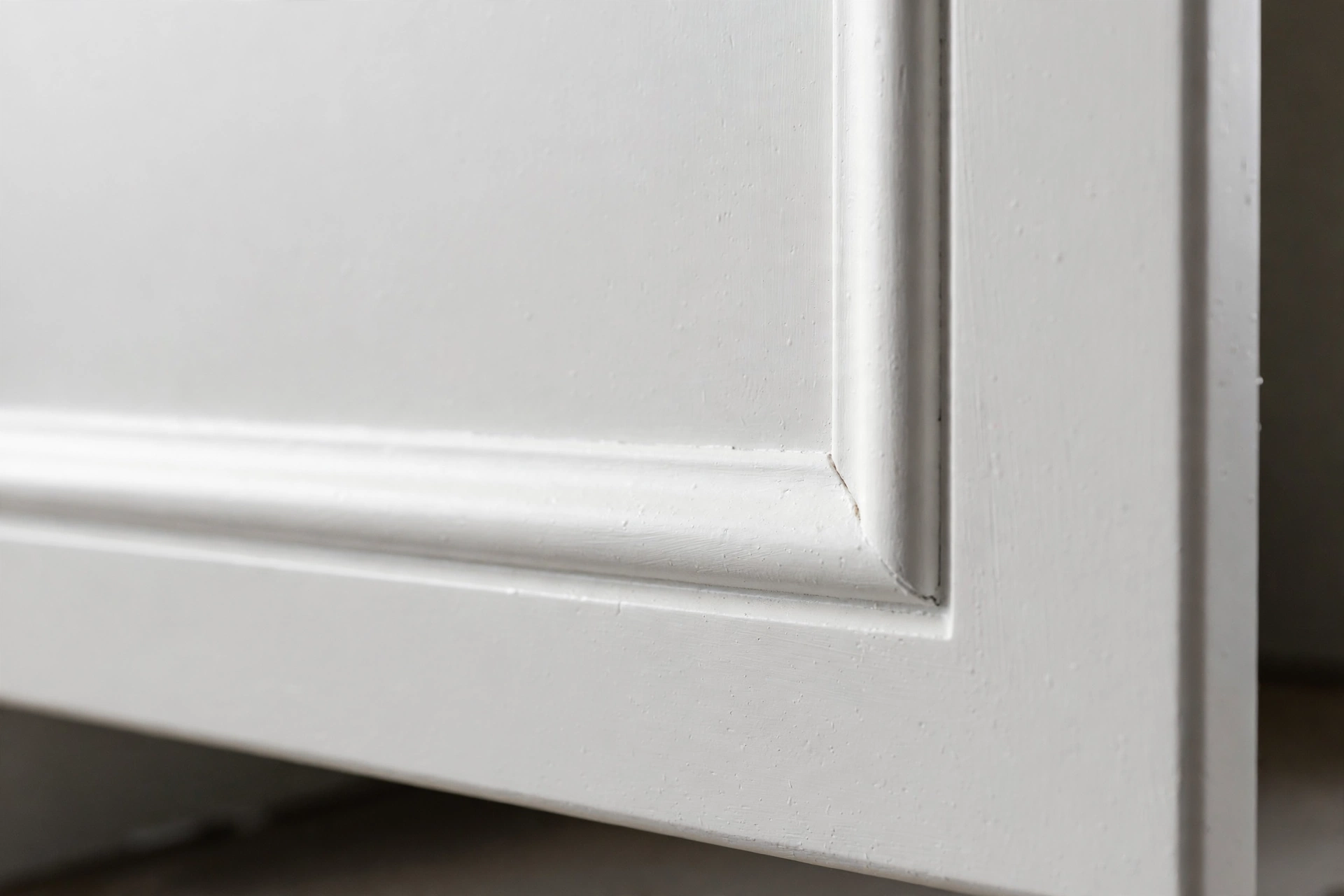
Panel construction: a true shaker door has a floating flat panel. Cheap versions use a routed-out MDF door that looks like shaker from the front — fine for painted applications, but check the back. If the back is flat with no frame detail, it’s a slab with a shaker face routed in. It’ll look fine; just don’t pay true-shaker prices for it.
Edge profile: the inside edge of the frame can be square (crisp, modern) or slightly eased/rounded (softer, more traditional). Square edges chip more easily but look sharper. This tiny detail changes the whole feel.
Rail width: standard shaker rails are about 2–2.5 inches. Wider rails (3+ inches) give a bolder, more craftsman look; narrower rails read more contemporary.
Finish quality: on painted shaker, run your finger along the inside corner where the panel meets the frame. Smooth with no paint buildup or cracking = good factory finish. Rough or cracked = the paint will fail there first.
Our kitchen cabinet doors guide covers door construction across all styles if you want to go deeper.
Where Shaker Style Works Best (and Where It Doesn’t)
Shaker excels in: farmhouse and modern-farmhouse kitchens, transitional spaces, coastal/beachy designs, craftsman homes, and just about any kitchen where you want the cabinets to support the design rather than dominate it. It’s also the safest choice for resale — the broadest buyer appeal of any style.
Think twice when: your kitchen is ultra-modern minimalist (flat-panel slab doors will look more intentional), or ultra-traditional formal (raised panel or inset with beading suits the architecture better). Shaker works in both, but it’s not the best choice in either — it’s the compromise choice. Sometimes the compromise is exactly right; sometimes you should commit to the style.
The one kitchen where I’d talk you out of shaker: a very small, very dark kitchen where you’re doing white shaker because you think you should. White shaker in a cave-like kitchen doesn’t fix the lighting — it just gives you white cabinets in a dark room. Fix the lighting first (under-cabinet LEDs, lighter counters, better bulbs), then choose the cabinet color.
Styling Shaker Cabinets: Hardware and Pairings
Shaker’s simplicity makes it a perfect canvas for hardware — and hardware is where shaker kitchens get their personality.
- Modern: slim bar pulls in matte black or brushed brass, flat and minimal.
- Farmhouse: cup pulls on drawers, round knobs on doors, oil-rubbed bronze or aged brass.
- Transitional: simple knobs or short bar pulls in polished nickel or champagne bronze.
- Coastal: glass or ceramic knobs, light finishes, airy feel.
Countertop pairings: shaker works with everything, but the classics are classics for a reason — white shaker with marble-look quartz, gray shaker with butcher block, navy shaker with white quartz and brass. For wood-tone shaker, keep counters simple; the wood is already doing the visual work.
Frequently Asked Questions
Are shaker kitchen cabinets going out of style? No — and they’ve survived long enough that “timeless” is now a fair description, not just marketing. Styles that last 15+ years as the top seller have crossed from trend to standard. That said, the all-white shaker kitchen is less dominant than it was in 2015; colored and wood-tone shaker is where the style is evolving.
What is the difference between shaker and raised panel cabinets? Shaker has a flat recessed center panel with clean square edges — simple and versatile. Raised panel has a center panel that’s raised and often beveled or contoured — more formal and traditional. Shaker suits more kitchen styles; raised panel suits traditional and classic designs specifically.
Are shaker cabinets more expensive than flat-panel? Roughly comparable, with shaker sometimes slightly more due to the frame-and-panel construction versus a simple slab. In RTA and stock lines the difference is negligible. In custom work, intricate flat-panel with edge detailing can actually cost more.
Do white shaker cabinets show dirt? Yes — white shows grease, fingerprints, and splatter more than any other color. It’s the price of the bright, clean look. A good factory finish wipes clean easily, so it’s maintenance, not permanent damage. Keep a microfiber cloth handy near the stove.
Can you mix shaker with other door styles? Absolutely — shaker lowers with glass-front uppers is a classic combination. Shaker perimeter with flat-panel island is a sharp modern mix. The rule: keep one style dominant (70%+) and use the second as an accent, and keep the finish palette tight.
The Bottom Line
Shaker kitchen cabinets earned their dominance the hard way: they’re versatile, practical, easy to clean, and they don’t date. Whether you go classic white, moody navy, or natural white oak, the simple frame-and-panel design gives you a kitchen that looks intentional without shouting.
Pair this guide with our white kitchen cabinets guide if you’re leaning white, browse kitchen cabinet doors for construction details, and check kitchen cabinet costs before you fall in love with a $30,000 inset shaker kitchen on a $12,000 budget.
Pingback: White Kitchen Cabinets: Complete Guide