
Every kitchen has the same problem: dry goods multiply. Cans, boxes, bags, bottles — they start in a neat little row and end up in an avalanche every time you reach for the pasta. A pantry cabinet is the fix. It’s the tall, deep storage workhorse that gives every box and can a visible, reachable home.
Pantry cabinets come in more varieties than most people expect: tall built-ins that look like part of the cabinetry, freestanding armoires you can take with you when you move, narrow pull-outs that slide out of a 12-inch gap, and full walk-in pantries for the lucky. This guide covers every type, the sizes that matter, how to organize them so they stay organized, what they cost, and where to put one in your layout.
Types of Kitchen Pantry Cabinets
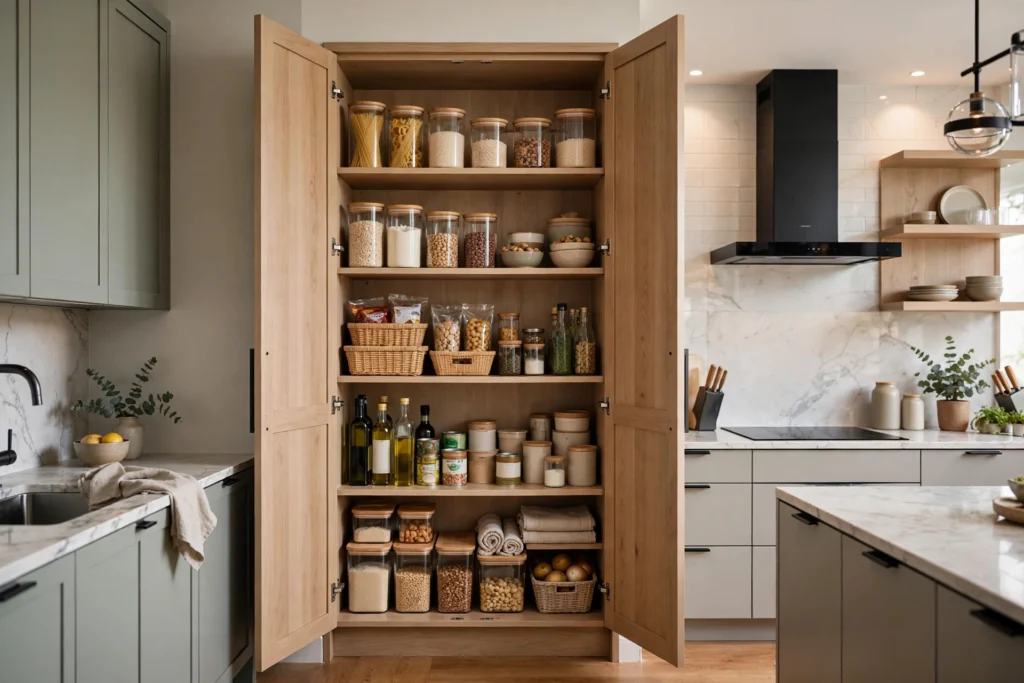
Tall built-in pantry cabinet. The classic: a floor-to-near-ceiling cabinet, 18″–24″ wide and 84″–96″ tall, finished to match your other cabinets. It looks like it was always part of the kitchen because it was. This is the best option if you’re remodeling or building — maximum storage, seamless look.
Freestanding pantry cabinet. A standalone armoire-style piece — basically furniture. No installation, no commitment. Perfect for renters or anyone who wants pantry storage without a remodel. The downside: they rarely match your cabinets, the depths are shallower (often 12″–16″), and tall narrow ones can tip — anchor them to the wall, especially with kids around.
Pull-out pantry. A tall, narrow cabinet (usually 9″–18″ wide) where the entire shelving unit slides out on heavy-duty tracks. Every shelf is visible at once — no more losing cans in the back. Brilliant for narrow gaps next to the fridge or range. The hardware costs more, but the usability is unmatched.
Corner pantry. Uses a corner of the kitchen — either a built-in corner cabinet with a Lazy Susan or a small walk-in carved from dead corner space. Great use of awkward square footage.
Walk-in pantry. Not a cabinet at all, but worth mentioning: a small closet or room off the kitchen with shelving on three sides. If you’re building or doing a major remodel and have the space, a walk-in beats every cabinet option for bulk storage. It doesn’t have to be big — even a 4×4-foot closet transforms a kitchen.
Pantry closet conversion. The budget hero: convert an existing nearby coat or broom closet with adjustable shelving, door racks, and good lighting. Costs almost nothing and works surprisingly well.
My honest take: if you’re remodeling, build in a tall pantry cabinet (or two) to match your cabinetry. If you’re not remodeling, a good freestanding pantry plus door racks gets you 80% of the way there for 10% of the cost.
Standard Pantry Cabinet Sizes
Tall pantry cabinets follow the same 3-inch increment system as the rest of the kitchen:
- Width: 12″ to 36″, in 3-inch increments. The sweet spots: 18″ (fits most kitchens, holds a surprising amount) and 24″ (the family-size pantry). 12″–15″ works for pull-outs; 30″–36″ is serious bulk storage.
- Height: 84″, 90″, or 96″. Match your ceiling and your other tall cabinets (oven cabinets, fridge surrounds). On 8-foot ceilings, 90″–96″ gets you near the top.
- Depth: 12″ to 24″. Here’s the key decision: 18″ deep is the practical sweet spot — deep enough for two rows of cans, shallow enough that nothing disappears. 24″ deep matches base cabinet depth for a flush, built-in look, but the back row becomes a black hole without pull-out shelves. 12″ deep is perfect for single-row can and spice storage — everything visible, nothing hidden.
Depth honesty check: a 24″-deep pantry with fixed shelves will waste the back 8 inches. If you go 24″ deep, budget for pull-out shelves or a pull-out unit — otherwise buy the 18″.
Built-In vs. Freestanding: Which Should You Get?
| Built-in pantry | Freestanding pantry | |
|---|---|---|
| Look | Seamless, matches cabinetry | Furniture piece, may not match |
| Storage | Maximum for the footprint | Good, usually shallower |
| Installation | Professional install, part of remodel | Set it down, anchor to wall, done |
| Cost | $400–$2,500+ per cabinet | $100–$800 |
| Moves with you | No | Yes |
| Best for | Remodels, new builds, forever homes | Renters, quick fixes, tight budgets |
There’s no wrong answer — just the right answer for your situation. A renter who buys a $2,000 built-in pantry is making a donation to their landlord.
Organizing a Pantry Cabinet So It Stays Organized
A pantry without a system becomes a junk drawer the size of a refrigerator. The system doesn’t have to be complicated:
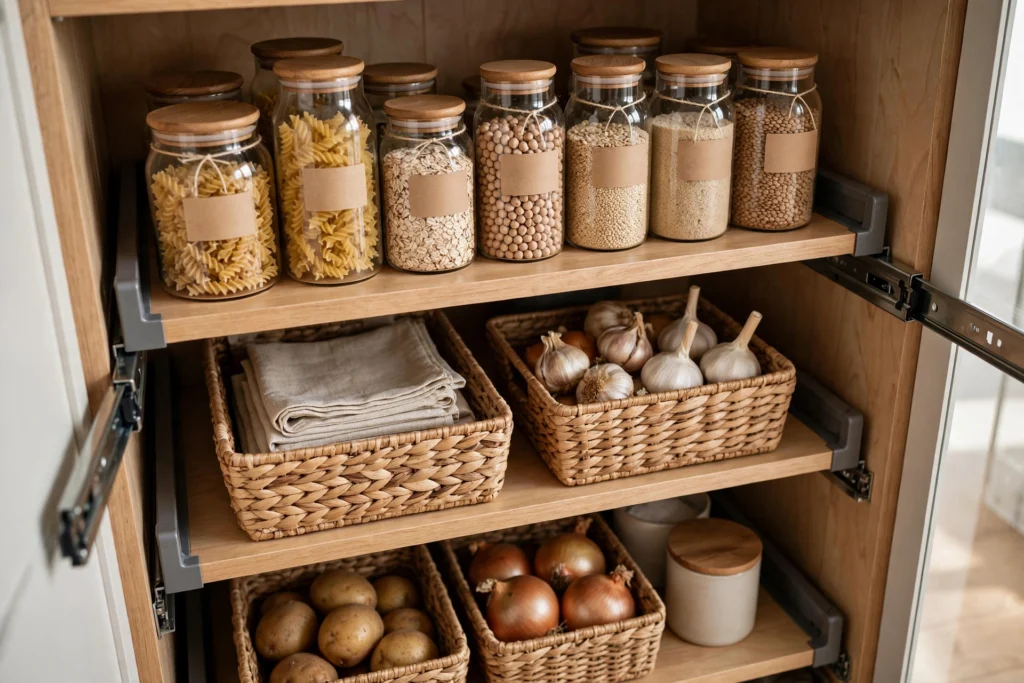
Zone it. Top shelf: rarely used (holiday baking, bulk overflow). Eye-level shelves: daily items (pasta, rice, cooking oils, snacks). Middle-low: heavy items (canned goods, jars — low because they’re heavy). Bottom: bulky items (paper towels, pet food, small appliances). Door racks: spices, packets, small bottles.
Decant the chaos. Bags of flour, sugar, rice, and cereal go into clear airtight containers. This single move does three things: keeps food fresher, makes quantities visible, and stops the avalanche of half-open bags. Square containers waste less space than round ones.
Use bins as drawers. On deep shelves, group categories into open bins or baskets — “baking,” “snacks,” “canned tomatoes.” You pull out the bin instead of excavating the shelf. Label them; future-you is forgetful.
Pull-out shelves for deep pantries. If your pantry is 18″+ deep with fixed shelves, aftermarket pull-out shelves (about $50–$120 each) convert dead back-of-shelf space into usable storage. Highest-impact pantry upgrade there is.
Door-mounted racks. The inside of the pantry door is free real estate — slim racks hold spices, packets, and bottles. $15–$40, ten minutes to install.
Light it. Pantries are dark. A $15 battery-powered motion-sensor LED light inside the cabinet changes everything — you can actually see what’s in there.
The one-in-one-out rule. Pantries grow because things enter and never leave. When you buy the new olive oil, the old bottle’s days are numbered. Twice a year, pull everything out, toss the expired, and wipe the shelves. It takes 30 minutes and resets the whole system.
For more storage ideas beyond the pantry — appliance garages, pull-outs, organizers that actually work — my kitchen storage cabinets guide goes deeper.
Where to Put a Pantry Cabinet in Your Layout
Location matters as much as size:
- Near the fridge, not the range. The pantry-to-fridge trip happens constantly (ingredients out, leftovers in). The pantry-to-range trip happens once per meal. Prioritize the fridge.
- At the end of a cabinet run. Tall cabinets anchor the end of a run visually — they look intentional there and don’t break up your counter workspace.
- Near the kitchen entrance. Groceries go from bags to pantry in the shortest possible trip. If your kitchen has a “landing zone” near the door or garage entry, that’s prime pantry territory.
- Not in the work triangle. A tall pantry in the middle of the sink-range-fridge triangle creates a traffic obstacle. Keep the triangle clear.
- Consider the door swing. Pantry doors need clearance to open fully — check that they won’t hit the fridge door, the island, or a walkway.
What Pantry Cabinets Cost
Built-in pantry cabinets (cabinet only, before installation):
- Stock: $300–$800 for an 18″–24″ wide tall cabinet
- Semi-custom: $600–$1,500
- Custom: $1,200–$3,000+
- Pull-out pantry hardware: add $200–$600 for the slide-out unit
- Installation: usually bundled with the kitchen install; standalone, figure $150–$400 per tall cabinet
Freestanding pantry cabinets:
- Budget (flat-pack, 12″–16″ deep): $100–$300
- Mid-range (solid wood or good MDF, 15″–20″ deep): $300–$600
- Premium (furniture-grade): $600–$1,200+
Organization add-ons: pull-out shelves $50–$120 each, door racks $15–$40, airtight container sets $30–$60, LED lights $15–$30. A fully kitted-out pantry costs $150–$400 in organizers — money well spent.
Small Kitchen? Pantry Alternatives
No room for a tall cabinet? You still have options:
- A 12″ pull-out squeezed next to the fridge or range — 12 inches of width you didn’t know you had.
- Deep drawer bases in your base cabinets — a 36″ wide 3-drawer base holds as much dry goods as a small pantry, and it’s all visible.
- Over-the-fridge cabinet with pull-down shelving for bulk overflow.
- A rolling kitchen cart with shelves — pantry, island, and serving cart in one. Genuinely useful in tiny kitchens.
Kitchen Pantry Cabinets: FAQs
What is the standard size of a kitchen pantry cabinet?
18″–24″ wide, 84″–96″ tall, and 12″–24″ deep. The most common single pantry is 24″ wide × 96″ tall × 24″ deep in new builds, or 18″ × 90″ × 18″ in remodels where space is tighter.
How deep should a pantry cabinet be?
18 inches is the sweet spot — deep enough for two rows of cans, shallow enough to see everything. 24″ deep needs pull-out shelves to avoid wasting the back. 12″ deep is ideal for single-row spice and can storage.
Are freestanding pantry cabinets worth it?
For renters and quick fixes, absolutely — $100–$600 gets you real pantry storage with zero installation. Anchor tall units to the wall for safety. They won’t match built-in cabinetry, but they don’t need to.
How do I organize a deep pantry cabinet?
Zone by frequency (daily at eye level, heavy low, rare up top), decant dry goods into clear square containers, use bins as pull-out drawers on deep shelves, add door racks and a motion-sensor light. Pull-out shelves are the best upgrade for pantries deeper than 18″.
Where should a pantry go in the kitchen?
Near the fridge and the kitchen entrance, at the end of a cabinet run, outside the main work triangle. Groceries should travel the shortest path from door to shelf.
Can I add a pantry cabinet to an existing kitchen?
Yes — if you have 18″–24″ of width at the end of a cabinet run or on an empty wall. A matching stock tall cabinet plus a bit of trim blends in surprisingly well. No matching cabinets available? A freestanding pantry is the zero-commitment alternative.
Walk-in pantry vs. pantry cabinet — which is better?
A walk-in wins on capacity and usability if you have the space (even 4×4 feet works). A pantry cabinet wins on cost and simplicity. In a remodel with room to spare, the walk-in is worth stealing space for.
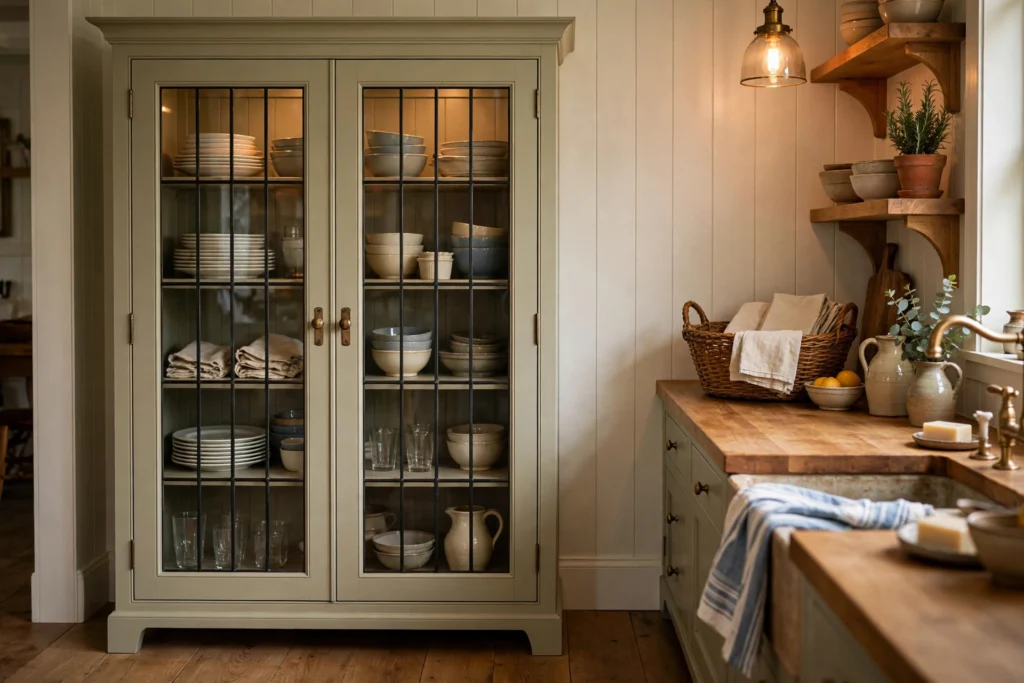
The best pantry is the one you’ll actually maintain — which means visible, reachable, and zoned by how you really cook. Get the depth right, light it, decant the bags, and the avalanche days are over.
Pingback: Kitchen Storage Cabinets: Complete Guide