
Commercial flooring is a different sport from residential. The traffic is 10x, the liability concerns are real, the maintenance happens at scale, and the floor has to look professional for years while hundreds of people abuse it daily. What works in your living room will fail in a retail store within months.
This guide covers the materials built for commercial use, how durability ratings work, what to choose for offices, retail, and rentals, real costs, and the maintenance reality.
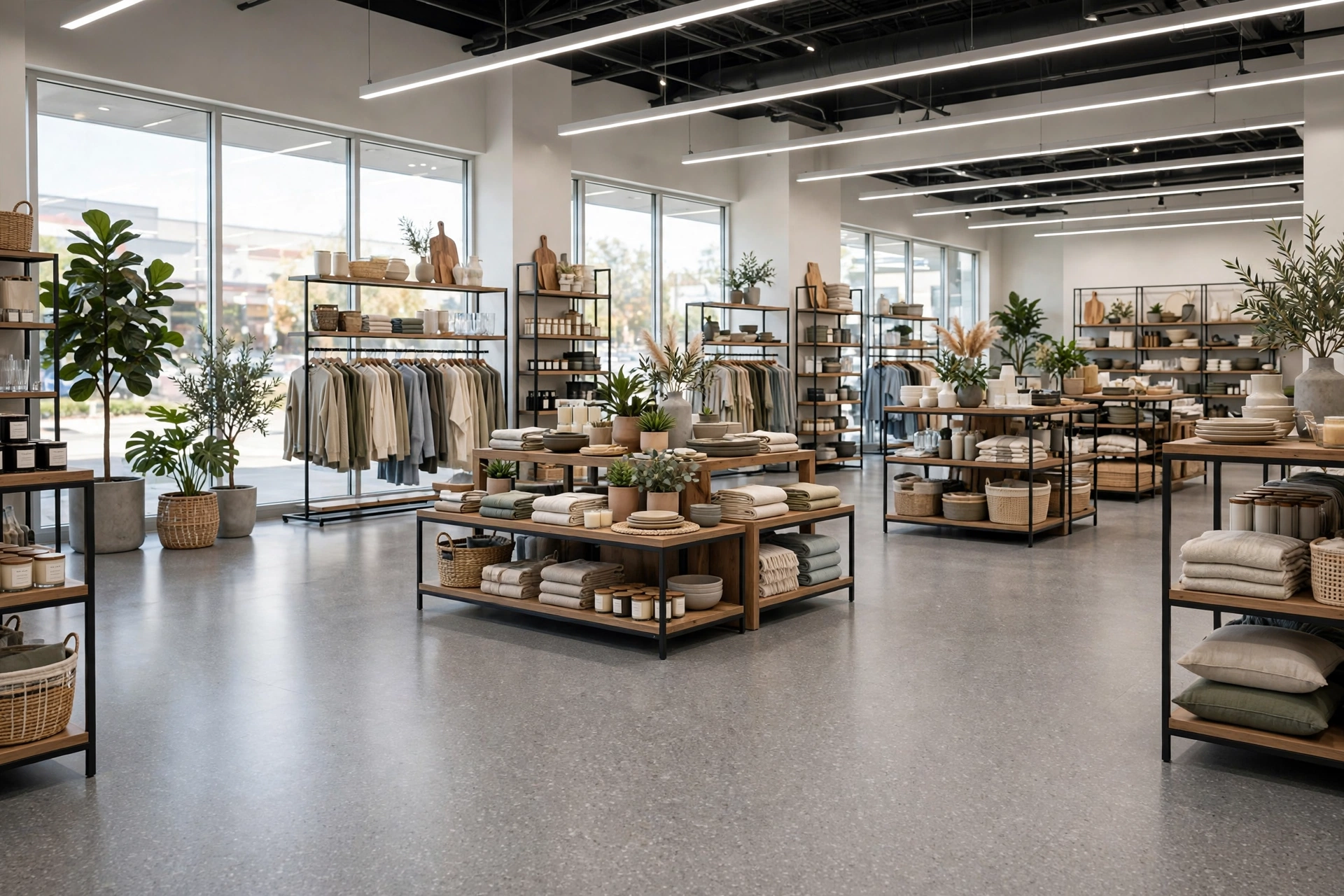
How Commercial Flooring Differs
Three things separate commercial from residential flooring:
Traffic volume. A home hallway sees dozens of footfalls daily. A retail entrance sees thousands. Materials and wear layers are engineered for completely different duty cycles.
Liability. Slip-and-fall lawsuits are a real business risk. Commercial floors need documented slip resistance, and the choice has legal implications residential floors don’t.
Maintenance at scale. A homeowner mops on Saturday. A commercial space needs floors that survive daily professional cleaning, and the cleaning cost over the floor’s life often exceeds the installation cost. Easy maintenance isn’t a perk — it’s the economics.
Replacement disruption. Replacing a home floor is inconvenient. Replacing a store floor means closing the store. Commercial floors need to last, and repairs need to be surgical (which is why carpet tile and LVT dominate — replace individual pieces, not the whole floor).
The Best Commercial Flooring Materials
Luxury Vinyl Tile/Plank (LVT/LVP) — The Default
The dominant commercial flooring for good reason. Commercial-grade LVT has thicker wear layers (20+ mil), handles heavy traffic, replaces piece-by-piece, and looks professional in wood, stone, or abstract designs.
Best for: offices, retail, restaurants, healthcare corridors, multifamily common areas.
Cost: $4–$9/sq ft installed (commercial grade).
Carpet Tile — The Office Standard
Modular carpet squares (usually 24″x24″) that lay without full adhesive. Stained tile? Lift it, drop in a spare. This replaceability is why offices love it — the floor never looks worn because worn tiles just get swapped.
Best for: offices, call centers, libraries, any space where acoustics matter.
Cost: $3–$7/sq ft installed.
Polished Concrete — The Industrial Pick
Grind and polish the existing slab. Nearly indestructible, zero replacement cost (it’s the building), easy to clean, and the industrial aesthetic suits retail, restaurants, and creative offices.
Best for: retail, restaurants, warehouses-turned-offices, galleries.
Cost: $2–$6/sq ft to polish existing concrete.
Sheet Vinyl / Homogeneous Vinyl — The Healthcare Pick
Seamless (or heat-welded) vinyl with color through the full thickness. The standard for hospitals, clinics, and labs — hygienic, chemical-resistant, no seams for bacteria to hide in.
Best for: healthcare, laboratories, commercial kitchens, clean rooms.
Cost: $4–$8/sq ft installed.
Rubber Flooring — The Specialty Pick
Tiles or rolls of rubber. Supreme comfort underfoot, excellent slip resistance, sound-dampening. Common in gyms, but also great for commercial kitchens, hospitals, and anywhere staff stand all day.
Best for: gyms, commercial kitchens, healthcare, childcare.
Cost: $5–$10/sq ft installed.
Durability Ratings Explained
Commercial flooring uses standardized ratings. The ones that matter:
Wear layer thickness (vinyl): measured in mil (thousandths of an inch). Residential: 8–12 mil. Light commercial: 12–20 mil. Heavy commercial: 20+ mil. This single number predicts lifespan more than anything else.
ASTM/EN ratings: commercial products carry classifications like “Class 33” (heavy commercial) or “Class 34” (very heavy commercial) under EN 685. If a product doesn’t publish these, it’s not really commercial grade.
Static load limit: how much weight the floor tolerates without indenting. Matters for retail (heavy fixtures) and offices (server rooms, filing systems).
Slip resistance: dynamic coefficient of friction (DCOF) of 0.42+ for wet commercial areas. Document this — it matters for liability.
My honest take: the wear layer number is the spec to shop by for vinyl. Everything else being equal, 20+ mil commercial LVT outlasts 12 mil “commercial-rated” products by years. Don’t pay commercial prices for residential specs.
Offices: What to Choose
Open office areas: carpet tile. Acoustics matter enormously in open offices — hard floors create echo chambers that destroy productivity. Carpet tile’s replaceability handles the traffic.
Private offices and conference rooms: LVT or carpet tile depending on desired formality. LVT reads more premium; carpet tile is quieter.
Break rooms and kitchens: LVT or sheet vinyl — water and food demand cleanable hard surfaces.
Lobbies: LVT, polished concrete, or large-format porcelain. First impressions matter; this is where to spend.
Retail: What to Choose
Sales floor: polished concrete or commercial LVT. Both handle cart and foot traffic, clean easily, and look intentional. Concrete is cheapest if the slab is in good shape.
Fitting rooms: carpet tile or LVT — comfort and warmth matter in small enclosed spaces.
Entrances: this is the highest-abuse zone. Walk-off mats (non-negotiable — they trap 80% of dirt), then LVT or tile underneath. Budget for mat replacement; it’s cheaper than floor replacement.
Stockrooms: sealed concrete. Don’t overthink it.
Rental Properties: The Landlord’s Flooring
Rentals are commercial-adjacent: high turnover, unknown tenant behavior, and every replacement costs vacancy days.
The landlord ranking:
- Commercial-grade LVP — the sweet spot. Durable enough for tenants, cheap enough to replace, looks good in listings.
- Sheet vinyl — cheapest acceptable option for bathrooms and kitchens.
- Carpet (cheap) — only in bedrooms, and only because tenants expect it. Budget for replacement every turnover.
What to avoid: hardwood (tenants destroy it), tile (expensive to replace when cracked), anything that can’t be repaired piecemeal.
The math: a $5/sq ft commercial LVP that survives 3 tenant turnovers is cheaper than a $2 carpet replaced every turnover. Durability is the economy.
What Does Commercial Flooring Cost?
Per square foot installed, commercial grade:
- Sealed/polished concrete: $2–$6
- Carpet tile: $3–$7
- Sheet vinyl: $4–$8
- Commercial LVT: $4–$9
- Rubber: $5–$10
- Porcelain tile: $8–$15
But the real cost is maintenance. A floor that costs $2/sq ft more but halves cleaning labor pays for itself within a couple of years at commercial cleaning rates. Always evaluate total cost of ownership, not just installation.
Maintenance: The Commercial Reality
Daily: dust mop or auto-scrub high-traffic areas. Dirt is abrasive — removing it daily is the single biggest lifespan factor.
Weekly/monthly: damp mop or scrub per manufacturer guidelines. Use the right chemicals — wrong cleaners destroy finishes (especially on vinyl and rubber).
Annually: deep clean, and assess whether individual tiles/planks need replacement (the modular advantage).
The walk-off mat system: 15 feet of matting at every entrance (exterior scraper + interior wiper). This $500–$1,000 investment extends floor life more than any other single thing. Most commercial floors die from tracked-in grit, not from foot traffic itself.
Codes, ADA Compliance, and Liability
Commercial flooring isn’t just a design choice — it’s a compliance decision. Get this wrong and the consequences go beyond aesthetics.
ADA (Americans with Disabilities Act): flooring surfaces must be “stable, firm, and slip-resistant.” Carpet must be securely attached with pile height under 1/2″. These aren’t suggestions — they’re federal requirements for public spaces, and violations bring lawsuits.
Slip resistance documentation: for commercial spaces, specify products with published DCOF (dynamic coefficient of friction) ratings of 0.42 or higher for level wet areas. Keep the spec sheets on file. If someone falls and sues, “we chose a floor with documented slip resistance” is a defense; “it looked fine” is not.
Fire ratings: commercial flooring must meet ASTM E648 (critical radiant flux) for flame spread. Most commercial products do — but verify, especially with unusual materials or imports.
Local codes: some jurisdictions add requirements for specific occupancies (healthcare, childcare, food service). Check with your local building department before specifying — a floor that meets code in one city may not in another.
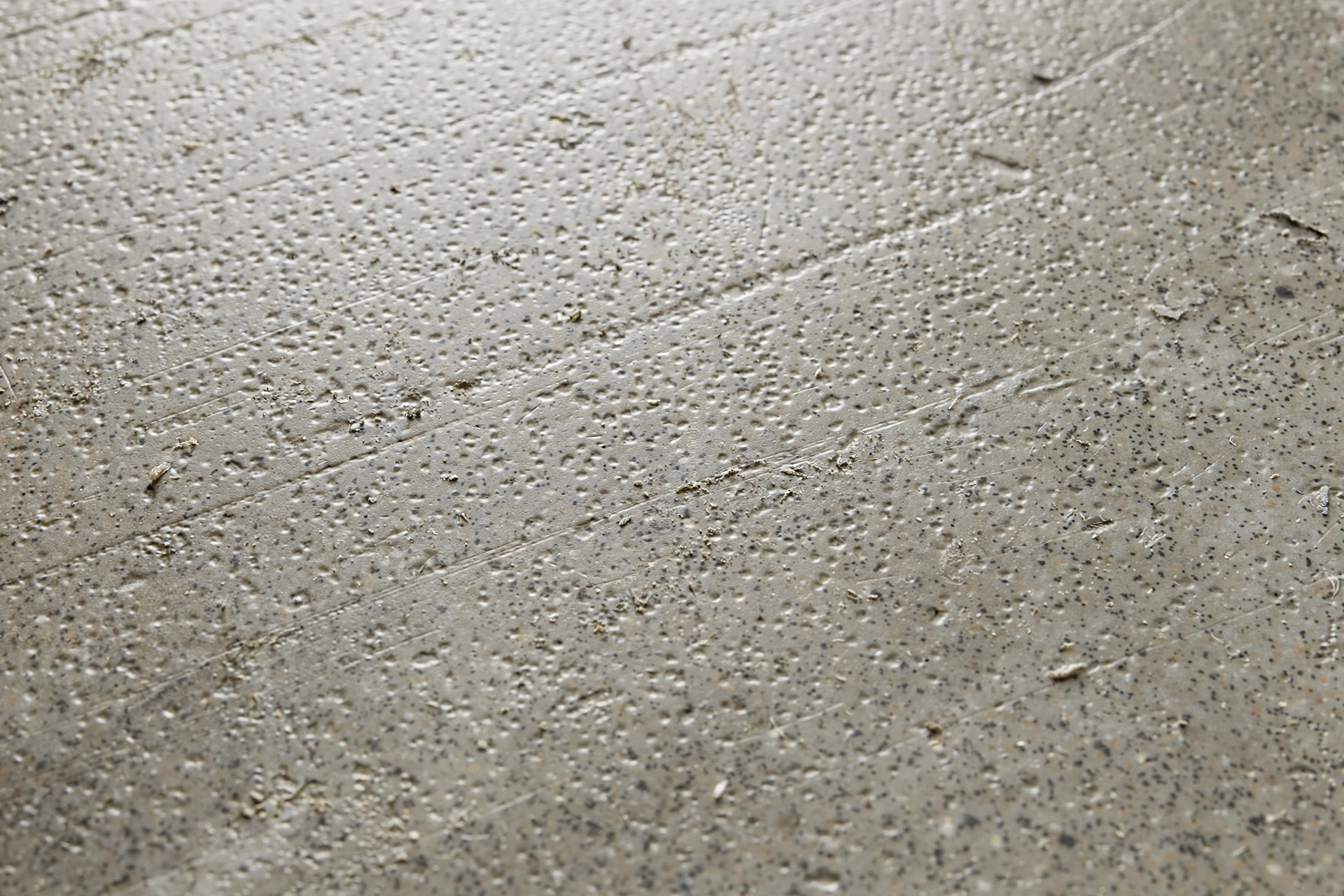
The practical takeaway: buy commercial-rated products from established manufacturers who publish their test data. The documentation is part of what you’re paying for, and in commercial space, it’s worth every penny.
Frequently Asked Questions
What’s the most durable commercial flooring?
Polished concrete and porcelain tile are the toughest. Among resilient options, 20+ mil commercial LVT and homogeneous sheet vinyl handle the heaviest traffic.
What’s the best flooring for an office?
Carpet tile for open areas (acoustics + replaceability), LVT for lobbies and break areas. The combination covers 90% of office needs.
How long does commercial flooring last?
Commercial LVT: 10–20 years. Carpet tile: 7–15 years (with tile replacement). Polished concrete: decades. Sheet vinyl: 15–25 years. Traffic and maintenance quality swing these numbers significantly.
Can I use residential flooring in a commercial space?
Physically yes, wisely no. Residential products lack the wear layers for commercial traffic, warranties are voided by commercial use, and slip ratings may not meet code. The savings evaporate at the first early replacement.
What’s the cheapest commercial flooring?
Sealed concrete ($2–$6) if the slab is usable, carpet tile ($3–$7) otherwise. But factor maintenance — the cheapest install isn’t always the cheapest floor.
The Bottom Line
Commercial flooring is an engineering decision, not a decorating one. Shop by wear layer and durability ratings, prioritize maintainability and repairability (modular products win), invest in entrance matting, and evaluate total cost of ownership instead of installation price. Get those right and the floor becomes invisible infrastructure — which, in commercial space, is exactly what success looks like.
Related: Vinyl Flooring Guide · Types of Flooring Guide