
Let’s be honest: the tub and shower combo gets no respect. Design magazines pretend it doesn’t exist. Remodel shows rip them out on camera. And yet — walk through any suburban neighborhood and it’s in most of the bathrooms. There’s a reason for that.
Kids need baths. Adults want showers. Most bathrooms aren’t big enough for both. The combo solves all three in 60 inches, for less money than any alternative. That’s not compromise — that’s good design doing its job quietly.
This guide covers combo types, how they compare to separate fixtures, standard sizing, shower heads and diverters that work, design ideas that make them look good, costs, and when a combo is the smartest choice.
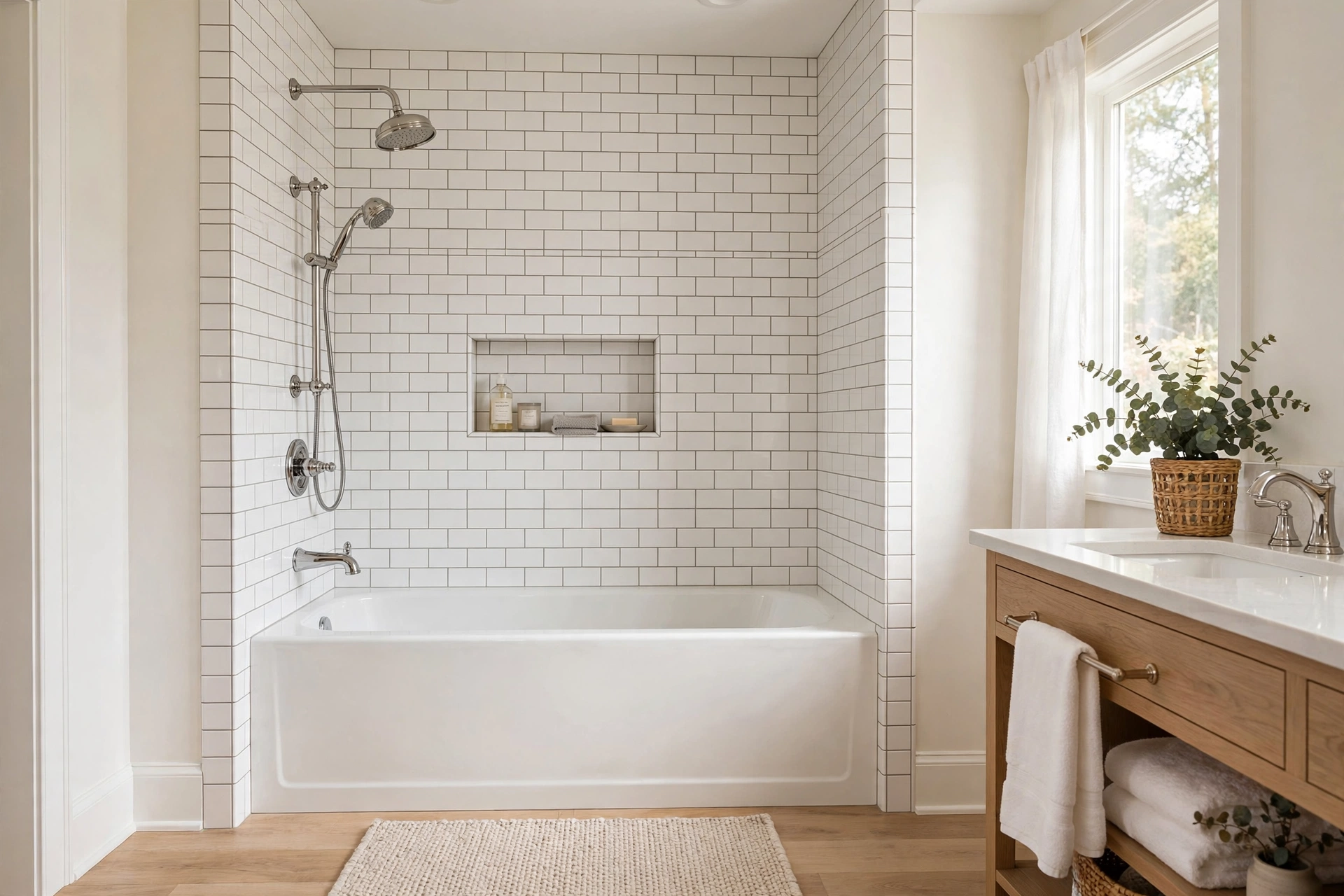
What Is a Tub and Shower Combo? (And Why It’s Everywhere)
A tub and shower combo is exactly what it sounds like: a bathtub with a shower head above it, a tub spout, and a diverter switching between the two. One fixture, one footprint, two jobs.
Why does it dominate? Three reasons. Families: small kids take baths, parents take showers. Space: most secondary baths are 40–60 square feet — no room for both fixtures. Resale: a house with zero tubs loses buyers with young kids; keeping one tub protects resale in a way a second shower never will.
The bathtub shower combo isn’t glamorous. It’s practical the way a good kitchen knife is practical — used daily, missed immediately if gone.
Types of Tub-Shower Combos
Alcove Tub-Shower (The Classic)
The one you grew up with: a 60-inch tub between three walls, tile or panels above, curtain or doors in front. The most common shower tub setup in existence.
Why it’s still king: flexibility — pick the tub, the wall finish, curtain or doors. Upgrade later by swapping the surround for tile without touching the tub.
Watch out for: the surround is where these age badly. A 1990s fiberglass surround with a stained curtain is what gives combos their bad reputation — not the concept, the execution.
One-Piece Bathtub Shower Combos
A single molded unit — tub plus walls, one piece of fiberglass or acrylic. The new-construction favorite: set during framing, no seams to caulk, installed in an afternoon.
Best for: new builds, rentals, and speed. Honest caveat: measure every doorway on the delivery path — these don’t bend. Fiberglass one-piece units look basic and age visibly; acrylic costs more but holds up better.
Deep Soaker Combos
Same 60-inch footprint, deeper tub — 18+ inches of soaking depth vs. the standard 14–15. A real bath and a functional shower in the same space.
Worth knowing: a deeper tub holds far more water — a 60-gallon fill will humble a 40-gallon water heater fast. And verify your floor can handle the weight: water is 8.3 pounds per gallon.
Shower Doors vs. Curtain: The Eternal Debate
Here’s the honest breakdown:
Shower curtain: $20–$50, replaceable in minutes. Downsides: cheap liners cling, they mildew, and a sad curtain drags down the whole bathroom. Buy a weighted quality liner and replace it yearly — a $40 setup beats a $15 one by a mile.
Shower doors: $300–$1,200+ installed, and they transform the look — glass reads “real shower” like no curtain can. Trade-offs: tracks collect grime, glass needs a 30-second squeegee habit, and cheap sliders rattle.
My take: doors if the budget allows — the single biggest visual upgrade a combo can get. But a good curtain beats cheap doors every time.
Tub-Shower Combo vs. Separate Tub + Shower: Pros and Cons
Let’s do this straight.
The combo wins on: space (one 60-inch footprint), cost (one drain, one set of plumbing), resale (keeps a tub in the house), and kid-friendliness (bathing a toddler in a walk-in shower is misery).
Separate fixtures win on: shower comfort (a real shower is 36+ inches wide; a combo is tub-width, ~30–32 inches — snug), bathing luxury (no step-over wall), accessibility (tub walls get harder with age), and design ceiling (a big walk-in with nice tile is simply more premium).
The tie-breaker most people ignore: bathroom size. Under ~80 square feet, the combo wins on practicality — separate fixtures eat the whole room. With space, no small kids, and budget, separate fixtures are the luxury choice. Most family homes don’t have all three, which is exactly why the tub shower combo is everywhere.
Standard Sizes (and the Doorway Problem)
The standard alcove tub is 60 x 30 inches — that’s the size your bathroom was almost certainly framed for. Common variations:
- 60 x 32 and 60 x 36 — wider tubs, noticeably more comfortable showers. Worth it if you have the room.
- 54-inch and 48-inch tubs — for tight bathrooms and small apartments. Cozy, but they exist for a reason.
- Soaking depth — standard tubs hold about 14–15 inches of water; soakers go 18+.
Measure the finished opening, not the old tub. And the doorway problem: a one-piece unit travels from truck to bathroom in one piece — measure every doorway and hallway turn. Alcove tubs are far easier to maneuver, one more reason the classic setup persists.
Shower Heads That Actually Work in Combos
Here’s the problem nobody mentions until you’re annoyed: a tub deck sits ~20 inches off the floor, but shower arms mount at standard height — so the head lands at face level for anyone tall. Fixes, cheapest first:
An S-shaped shower arm or riser ($15–$30) raises the head 6–8 inches and pushes it outward. Ten-minute install, huge difference — if you do one upgrade, make it this one.
A handheld shower on a slide bar is the best accessory a shower in tub setup can have — down for kids, up for adults, unhook it to rinse the tub (or the dog). Around $50–$150, and it solves the height problem for everyone at once.
Rainfall heads? Only with 8+ feet of ceiling, ideally ceiling-mounted. In a standard-height bathroom with a tub, a wall-mounted rain head just sprays your forehead.
Water pressure note: combos share one valve, so a weak-pressure house feels it here. If your shower dribbles, the fix is usually the valve or the head — not the combo concept.
Faucets and Diverters, Explained Simply
Three setups, simplest first:
Tub spout with pull-up diverter — the classic: pull the knob, water switches from tub to shower. Cheap and universal; the diverter wears out every few years, but it’s a $10 part and a five-minute fix. Keep a spare.
In-wall diverter valve — a separate handle switching between tub, shower, and handheld. Cleaner look, more reliable, costs more. Common in nicer remodels.
Single-handle vs. multi-handle: single-handle valves are the modern standard — one lever, with pressure-balancing to prevent scalding when someone flushes. Older three-handle setups work but lack scald protection. Opening the wall anyway? Upgrade to pressure-balance or thermostatic. It’s safety, not luxury.
Related: Shower Faucets Guide — the full breakdown of valve types, finishes, and fixes for weak water pressure.
Design Ideas That Make Combos Look Good (Yes, Really)
The ugly-combo reputation is a surround problem, not a combo problem. Fix the surround and the fixtures, and nobody pities your bathroom:
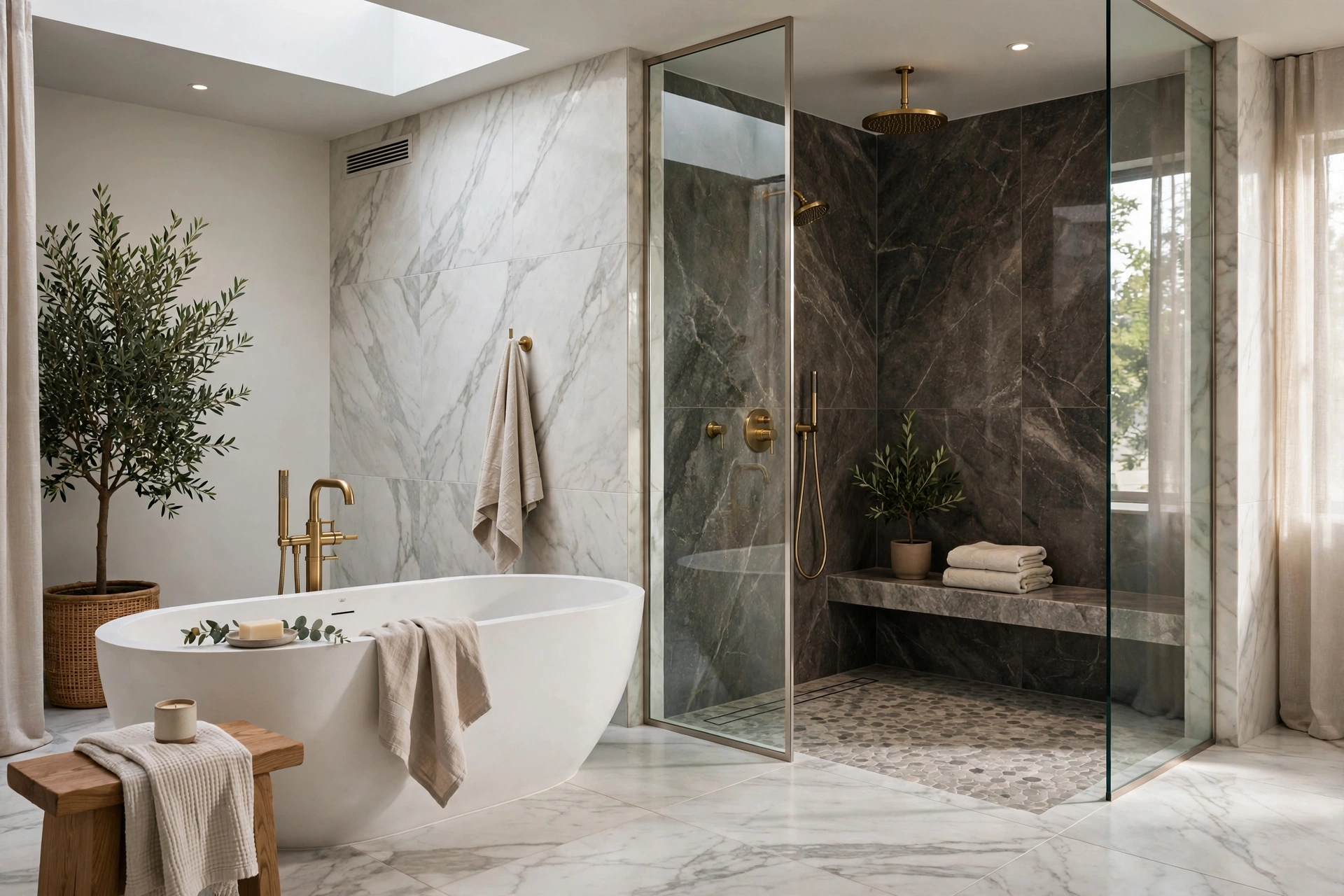
- Tile to the ceiling. The #1 upgrade — most dated combos stop at six feet with sad painted wall above. Full-height tile makes it feel like a real shower.
- Frameless or semi-frameless glass doors. The single biggest visual upgrade, as covered above.
- A real niche or shelf. Built in beats a wire caddy on the shower head every time. Plan it before tile goes up.
- Large-format tile or dark grout. Less grout to look at, less grout to clean. Both read modern.
- One fixture finish, everywhere. Mixed finishes (chrome spout, brushed-nickel head, brass handles) scream rental. Pick one and commit.
- Good lighting. A bright shower feels twice as big — add a shower-rated recessed light if the room is dim.
- A deeper tub in the same footprint. Same 60 inches, much better bath. The soaker upgrade fools everyone into thinking you remodeled.
It IS possible for a tub-shower combo to look genuinely good — most of the “after” photos people admire in remodeled hall baths are combos with good tile, glass doors, and decent fixtures.
What Does a Tub-Shower Combo Cost?
Typical US ranges, materials:
- One-piece fiberglass unit: $400–$1,200
- Acrylic alcove tub + surround kit: $800–$2,500
- Tub + custom tile surround: $3,000–$8,000+
- Deep soaker upgrade: add $500–$1,500 over standard
- Glass doors: $300–$1,200 installed
- Full pro remodel keeping the combo layout: $8,000–$15,000 typical
A DIY tub swap is advanced — heavy lifting, drain plumbing, and waterproofing in one. The surround is the more DIY-friendly half. Keeping the existing layout (no moving the drain) saves thousands.
When a Combo Is the Smartest Choice
Kids in the house. Non-negotiable — you need a tub. A shower-only house with toddlers is a daily regret.
Only one full bathroom. Keep at least one tub for resale — buyers with kids filter for it, and “no tub” shrinks your buyer pool.
Small bathroom. Under ~80 square feet, a combo gives both functions without a cramped version of each.
Guest bath or rental. Durable, familiar, easy to clean — and one-piece units are nearly indestructible here.
When to skip it: a primary bathroom with the space and budget for separate fixtures, or genuine accessibility needs — a curbless walk-in shower is the better answer there.
Related: Shower Pan Guide — if you’re converting the combo footprint to a walk-in shower, start with pan sizes and types.
Frequently Asked Questions
Can I convert a tub-shower combo into a walk-in shower?
Yes — a 60×30 or 60×32 shower pan fits the standard 60-inch alcove neatly. The drain usually needs moving (tub and shower drains sit in different spots), the floor needs waterproofing, and you’ll want a plumber. Budget $3,000–$8,000.
Is a tub-shower combo bad for resale?
No — for family homes, having at least one tub helps resale. What hurts is removing the only tub in the house to install a second shower. If the combo is the home’s only tub, think twice before converting it.
Shower doors or curtain — which is better for a combo?
Doors look better and feel more premium but cost $300–$1,200+ and need a squeegee habit. Curtains cost almost nothing and take minutes to replace. For a rental or tight budget: quality curtain. For your own home long-term: doors.
How high should the shower head be in a combo?
At least 80 inches above the tub floor — higher for tall households. Standard arms land too low over a tub deck, which is why the $15–$30 riser arm is the best-value combo upgrade there is.
Can I put a rainfall shower head in a tub-shower combo?
Only with 8+ feet of ceiling and ideally a ceiling-mounted arm. A wall-mounted rain head in standard height just delivers water to your forehead — a handheld on a slide bar is the more practical upgrade.
The Bottom Line
The tub and shower combo isn’t a compromise — it’s the hardest-working 60 inches in the house. One footprint, two jobs, kid-approved, resale-safe. Give it tile to the ceiling, raise the shower head, put glass on the front, and it’ll hold its own against bathrooms that cost three times as much.