
Sheet vinyl is the flooring everyone forgot about — and that’s a shame, because for certain jobs it’s still the smartest choice in the store. While luxury vinyl plank gets the glory, sheet vinyl quietly does something no plank or tile can: cover an entire room with virtually no seams. In a bathroom or laundry room, that single fact matters more than any design trend.
This guide covers what sheet vinyl is, how it compares to planks and tiles, honest pros and cons, costs, installation, and where it still wins.
What Is Sheet Vinyl Flooring?
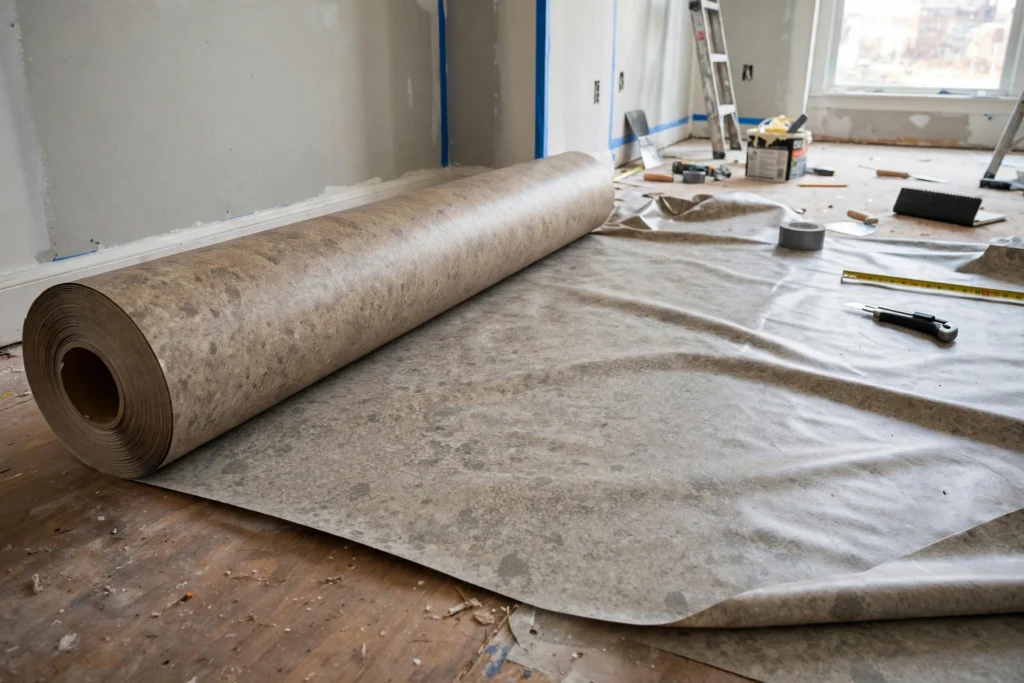
Sheet vinyl (sometimes called “vinyl flooring roll”) is vinyl flooring sold in large continuous rolls — typically 6 or 12 feet wide, cut to length. One piece covers most small rooms wall-to-wall with zero seams. Larger rooms need one seam, maybe two.
It’s the oldest form of vinyl flooring, and the construction has improved enormously: modern sheet vinyl has realistic printed designs, textured surfaces, and wear layers comparable to mid-range LVP. The cheap stuff still exists (and still looks cheap), but the good sheet vinyl is a legitimate flooring choice, not a compromise.
There are two main backings:
- Felt-backed — the traditional type, glued down fully. Thinner, less forgiving, but very affordable.
- Fiberglass-backed — the modern type. More dimensionally stable, often installed loose-lay or perimeter-glued, more forgiving of subfloor imperfections.
Sheet vs Plank vs Tile: The Real Comparison
Seams. This is sheet vinyl’s superpower. A 10×12 bathroom in sheet vinyl = zero seams. The same room in LVP = dozens of seams, every one a potential water entry point. For true water protection, fewer seams always wins.
Looks. Planks and tiles win. Individual pieces with beveled edges and varied patterns look more like real wood or stone. Sheet vinyl’s repeating pattern is harder to disguise, though the good designs are genuinely attractive.
Repairs. Planks and tiles win big. Damage one LVP plank? Pop it out, click in a new one. Damage sheet vinyl? You’re patching (visible) or replacing the whole sheet. This is sheet vinyl’s biggest practical weakness.
Installation. Planks win for DIY — click-lock is forgiving. Sheet vinyl in a small room is DIY-able; in a large room with seams to seal, it’s pro work. Maneuvering a 12-foot roll without creasing it is a skill.
Comfort. Roughly equal, though sheet vinyl over a cushioned backing can feel slightly softer.
Price. Sheet vinyl wins — it’s the cheapest vinyl format by a clear margin.
My honest take: think of it as horses for courses. Planks for living areas where looks and repairability matter. Sheet for wet utility rooms where seamless water protection matters most.
Related: Vinyl Flooring Guide — LVP, LVT, and SPC explained in full detail.
Honest Pros and Cons
Pros:
- Cheapest vinyl format ($2–$4 installed)
- Fewest seams = best water protection of any resilient floor
- Fast installation (one piece covers a room)
- Comfortable and quiet underfoot
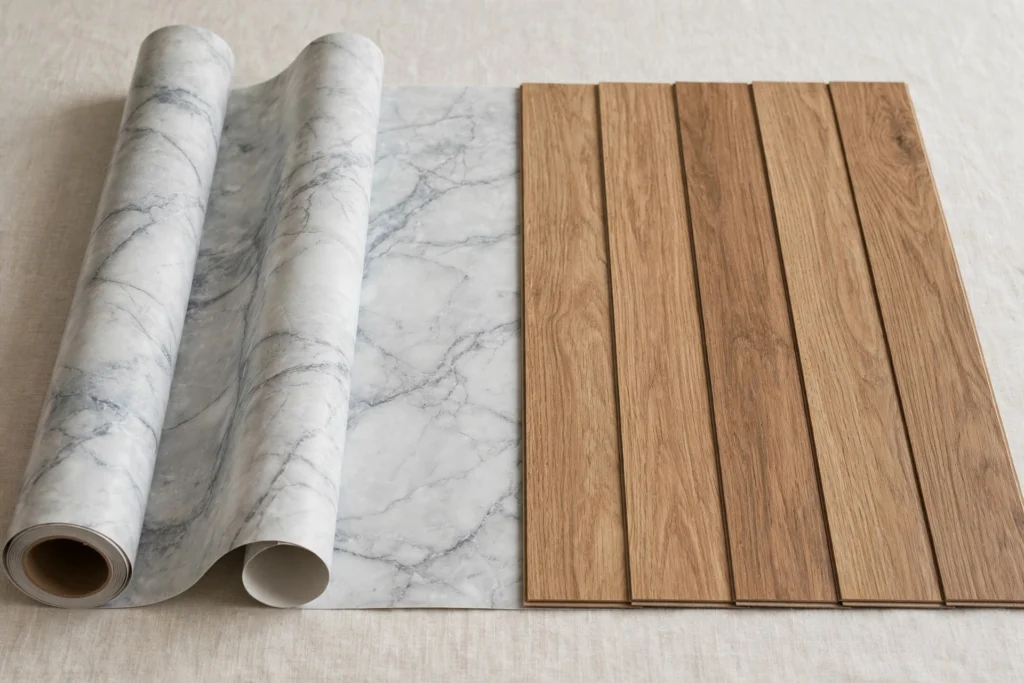
- Huge design range, including convincing stone and wood looks
Cons:
- Hard to repair — damage usually means replacing the whole sheet
- Shows subfloor imperfections (thin and flexible)
- Pattern repeat is visible in large rooms
- Can look “budget” in main living areas
- Heavy, unwieldy rolls make DIY tricky in large rooms
- Lower resale perception than plank
What Does Sheet Vinyl Cost?
- Materials: $1–$3/sq ft. Budget felt-backed under $1.50; good fiberglass-backed $2–$3.
- Installed: $2–$4/sq ft, one of the cheapest professional installs in flooring.
- DIY: just materials. A small bathroom can be under $100 total.
For rental properties, laundry rooms, and basement bathrooms, the value proposition is almost unbeatable.
Installation: DIY or Pro?
Small rooms (bathrooms, laundry): genuinely DIY-friendly. Roll it out, trim to fit with a utility knife, glue or loose-lay per the product instructions. The hardest part is getting the roll home and maneuvering it without creasing.
Large rooms: hire a pro. Seaming two sheets invisibly (heat-welding or chemical seam sealer) is skilled work, and a creased roll is ruined.
The critical steps either way:
- Subfloor must be smooth — sheet vinyl shows everything. Skim-coat or sand as needed.
- Acclimate the roll in the room for 24–48 hours.
- Make a paper template for tricky rooms (lots of corners, toilet flanges). Cut the vinyl from the template, not by eye.
- Don’t stretch it. Vinyl relaxes back and gaps appear.
- Roll with a heavy roller after gluing to eliminate bubbles.
Best Rooms for Sheet Vinyl
Bathrooms — the #1 use case. Seamless water protection, cheap, comfortable. The smart money for any bathroom where tile’s cost doesn’t make sense.
Laundry rooms — same logic. Water happens; seams are the enemy.
Basements — affordable, moisture-tolerant, and if the basement ever floods, you’re replacing a $300 floor, not a $3,000 one.
Rental properties — cheap, durable enough, and easy to replace between tenants.
Kitchens — works fine, though LVP looks better and repairs easier. Sheet vinyl is the budget kitchen pick.
Skip: main living areas and bedrooms in your own home — plank looks better and the repairability matters more there.
Maintenance
The easiest floor to maintain, honestly:
- Sweep or vacuum regularly
- Damp-mop with a pH-neutral cleaner
- Avoid abrasive scrubbers
- Felt pads under furniture (it can dent under heavy point loads)
- No wax needed on modern no-wax finishes (despite the old name, nobody waxes vinyl anymore)
That’s the whole routine. Sheet vinyl asks almost nothing of you.
Understanding Sheet Vinyl Grades
Sheet vinyl isn’t one product — it’s a range, and the price tiers reflect real differences:
Budget felt-backed ($0.50–$1.50/sq ft): thin, minimal wear layer, glued fully. Looks okay on day one, shows wear within a few years. Fine for rentals and utility rooms where longevity doesn’t matter.
Mid-range fiberglass-backed ($1.50–$3/sq ft): the sweet spot. Thicker wear layers, better prints, dimensionally stable (won’t shrink or curl like old felt-backed). Loose-lay or perimeter-glue installation. This is what most homeowners should buy.
Premium heterogeneous ($3–$5/sq ft): thick wear layers (20+ mil), inlaid designs (color through the wear layer, not just printed), commercial-grade durability. Approaches LVP pricing but keeps the seamless advantage.
How to shop: check the wear layer thickness (in mil), not just the total thickness. A thick vinyl with a thin wear layer wears out fast; a thinner vinyl with a thick wear layer lasts. Ask for the spec sheet — reputable products publish it.
The print quality test: unroll a few feet in the store and look at it from standing height (not crouched close). Good sheet vinyl looks convincing from 5 feet away; cheap stuff looks flat and repetitive. Check the pattern repeat by finding the same element twice — longer repeats look more natural.
Getting the Most from Your Sheet Vinyl
A few practices that separate sheet vinyl that lasts 15 years from sheet vinyl that looks tired in 5:
Furniture protection is critical. Sheet vinyl dents under concentrated weight more readily than rigid plank. Use wide furniture cups under heavy pieces, felt pads under everything else, and never drag furniture across it.
Sunlight fades it. Prolonged direct sun bleaches vinyl over time. In sunny rooms, use window coverings or UV-filtering film. The fade is gradual enough that you won’t notice until you move a rug — then it’s obvious.
Seam placement matters. In rooms needing multiple sheets, place seams away from high-traffic paths and water sources. A seam in front of the tub fails faster than a seam under the vanity.
Don’t use “mop and shine” products. They build up layers that yellow and attract dirt. pH-neutral cleaner and water is all sheet vinyl needs — the “no-wax” in no-wax vinyl is a promise, not a challenge.
Keep a remnant. Save a leftover piece (2×2 feet minimum) for future patches. Dye lots change; a remnant from your install is the only guaranteed match.
Frequently Asked Questions
Is sheet vinyl flooring waterproof?
The material is waterproof, and with minimal seams it’s the most watertight resilient floor system. Properly installed in a bathroom, it’s about as close to waterproof as a non-tile floor gets.
How long does sheet vinyl last?
10–20 years residential. Less than LVP (thinner wear layers typically), but at half the price, the value holds up.
Can you install sheet vinyl over old flooring?
Over smooth, well-adhered vinyl: often yes. Over tile with grout lines or damaged floors: the imperfections telegraph through — prep or remove first. One layer max; don’t stack vinyl on vinyl on vinyl.
Sheet vinyl vs LVP — which is better?
For wet rooms and budgets: sheet vinyl. For looks, repairability, and main living areas: LVP. They’re siblings, not rivals — pick based on the room.
Does sheet vinyl look cheap?
The cheap stuff does. But good fiberglass-backed sheet vinyl with a quality print looks genuinely nice — most visitors won’t identify it as “sheet vinyl” unless they’re flooring people.
The Bottom Line
Sheet vinyl isn’t glamorous, but it’s the most practical answer for wet, low-stakes rooms. Seamless water protection at the lowest price in the store, with looks that have improved enormously. Don’t put it in your living room to save money — but for bathrooms, laundry rooms, and rentals, it’s quietly one of the smartest flooring choices you can make.