
“Waterproof” is the most abused word in flooring marketing. Every box seems to promise it, every salesperson says it, and half the time it’s… let’s say optimistic. A floor that’s waterproof in the lab can still fail in your bathroom if water gets where it shouldn’t. So let’s cut through the marketing and talk about which floors are genuinely waterproof, which ones just claim to be, and what actually matters in wet rooms.
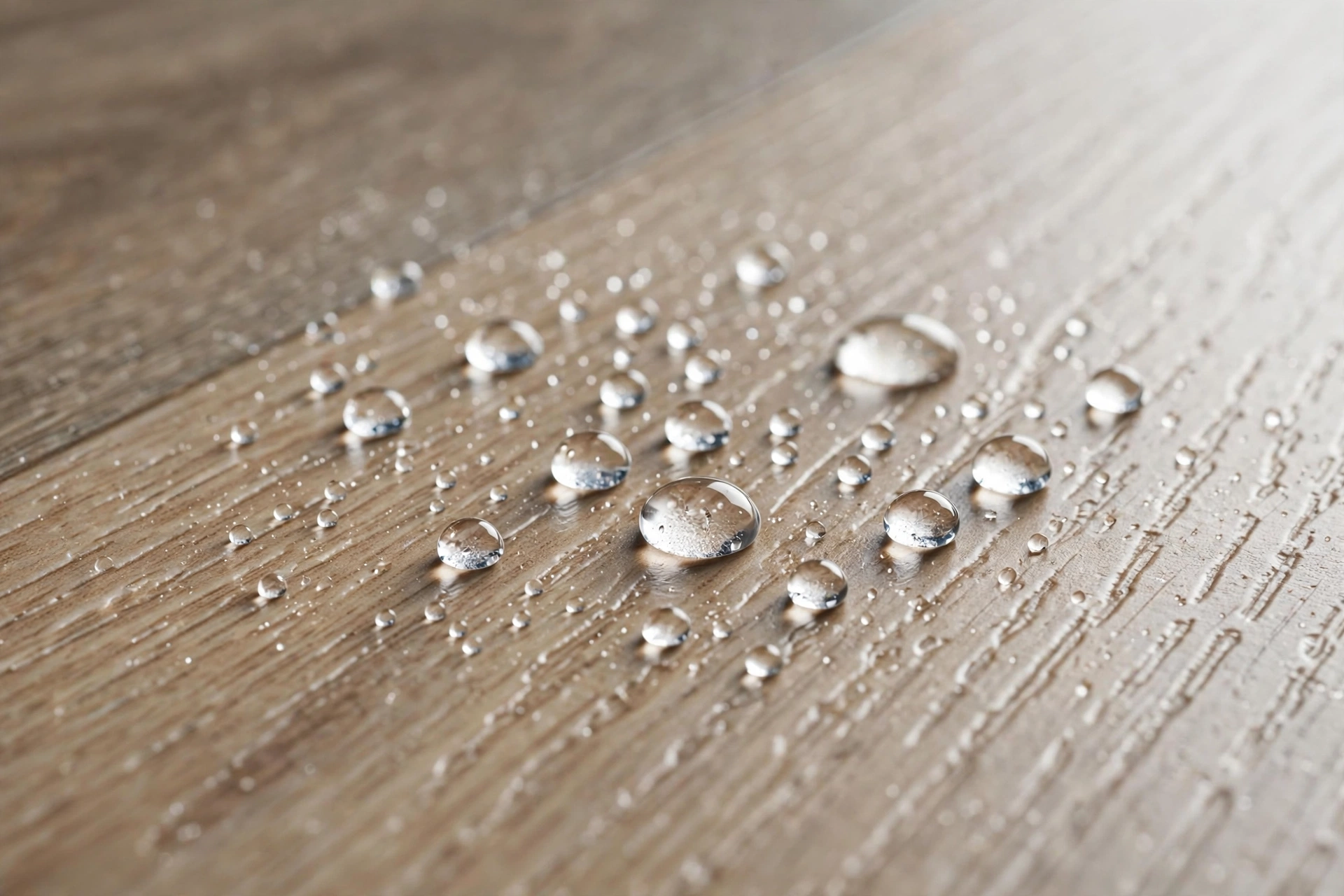
What “Waterproof” Actually Means (And What It Doesn’t)
Here’s the distinction that clears up 90% of the confusion:
Waterproof material = the flooring material itself won’t be damaged by water. PVC vinyl, porcelain tile, and sealed linoleum qualify. Leave water sitting on them and the material doesn’t swell, warp, or break down.
Waterproof floor system = water can’t get through the floor to damage what’s underneath. This is much harder to achieve. Click-lock planks have seams; water can seep between them to the subfloor. Grout lines in tile can let water through if not sealed. The material survives; the subfloor might not.
When a manufacturer says “waterproof,” they almost always mean the material. That’s still meaningful — a waterproof-material floor won’t be ruined by the spill — but it doesn’t make your floor a bathtub. Keep that in mind and marketing claims stop being confusing.
The Truly Waterproof Options
Luxury Vinyl (LVP/LVT/SPC)
The waterproof champion of the modern market. The PVC core doesn’t absorb water — period. Spills, pet accidents, mopping, even brief flooding: the planks themselves come through fine.
As discussed above, the seams are the weak point in click-lock installations. For maximum protection, glue-down LVT (fully adhered, no floating gaps) is the most watertight vinyl installation. In bathrooms, many installers also run a bead of silicone around the perimeter.
Best for: bathrooms, kitchens, basements, laundry rooms, mudrooms — anywhere water is a regular visitor.
Related: Vinyl Flooring Guide — LVP vs LVT vs SPC explained in full.
Porcelain and Ceramic Tile
Waterproof by nature — it’s fired clay and glass. Tile doesn’t care about water at all. The vulnerability is the grout: cement grout is porous and can let water through to the substrate if unsealed. Epoxy grout is effectively waterproof and worth the upgrade in showers and wet areas.
Properly installed tile over a waterproof membrane (like in a shower) is the closest thing to a genuinely waterproof floor system in residential construction.
Best for: bathrooms, showers, kitchens, outdoor-adjacent areas.
Sheet Vinyl
One continuous sheet with heat-welded or minimal seams means almost nowhere for water to go. It’s the most watertight system of any resilient flooring — which is why it’s still the standard in commercial bathrooms and healthcare. Less glamorous than LVP, more watertight.
Best for: bathrooms on a budget, laundry rooms, basements.
Water-Resistant (But Not Waterproof)
These handle everyday moisture fine but have limits. Know the limits and they’re excellent floors.
“Waterproof” Laminate
This deserves its own callout because the marketing is aggressive. Waterproof laminate has a water-resistant core and sealed edges — it’s genuinely much better than standard laminate. It’ll survive spills and mopping that would kill old-school laminate.
But read the fine print: most waterproof laminate warranties cover surface water for a limited time (often 24 hours). Standing water that gets into the locking system can still cause damage. It’s water-resistant-plus, not tile-level waterproof. Fine for kitchens with prompt cleanup; I’d still choose vinyl or tile for a bathroom.
Engineered Hardwood
The surface handles brief moisture — a spilled glass wiped up quickly is no problem, especially with a good polyurethane finish. But the plywood core will swell if water sits, and the veneer can delaminate in sustained wet conditions. Water-resistant in practice, not waterproof by any definition.
Sealed Linoleum
Naturally water-resistant and handles damp mopping well. But standing water can seep into seams, and linoleum doesn’t love prolonged soaking. Great for kitchens; not a bathroom floor.
Not Waterproof — Keep These Dry
Solid hardwood: absorbs water, swells, cups, and can permanently deform. Beautiful everywhere else; wrong for wet rooms.
Standard laminate: the fiberboard core swells irreversibly when wet. One dishwasher leak can total the floor.
Carpet: absorbs everything — water, odors, stains. In a bathroom it’s a mold farm. Just don’t.
Best Waterproof Flooring for Bathrooms
Bathrooms are the ultimate test: constant humidity, standing water, splashing. Ranked:
- Porcelain tile — the gold standard. Waterproof, durable, endless styles. Cold underfoot, but that’s what bath mats are for.
- Waterproof LVP/SPC — warmer, softer, easier DIY. Glue-down for maximum protection.
- Sheet vinyl — the budget waterproof option. One piece, minimal seams.
What to avoid in bathrooms: standard laminate, solid hardwood, carpet, and — controversially — I’d skip “waterproof” laminate here too. Bathrooms are where the fine print matters most.
Related: Bathroom Flooring Options — the full breakdown of bathroom-safe floors, ranked and compared.
Best Waterproof Flooring for Kitchens
Kitchens are wet-ish: spills, splashes, the occasional appliance leak. You need water resistance more than true waterproofing.
- LVP/SPC vinyl — the sweet spot. Waterproof material, comfortable, great looks, reasonable price.
- Porcelain tile — the premium pick. Indestructible, but hard and cold.
- Sealed linoleum — the natural option. Handles kitchen moisture beautifully.
Kitchens are also where “waterproof laminate” is actually fine — spills get wiped up, nobody’s flooding the kitchen regularly. Just know its limits.
Related: Kitchen Flooring Options — durability, comfort, and water resistance compared for kitchens.
What Does Waterproof Flooring Cost?
- Waterproof LVP/SPC: $3–$7/sq ft installed
- Porcelain tile: $5–$12/sq ft installed
- Sheet vinyl: $2–$4/sq ft installed
- “Waterproof” laminate: $3–$6/sq ft installed
The irony: the most waterproof options (vinyl, sheet vinyl) are also among the cheapest. Waterproofing doesn’t have to cost extra — it just requires picking the right material.
What to Avoid: The Fine Print Traps
“Waterproof” without specifics. If a product claims waterproof but won’t explain how (what’s the core? what happens at the seams? what’s the warranty exclusion?), that’s a red flag.
Ignoring the subfloor. A waterproof floor over a moisture-damaged subfloor is lipstick on a pig. Fix subfloor moisture issues (especially in basements and concrete slabs) before installing anything.
Skipping transitions and seals. The perimeter of a floating floor — where it meets tubs, toilets, and doorways — is where water gets underneath. Silicone sealant at these junctions is cheap insurance.
Steam mops on vinyl. The heat and moisture forced into seams can damage click-lock systems over time, even “waterproof” ones. Damp mop, don’t steam.
How to Read (and Test) Waterproof Claims
Manufacturers know “waterproof” sells, so the word appears everywhere. Here’s how to separate real claims from marketing:
Read the warranty, not the box. The box says “waterproof.” The warranty says “warranted against water damage from topical spills cleaned within 24 hours, excluding…” — the exclusions tell you what the product actually tolerates. A 24-hour topical warranty is water-resistant. A lifetime structural warranty against water damage is genuinely waterproof.
Ask about the core. Waterproof claims live or die by core material. PVC/SPC cores: genuinely waterproof. Wood-plastic composite: very good but not absolute. Fiberboard/HDF cores (even “water-resistant” treated): not waterproof, whatever the box says.
Ask about the seams. “Are the locking joints sealed against water intrusion?” If the answer is vague, assume water gets through. Some products have wax-coated or sealed locking systems that genuinely resist seepage — those are worth paying for in wet rooms.
The home test (before committing): buy one box, assemble a few planks, and pour water on the seams. Leave it 24 hours. Then disassemble and check: is the locking system swollen? Is there moisture underneath? A $50 test beats a $5,000 mistake.
Certifications that mean something: FloorScore (low emissions, not waterproofing — don’t confuse them), and specific ASTM water-absorption tests published on spec sheets. “Waterproof” with no test data is just a word.
Frequently Asked Questions
Is vinyl plank flooring waterproof?
The planks are waterproof — PVC doesn’t absorb water. But water can seep between click-lock seams to the subfloor during floods. For spills and mopping, it’s effectively worry-free.
Is laminate flooring waterproof?
Standard laminate: no, absolutely not. “Waterproof” laminate: water-resistant enough for spills and damp mopping, but not for standing water or bathrooms. Read the warranty’s fine print.
What’s the most waterproof flooring?
Porcelain tile with epoxy grout over a waterproof membrane — the full system, not just the material. For resilient flooring, glue-down LVT or heat-welded sheet vinyl.
Can waterproof flooring go in a basement?
Yes — vinyl and tile are the best basement floors precisely because of moisture tolerance. Just address any subfloor moisture or drainage issues first; no floor fixes a wet basement.
Does waterproof mean scratch-proof?
No — completely separate properties. Waterproof is about moisture; scratch resistance is about the wear layer. A waterproof floor can still scratch. Check both specs.
The Bottom Line
True waterproofing is about the material and the installation. Vinyl plank and porcelain tile are genuinely waterproof materials — pick them for any room where water is a regular guest. Be skeptical of “waterproof” claims on wood-based products; they’re better than they used to be, but they’re water-resistant, not waterproof. And remember the golden rule: the best waterproof floor in the world can’t compensate for a wet subfloor. Fix moisture at the source, then pick the right material, and your floors will outlast the appliances sitting on them.
Pingback: Bathroom Flooring: Best Options - Seen Scale