
Nobody picks a shower drain for fun. You pick tile, you pick the shower head, you argue about the glass door — and then the drain is whatever the plumber grabs off the shelf. Six months later, you’re standing in three inches of water wondering what went wrong.
Here’s the thing: the drain is the one part of your shower you can’t easily swap later. Tile can be regrouted. A shower head unscrews in two minutes. But the drain? It’s set in the pan, tied into your plumbing, buried under everything. Get it right once and you’ll never think about it again. Get it wrong and you’ll think about it every single morning.
This guide covers the types of shower drains, what size you actually need, and how installation works — whether you’re hiring it out or doing it yourself.
Types of Shower Drains
There are three main designs. They all do the same job, but they look different, drain differently, and suit different bathrooms.

Point Drains (The Classic)
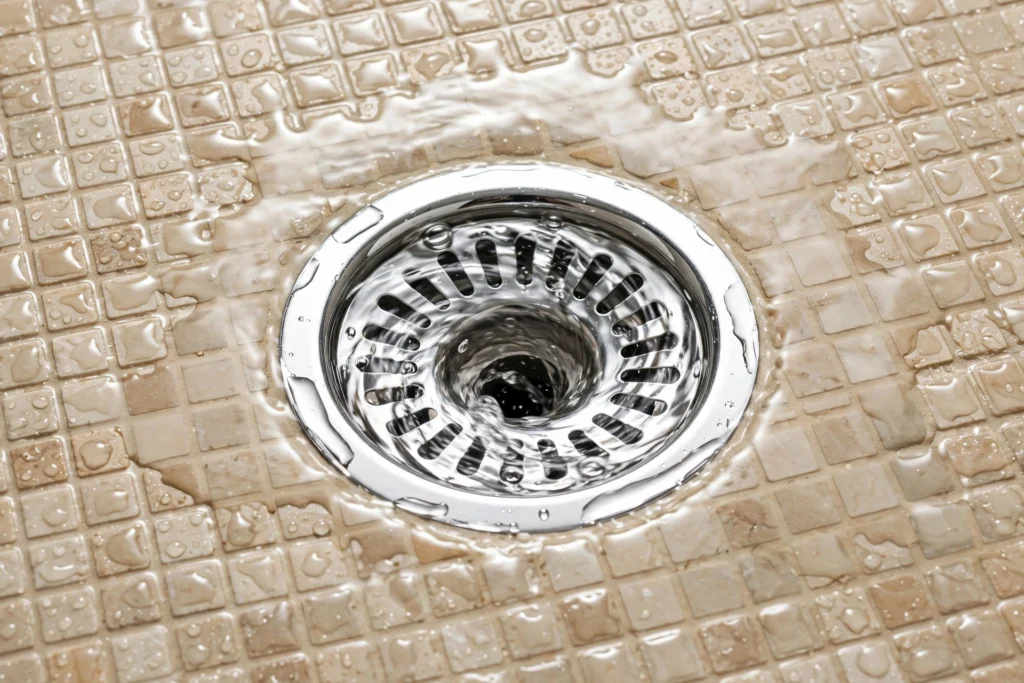
This is the drain you picture when someone says “shower drain” — a round or square grate sitting in the middle (or corner) of the shower floor, with the floor sloping toward it from all sides.
Why people still choose them: they’re cheap, every plumber knows how to install them, and replacement grates are available everywhere. A standard point drain costs a fraction of a linear drain, and if yours ever fails, finding parts is never a problem.
The downside: the floor needs a four-way slope toward the center, which means more cuts in large-format tile. And honestly? They’re a little boring. But boring that works beats exciting that floods.
Linear Drains (Trench Drains)
A long, narrow channel — usually set against one wall or the shower entrance. Water flows in a single direction toward the slot. You’ve seen these in high-end hotel bathrooms and modern walk-in showers.
Why they’re popular now: one-direction slope means big tiles stay intact (fewer cuts, cleaner look), and they handle high water flow beautifully — great if you have a rain shower head dumping gallons per minute. They also just look sharp.
The downside: price. A quality linear drain can cost 3–5x more than a point drain, and installation is fussier — the channel has to sit perfectly level. This is not the drain to cheap out on; a badly installed linear drain is worse than a good point drain.
Tile-In (Invisible) Drains
A linear drain with a twist: the grate is designed to hold a piece of your floor tile, so the drain practically disappears into the floor. All function, almost no visual interruption.
Best for: minimalist bathrooms where you want clean sightlines. Watch out for: they’re the priciest option and the tile insert needs to be cut precisely. Gorgeous when done right, unforgiving when done wrong.
Shower Drain Sizes Explained
Size matters here — not for looks, for flow rate. A drain that’s too small for your shower head setup will leave you ankle-deep.
Standard point drains are typically 4 inches (square or round). That’s fine for a normal single-head shower. Running a rain head plus body sprays? Step up or go linear.
Linear drains commonly come in 24, 28, 32, and 36-inch lengths. Rule of thumb: the drain should span most of the wall it’s set against. A 32-inch shower gets a 28-inch drain. Don’t overthink it — match the drain to the shower width and leave a couple inches on each side.
Drain outlet size (the pipe underneath) is usually 2 inches in the US, which handles standard residential flow. If you’re building a multi-head spa shower, talk to your plumber about whether your drain line needs upsizing — this is decided before the pan goes in, not after.
How to Choose the Right Shower Drain
Forget the marketing. Ask yourself four questions:
1. What’s your shower head situation? Single standard head → any drain works. Rain head or multiple heads → lean linear, and confirm your flow rate.
2. What’s your tile? Large-format tile (12×24 or bigger) → linear drain saves you from a jigsaw puzzle of cuts. Small mosaic → point drain is fine and cheaper.
3. Curbed or curbless? Curbless (walk-in) showers practically beg for linear drains — the single-direction slope is what makes curbless work without water escaping.
4. What’s the budget? Point drains: $20–$60 for the drain itself. Linear: $150–$500+. Tile-in: $300+. Installation labor is on top, and linear costs more to install too.
My honest take: if budget is tight, a quality point drain from a reputable brand beats a cheap linear drain every time. The fanciest design in the world doesn’t matter if it doesn’t drain.
Shower Drain Installation: What to Know
If you’re hiring a plumber (recommended for most people): the drain decision happens early — before the shower pan or waterproofing goes in. Tell your contractor which drain you’ve chosen before they start, not during. The pan slope, waterproofing method, and drain type all have to agree with each other.
If you’re DIY-ing: a point drain replacement (swapping the grate and clamping ring on an existing setup) is very doable — it’s a weekend project with basic tools. A full new installation, especially linear, is advanced. The waterproofing around the drain is the single most failure-prone part of any shower build. If you’re not confident in your waterproofing, hire that part out even if you do the rest yourself.
One thing most guides skip: test the drain before you tile. Flood-test the pan, run water, watch it drain. Finding a problem after tile is a nightmare; finding it before is a five-minute fix.
Cleaning and Maintenance
Hair is the enemy — a $5 drain hair catcher saves you from 90% of clogs. Pop the grate every few months and clear buildup. For linear drains, the channel lifts out for cleaning; do it quarterly or you’ll get that slow-drain sadness.
Skip the harsh chemical drain cleaners on a regular basis. They can damage finishes and, over time, the pipes themselves. A drain snake and some patience beat chemicals almost every time.
Frequently Asked Questions
Can I replace just the shower drain cover?
Yes — if the drain body underneath is fine, swapping the grate/cover is easy and cheap. Just match the size and shape.
Do linear drains clog more than point drains?
Not inherently, but their long channel collects hair along its full length, so they need cleaning a bit more often. The removable channel makes it easy, though.
What’s the best shower drain for a curbless shower?
A linear drain, set at the shower entrance or along the back wall. The single-slope floor it enables is what keeps water where it belongs.
How long does a shower drain last?
The drain body itself — decades. Grates and finishes wear faster, but those are replaceable without touching the plumbing.
The Bottom Line
Pick your drain early, match it to your shower heads and tile, and don’t cheap out on installation. It’s the least glamorous decision in your bathroom project and one of the most consequential. A $40 drain installed right will outlive a $400 drain installed wrong — every time.
Pingback: Shower Wall Panels & Surrounds: Complete Guide