
The bathroom is the hardest-working room for flooring in the entire house. Constant humidity, standing water, splashing, temperature swings — and it all happens in a small space where every flaw is visible. Get the bathroom floor wrong and you’ll know within a year. Get it right and you’ll forget about it for decades.
This guide ranks the best bathroom flooring options honestly, covers what to avoid, and gets into the details (slip resistance, grout, heated floors) that separate a good bathroom floor from a regrettable one.
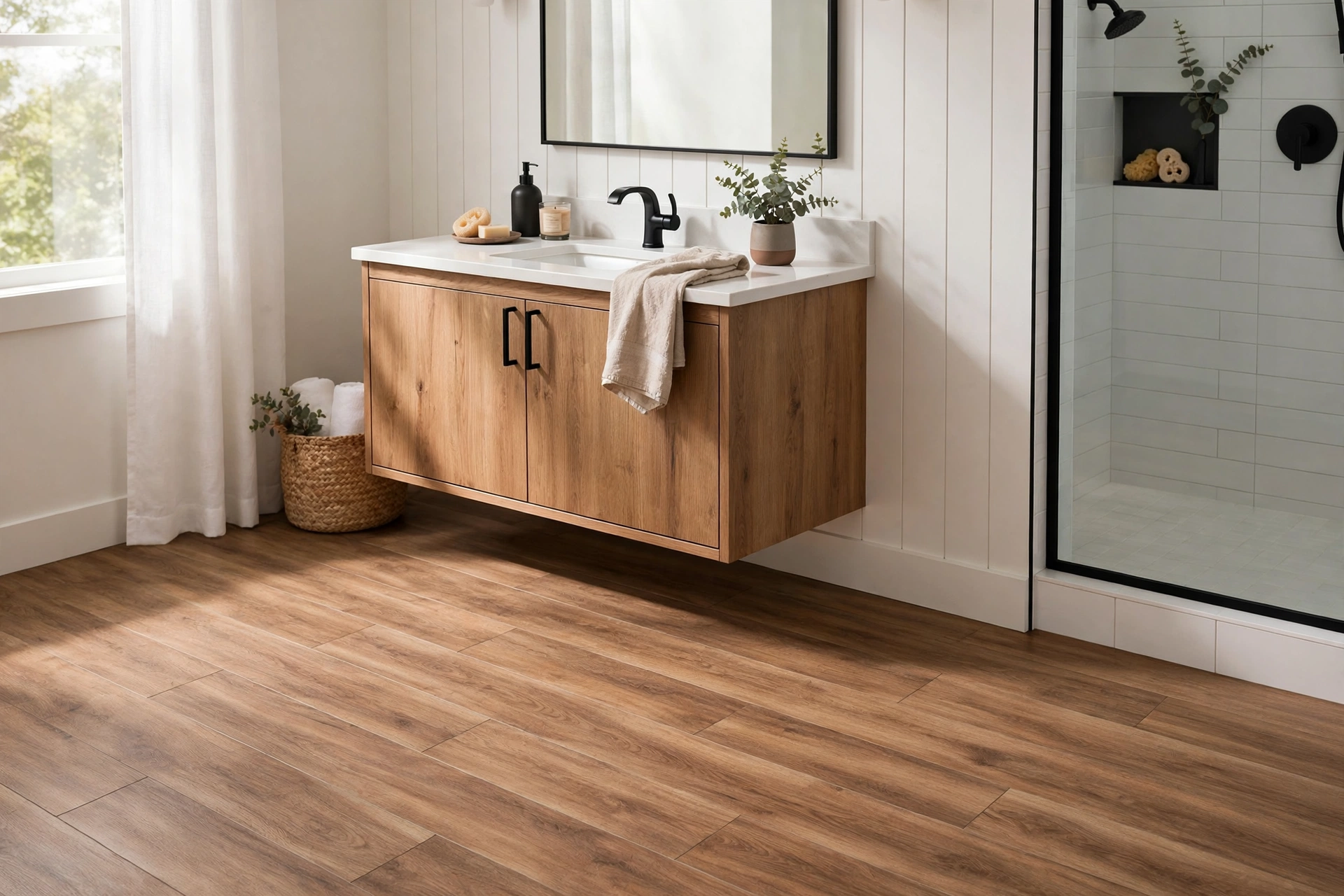
What Bathroom Floors Must Handle
Before comparing materials, let’s be clear about the job:
Standing water. Not just splashes — the puddle by the tub, the overflow that nobody mentions, the toilet supply line that drips for a week before anyone notices.
Constant humidity. Hot showers steam the room daily. Materials that absorb moisture slowly degrade even without direct water contact.
Temperature swings. Hot shower, cold room, repeat daily. Materials expand and contract; the floor system has to tolerate it.
Slip risk. Wet smooth surfaces are dangerous. This isn’t just comfort — it’s safety, especially for kids and older adults.
Cleaning. Toothpaste, makeup, hair products, hard water deposits. The floor needs to survive chemicals and scrubbing.
Any floor that can’t handle all five doesn’t belong in a bathroom. That eliminates more options than people expect.
The Best Bathroom Flooring Options, Ranked
1. Porcelain Tile — The Gold Standard
Still the best bathroom floor, and it’s not close. Porcelain is waterproof, nearly indestructible, immune to humidity, and available in every style from classic subway to wood-look planks to massive slabs.
Why it wins: nothing else matches the combination. Waterproof material, decades-long lifespan, and grout technology (epoxy) has solved the old maintenance complaints.
The catches: it’s cold and hard underfoot (radiant heating or bath mats solve the cold), installation is skilled labor and priced accordingly, and dropped items break.
Cost: $5–$12/sq ft installed.
2. Waterproof Vinyl Plank (LVP/SPC) — The Comfortable Choice
The best alternative to tile, and the right choice for many people. Warm underfoot, softer, quieter, and genuinely waterproof as a material. Modern wood-look and stone-look vinyl looks excellent in bathrooms.
Why people choose it: comfort and cost. It’s warmer than tile, cheaper to install, and DIY-friendly. For a secondary bathroom or a budget remodel, it’s arguably the smarter pick.
The catches: seams. Click-lock vinyl has dozens of seams where water can seep to the subfloor in a flood. For normal bathroom use (splashes, humidity, mopping), this is a non-issue. For the “left the tub running” scenario, tile wins. Glue-down LVT closes most of this gap.
Cost: $3–$7/sq ft installed.
Related: Waterproof Flooring Guide — the full breakdown of what “waterproof” really means.
3. Sheet Vinyl — The Budget Waterproof Pick
One continuous sheet, minimal seams, waterproof material, $2–$4 installed. For a bathroom on a tight budget, sheet vinyl is genuinely excellent — it’s more watertight as a system than click-lock plank because there are hardly any seams at all.
Why people choose it: price and practicality. A small bathroom can be floored for under $200.
The catches: harder to repair (damage usually means replacing the whole sheet), and it doesn’t look as premium as tile or plank.
Cost: $2–$4/sq ft installed.
Related: Sheet Vinyl Flooring Guide — when sheet vinyl is the smartest choice.
4. Natural Stone Tile — The Luxury Option
Marble, travertine, slate — stunning, unique, and undeniably premium. Also: expensive, porous (needs regular sealing), slippery when polished, and cold. It’s a luxury choice with luxury maintenance.
Verdict: beautiful if you love it and maintain it. Not the practical pick.
What to Avoid in Bathrooms
Standard laminate. The fiberboard core swells irreversibly with moisture. Bathroom humidity alone shortens its life; any real water exposure kills it.
Solid hardwood. Absorbs moisture, cups, gaps, and eventually rots in sustained humidity. There are “bathroom hardwood” products with extreme sealing, but it’s fighting the material’s nature.
Carpet. In a bathroom it’s a mold and mildew farm. This should go without saying, but bathroom carpet still exists in older homes. If you have it, replace it.
“Waterproof” laminate. Better than standard, but bathrooms are where the fine print matters. The warranty covers surface water for limited time — a bathroom exceeds those limits regularly. I’d skip it here.
Peel and stick tiles. Fine for a powder room that barely gets wet. Not for a full bathroom with a shower or tub — water works under the edges over time.
Slip Resistance: The Safety Detail
This matters more than most guides admit. Bathroom falls are a leading cause of home injury, and the floor is the variable you control.
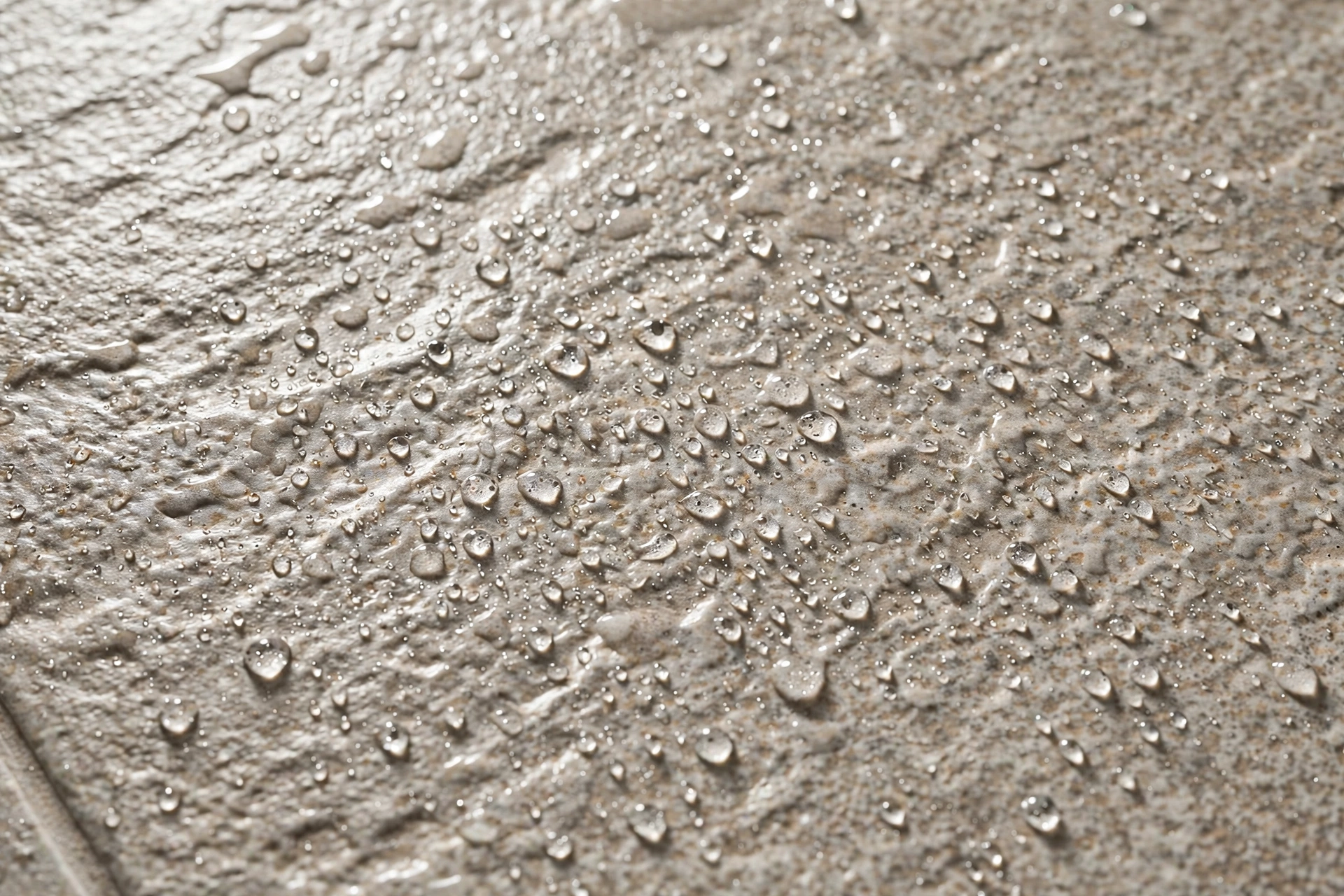
What to look for: tile with a COF (coefficient of friction) rating of 0.42+ for wet areas. Textured or matte finishes grip far better than polished. Wood-look porcelain with texture is the sweet spot — beautiful and safe.
Vinyl’s advantage: most LVP has a naturally grippier surface than polished tile. It’s one of vinyl’s underrated bathroom benefits.
What to avoid: polished marble or glossy ceramic in a bathroom. Beautiful, treacherous. If you love the look, confine it to walls and use something textured on the floor.
Small tiles help: mosaic floors have more grout lines, and grout provides grip. A penny-round or hex mosaic shower-adjacent floor is both beautiful and safe.
Heated Bathroom Floors: Worth It?
Radiant floor heating under tile is one of those upgrades people rave about after installing and wish they’d done sooner. It eliminates tile’s #1 drawback (cold) and dries the floor faster (less mildew, less slip risk).
Cost: $8–$15/sq ft installed for electric mat systems, plus an electrician for the thermostat. For a typical 50 sq ft bathroom, $500–$1,000 all-in.
Worth it? In cold climates, absolutely — it’s the difference between dreading and loving a tile bathroom in winter. In warm climates, skip it. It works under tile and stone; most systems also work under LVP (check the manufacturer’s temperature limits).
Installation Notes for Bathrooms
Bathroom floors have specific requirements beyond the material:
Waterproof the substrate. Cement backer board under tile (never drywall in wet areas), and consider a waterproof membrane (paint-on like RedGard) under the tile in wet zones. This is what separates a 30-year bathroom floor from a 5-year one.
Toilet flange height. The new floor changes the flange height relative to the finished floor. Too low and the wax ring won’t seal — plan for a flange extender if needed.
Transitions. Bathroom floors often meet hallway floors of different heights. Plan transitions before installation, not after.
Silicone, not grout, at changes of plane. Where floor meets wall, tub, or shower curb: 100% silicone caulk, not grout. Grout cracks at movement joints; silicone flexes.
What Does Bathroom Flooring Cost?
For a typical 50 sq ft bathroom:
- Sheet vinyl: $100–$200 materials, $200–$400 installed
- LVP/SPC: $150–$350 materials, $300–$600 installed
- Porcelain tile: $250–$600 materials, $600–$1,200 installed (labor is the big variable)
- Natural stone: $500–$1,500+ materials, $1,000–$2,500+ installed
- Radiant heating add-on: $500–$1,000
Bathrooms are small, so even premium materials stay affordable in absolute terms. This is the room to splurge a little.
Ventilation: The Forgotten Factor
Here’s what most flooring guides skip: even the best bathroom floor degrades faster in a poorly ventilated bathroom. Humidity that never clears works its way into every seam, grout line, and subfloor edge. An exhaust fan that actually vents outside (not into the attic) is as important as the flooring material itself.
The rule: run the fan during showers and 20–30 minutes after. If your mirror is still fogged, the fan isn’t doing its job — upgrade to a higher CFM model (roughly 1 CFM per square foot of bathroom). It’s a $150 fix that protects a $1,000 floor.
Mold-resistant paint on walls, a squeegee habit after showers, and keeping the bathroom door open when not in use all extend floor life. The floor handles water; it shouldn’t have to handle perpetual damp.
Frequently Asked Questions
What’s the best flooring for a bathroom?
Porcelain tile — waterproof, durable, huge style range. Waterproof vinyl plank is the best alternative for comfort and budget.
Can you put vinyl plank flooring in a bathroom?
Yes. The material is waterproof. Use SPC rigid core, consider glue-down for maximum protection, and seal the perimeter with silicone. It’s one of the most popular bathroom floors for good reason.
Is laminate flooring OK in a bathroom?
Standard laminate: no. “Waterproof” laminate: risky — the warranty fine print usually excludes sustained wet conditions, which describes bathrooms. Choose vinyl or tile instead.
What flooring is best for a small bathroom?
Larger-format tile or wide-plank vinyl in a light color — fewer visual breaks make small rooms feel bigger. Avoid tiny busy patterns that chop up the space visually.
How do I make bathroom tile less slippery?
Choose textured/matte tile (COF 0.42+), use smaller tiles with more grout lines for grip, and keep the floor dry with good ventilation. Bath mats at the tub/shower exit are non-negotiable.
The Bottom Line
Bathroom flooring is one place where practicality should lead and style follows — but the good news is you don’t have to sacrifice style. Porcelain tile remains the gold standard: waterproof, durable, beautiful. Waterproof vinyl plank is the comfort-and-budget champion. Either way, prioritize slip resistance, waterproof the substrate properly, and seal every edge. Do that, and your bathroom floor becomes the thing you never think about — which is exactly what a bathroom floor should be.