
There’s a reason hardwood floors show up in every “dream home” montage. Real wood has a warmth and character that no synthetic has fully replicated — the grain, the way it ages, the solid feel underfoot. It’s also the one flooring choice that consistently adds resale value. But hardwood is a big investment, and the options (solid vs engineered, species, finishes, prefinished vs site-finished) can paralyze even decisive shoppers.
This guide breaks it all down in plain English: the types, the wood species worth knowing, what finishes actually do, real costs, installation, and how to keep wood floors beautiful for decades.
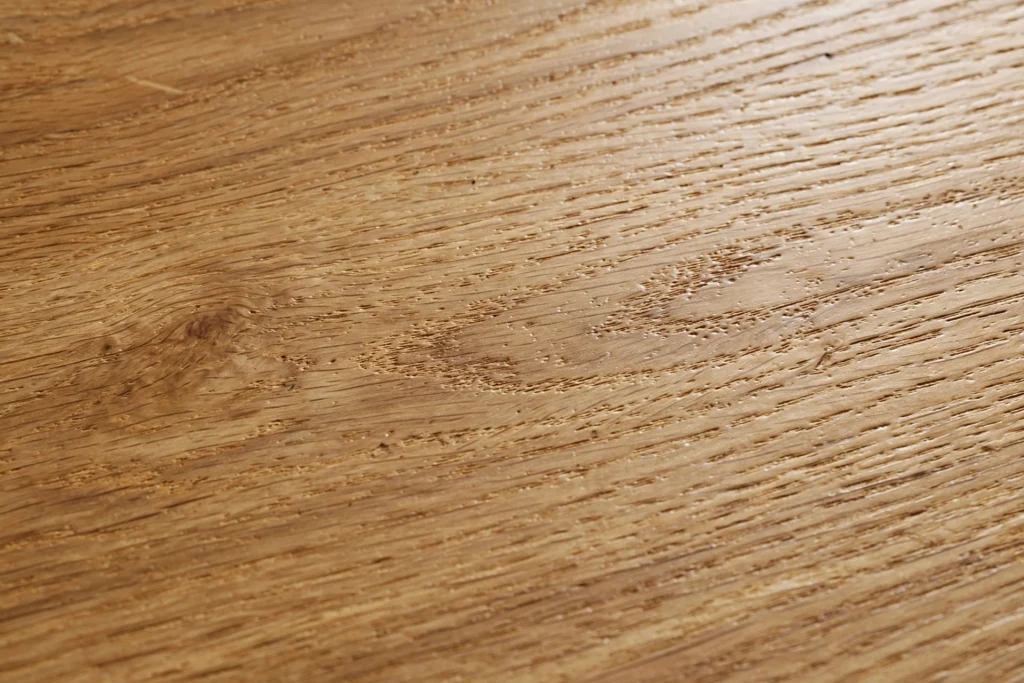
Solid vs Engineered: The Fundamental Choice
Every hardwood decision starts here, so let’s get it right.
Solid hardwood is milled from a single piece of lumber, typically 3/4″ thick and 2-1/4″ to 5″ wide (wider planks exist and cost more). Because it’s solid wood all the way through, it can be sanded and refinished four, five, even six times. In practical terms, that means a lifespan measured in generations — there are oak floors from the 1920s still in daily use.
The limitation is movement. Wood is hygroscopic — it absorbs and releases moisture with the seasons. In humid summers, boards swell; in dry winters with the heat running, they shrink and can gap. That’s normal and expected, but it rules out installations where moisture is a real factor: below-grade basements, bathrooms, and directly over concrete slabs without serious moisture mitigation.
Engineered hardwood is a sandwich: a real hardwood veneer (the “show” layer, typically 1–4mm of actual oak, walnut, etc.) bonded over cross-layered plywood. The cross-grain plywood core barely moves with humidity, which makes engineered dramatically more stable. It can go in basements, over concrete, over radiant heating — places solid wood can’t.
The trade-off: that veneer is thin. You can refinish engineered hardwood once, maybe twice if the veneer is thick (3mm+). After that, you’re replacing it. Realistic lifespan: 25–40 years vs 75–100+ for solid.
Which should you buy? If you’re installing on a wood subfloor above grade and you plan to stay for decades, solid is the forever choice. If you’re going over concrete, in a basement, or you want wider planks (engineered comes in widths solid can’t practically match), engineered is the smart pick. Neither is “fake” — engineered is real wood, just constructed differently.
Wood Species: What Actually Matters
The species determines hardness, grain character, color, and price. Here are the ones worth knowing:
Red oak — the American default. Medium hardness (1290 on the Janka scale), prominent grain, warm reddish tone. Takes stain beautifully. The most affordable hardwood option and the one you’ll see most. If a listing just says “hardwood floors,” it’s probably red oak.
White oak — red oak’s tougher, more refined sibling (1360 Janka). Tighter grain, more neutral brown-gray tone, and naturally more water-resistant. It’s the darling of modern design right now — that pale, Scandinavian look is almost always white oak. Costs 10–20% more than red oak; worth it.
Hickory — the rustic one (1820 Janka, very hard). Dramatic color variation from light to dark within the same floor, bold grain. Hides wear and dents better than anything else because the busy pattern camouflages damage. Great for active households; polarizing if you want a calm, uniform look.
Walnut — the luxury pick (1010 Janka, actually softer than oak). Rich chocolate-brown color, straight elegant grain. Stunning, but it dents more easily and costs significantly more. Also darkens and lightens unevenly in sunlight — beautiful, but high-maintenance in sunny rooms.
Maple — pale, clean, contemporary (1450 Janka). Very hard and smooth-grained, which makes it great for a minimalist look. Doesn’t take dark stains evenly (it blotches), so it’s usually sold natural or lightly finished.
My honest take: white oak is the best all-around choice for most homes right now — hard enough, beautiful, on-trend without being trendy, and reasonably priced. Red oak if budget matters most. Hickory if you have kids and dogs and want to stop worrying.
Prefinished vs Site-Finished
Prefinished hardwood arrives from the factory with the finish already applied — usually aluminum-oxide urethane, cured under UV lights. It’s harder and more durable than anything applied on-site. Installation is fast (no sanding, no finish coats, no fumes, no waiting days between coats) and you know exactly what the floor will look like before it goes in. The tell: tiny beveled edges between boards, since each plank is finished individually.
Site-finished (unfinished) hardwood is installed raw, then sanded, stained, and finished in your home. The advantages: perfectly flat, seamless surface with no bevels, unlimited custom stain colors, and the ability to match existing floors exactly. The downsides: days of dust, fumes, and disruption, plus a finish that’s good but not quite as hard as factory UV-cured coatings.
My honest take: prefinished wins for most people — better durability, faster install, no fumes, lower labor cost. Go site-finished when you’re matching existing wood floors or you want a truly custom color.
Finishes: What Protects Your Floor
Oil-based polyurethane — the traditional choice. Warm amber tone that deepens over time, very durable, but strong fumes and slow drying (24+ hours between coats). Still excellent; just plan around the smell.
Water-based polyurethane — the modern default. Clear (doesn’t amber), low odor, dries in hours. Slightly less rich-looking than oil-based on some woods, but the convenience wins for most people.
Hardwax oil — the natural option. Penetrates the wood rather than forming a film on top. Gorgeous matte look, easy spot-repairs (just re-oil the damaged area), but less protective against standing water and needs periodic re-oiling.
Matte vs satin vs gloss: matte and satin hide dust, scratches, and wear far better than gloss. Gloss looks dramatic in formal spaces but shows every footprint. For real life, satin is the sweet spot.
What Does Hardwood Flooring Cost?
Materials:
- Red oak (solid, unfinished): $4–$7/sq ft
- White oak: $5–$9/sq ft
- Hickory: $5–$8/sq ft
- Walnut: $8–$14/sq ft
- Engineered (most species): $4–$9/sq ft
Installation: $4–$8/sq ft for nail-down, depending on your market. Site-finishing adds $3–$5/sq ft more.
All-in typical ranges: $8–$15/sq ft for solid installed (unfinished + site finish at the high end), $6–$12 for engineered or prefinished solid.
The hidden costs: subfloor repair, old floor removal ($1–$3/sq ft), transitions and moldings, and moving furniture. Get an itemized quote.
Installation: What to Expect
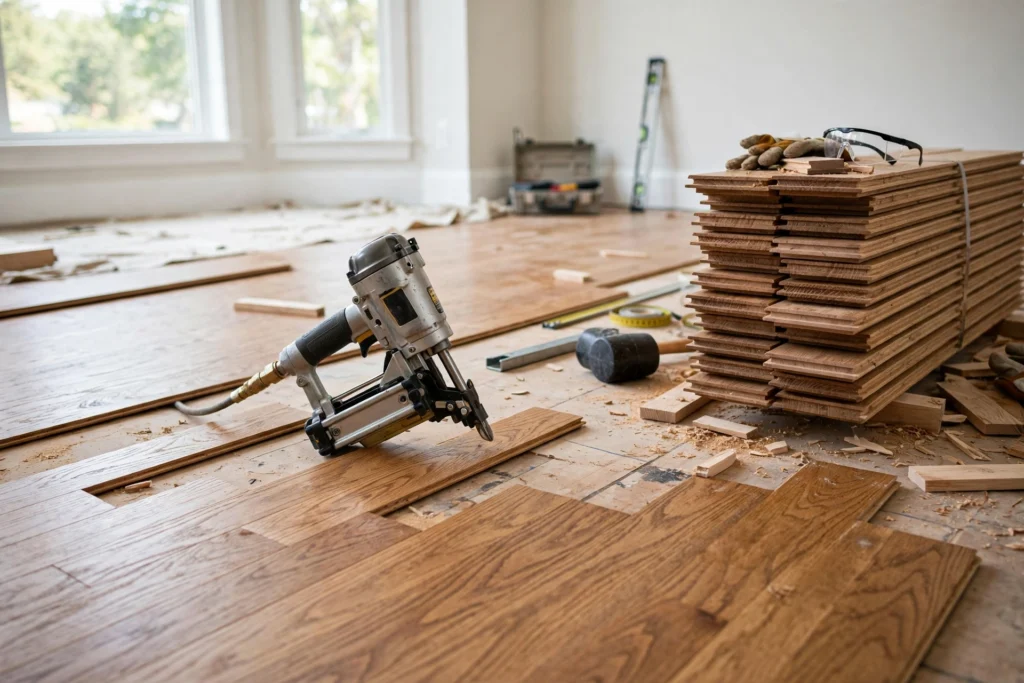
Solid hardwood is almost always nailed or stapled to a wood subfloor — 3/4″ solid needs 3/4″ plywood or OSB underneath. Over concrete, solid is generally a no-go (engineered can be glued or floated instead).
The process: acclimate the wood in the room for 5–7 days (longer than vinyl — wood moves more) → install a moisture barrier → lay the first rows carefully (they set the line for everything) → nail through the tongue → cut around obstacles → install baseboards and transitions.
DIY? Honestly, hardwood installation is intermediate-to-advanced DIY. Renting a floor nailer is easy; laying 500 square feet perfectly straight, handling tricky cuts, and racking boards for good color variation takes practice. A bad hardwood install is very visible and very expensive to fix. Most people should hire this one out.
Related: Flooring Installation Guide — DIY vs hiring a pro, step-by-step overviews, tools, and real cost ranges.
Maintenance: Keeping Wood Beautiful
The good news: hardwood maintenance is simple. The bad news: most damage comes from ignoring the simple stuff.
Daily/weekly: sweep or vacuum (soft brush head — beater bars scratch). Damp-mop with a wood-floor cleaner; never wet-mop, never steam-mop. Water is wood’s enemy, always.
The rules that matter:
- Felt pads under all furniture. Every chair, every table. This single habit prevents most scratches.
- Rugs at entries to catch grit — sand is sandpaper.
- Wipe spills immediately. Don’t let water sit.
- Keep humidity between 35–55% if you can. A humidifier in dry winters prevents gapping.
- Never use “mop and shine” products — they build up a film that looks dull and makes future refinishing harder.
Recoating: every 3–5 years in high-traffic areas, a professional can abrade the surface and apply a fresh topcoat without full sanding. This is cheap maintenance that dramatically extends time between full refinishes.
Refinishing: when wear goes through the finish into the wood — gray, dull areas that don’t respond to cleaning — it’s time. Solid hardwood: sand to bare wood, stain if desired, 2–3 finish coats. Expect $3–$5/sq ft and a few days of disruption.
Hardwood vs The Alternatives
Vs vinyl/LVP: hardwood wins on beauty, feel, longevity, and resale. Vinyl wins on waterproofing, price, and shrugging off abuse. Young kids + big dogs + hardwood = anxiety. There’s no shame in choosing vinyl for the chaos years.
Vs laminate: hardwood is the real thing; laminate is the photograph. If budget forces the choice, good laminate is fine — but it’s not an investment the way hardwood is.
Vs tile: different rooms, mostly. Tile for wet areas, hardwood for living areas. Both last decades.
Hardwood Grades: What Select, #1 and #2 Common Mean
Hardwood is graded by appearance — and the grade affects price significantly. Understanding grades prevents overpaying for uniformity you don’t need (or underbuying character you wanted).
Select and Better (sometimes “Prime”): the cleanest grade. Minimal knots, consistent color, uniform grain. The formal, refined look. Costs the most — you’re paying for the sorting, not better wood.
#1 Common: more character — small knots, some color variation, mineral streaks. Still an attractive floor, just livelier. The value sweet spot for most homes: 15–25% cheaper than Select with plenty of beauty.
#2 Common: rustic. Larger knots, dramatic color variation, visible character marks. Perfect for farmhouse, cabin, and rustic styles; wrong for formal spaces. The cheapest grade, often 30–40% below Select.
My honest take: most homeowners overbuy grade. #1 Common in white oak looks fantastic in real homes — the variation reads as natural character, not defects. Save the Select grade for formal dining rooms and showpiece spaces. And if you love rustic style, #2 Common isn’t “worse” — it’s exactly the look, at the lowest price.
One caution: lower grades have more short boards and trickier pieces, which can increase installation labor slightly. Factor that into the savings math.
Frequently Asked Questions
Is solid or engineered hardwood better?
Neither is universally better. Solid lasts longer and refinishes more times; engineered is more stable and installs in more places (basements, concrete, radiant heat). Match the product to your subfloor and your timeline.
What is white oak hardwood flooring, and why is everyone talking about it?
White oak is a North American hardwood species that’s become the design world’s favorite — neutral tone, tight grain, harder than red oak, and it takes the pale natural finishes that dominate current trends. It’s genuinely excellent, not just fashionable.
Can hardwood go in a kitchen?
Yes, with caveats. Site-finished hardwood with a good polyurethane handles kitchen life fine if you wipe spills promptly and use rugs at the sink. But it’s higher-maintenance than vinyl or tile there — be honest about your habits.
How long does hardwood flooring last?
Solid: 75–100+ years with periodic refinishing. Engineered: 25–40 years. Prefinished solid: same as solid, with the factory finish lasting 15–25 years before needing attention.
Does hardwood flooring increase home value?
Yes — consistently. It’s the flooring upgrade with the best ROI in real estate data, often returning more than its cost at resale.
What Janka rating do I need?
For most homes, 1290+ (red oak and up) is fine. Active households with large dogs: consider 1400+ (white oak, hickory, maple). Below 1000 (walnut, cherry) dents noticeably — beautiful, but know what you’re getting.
The Bottom Line
Hardwood is the benchmark every other flooring is measured against, and it holds the title for good reasons: unmatched beauty, generational lifespan, and real resale value. It’s not the cheapest, it’s not waterproof, and it asks for some care — but no synthetic has replaced what real wood does to a room. Choose white oak for the modern sweet spot, red oak for value, engineered when your subfloor demands it. Buy once, maintain simply, and you’ll walk on those floors for the rest of your life.