
A standard shower head points a tight spray at your shoulders. A rain shower head does something completely different — it hangs overhead and drenches you in a wide, gentle curtain of water, like standing under warm rain. No aiming, no ducking, just… soak.
It sounds luxurious because it is. But here’s the catch nobody puts on the box: a rain shower head is the most pressure-sensitive fixture in your bathroom. Get the conditions right and it’s the best shower of your life — get them wrong and you’ve bought a $150 drizzle.
This guide covers how rain shower heads actually work, the types worth considering, the water pressure reality check you need before buying, and the buying tips that separate a great purchase from a regret.
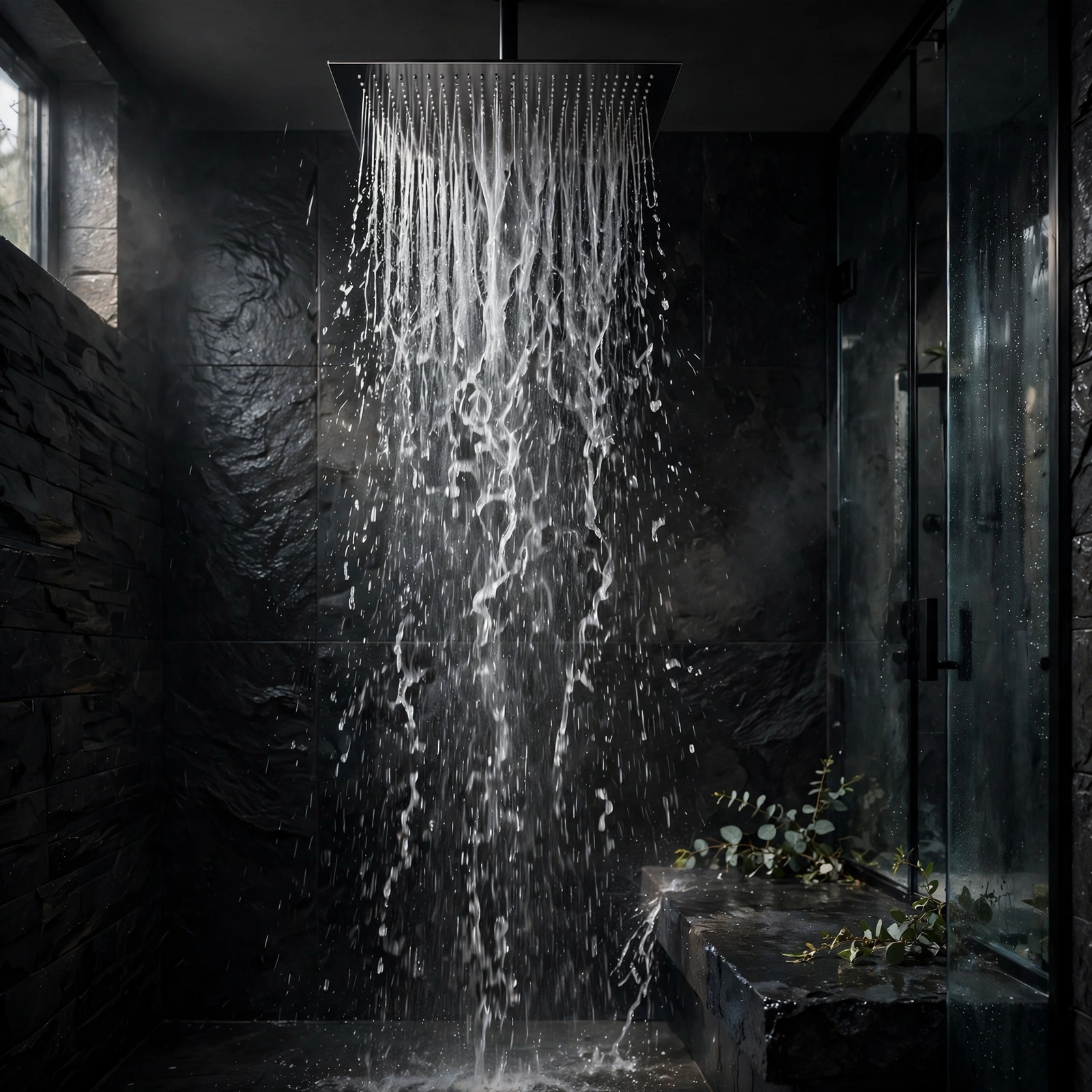
What Makes a Rain Shower Head Different
A regular shower head is typically 3 to 5 inches across with angled jets designed to hit you from the side. A rain shower head (also called a rainfall shower head) mounts directly overhead — or nearly so — and spreads water across a much wider face, usually 8 to 12 inches in diameter, with some designer models hitting 16 or even 20 inches.
The spray feels different because it IS different — hundreds of small streams falling straight down across your whole body at once. It doesn’t blast; it drenches, like standing in a warm downpour.
That wide diameter is the whole point — and also the whole challenge. Spreading your water flow across a 10-inch face instead of a 4-inch one means each individual stream is weaker. Which brings us to the thing you absolutely must understand before spending a dime.
The Water Pressure Reality Check (Read This First)
I’m going to be blunt: if your home has weak water pressure, a rain shower head will disappoint you. Full stop.
A standard head works fine at modest pressure because its small face concentrates what flow you have. A rain head spreads that same flow thin — at low pressure you get a pathetic drizzle from half the nozzles while the rest barely drip. It’s the number one complaint in rain shower head reviews, and it’s almost never the head’s fault.
Here’s what most guides won’t tell you: before you buy anything, check your home’s water pressure. A $10 pressure gauge on a hose bib tells you in a minute. Most homes sit between 40 and 60 PSI, and rain heads are happiest at 50 PSI and above. Under 40? You’ve got a plumbing problem to solve first, not a shower head problem.
Honestly? If your current shower already feels weak, a rain head will make it worse. Fix the pressure first.
Related: High Pressure Shower Heads — if your water pressure is the weak link, start here before considering a rain shower.
Types of Rain Shower Heads
Ceiling-Mount Rain Heads
The purest rain experience. The head mounts flush or near-flush to the ceiling with water fed through the ceiling, so the rain falls straight down onto you. This is the spa look — and the most involved install.
The reality: if your plumbing doesn’t already come through the ceiling, this means opening it up and rerouting pipes — a remodel-level project, not a weekend swap. Budget for a plumber. But nothing else gives you that true standing-in-the-rain feeling.
Ceiling height matters too. You want the head roughly 7 to 8 feet above the shower floor. In a standard 8-foot ceiling, a ceiling-mount head sits about right — below 7 feet of clearance, skip it.
Wall-Mount Rain Heads (with Shower Arm)
The practical middle ground. A curved or straight shower arm extends from the wall and holds the rain head overhead — you get the wide drenching spray without touching the ceiling plumbing.
Why most people choose this: it screws onto your existing shower arm fitting in about 15 minutes. No plumber, no drywall dust. The arm (usually 12 to 16 inches) positions the head out over the middle of the shower instead of hugging the wall.
Watch out for: cheap thin arms wobble under a heavy 12-inch head full of water. Going big? Get a solid brass arm — worth the extra $20.
Rain + Handheld Combos
A rain head paired with a separate handheld wand on a diverter — best of both worlds. Use the rain head for the soak, flip to the handheld for rinsing, cleaning the shower, washing the dog, all the practical stuff a fixed overhead head can’t do.
My honest take: if this is your only shower, get the combo. A rain head alone is lovely until you need to rinse shampoo out of a kid’s hair or scrub the walls — the extra $30–$50 removes the biggest functional downside of going rain-only.
Related: Dual Shower Heads — more ways to pair a rain head with a second spray option.
Rain Shower Heads vs Standard Heads: Pros and Cons
Let’s be straight about the tradeoffs.
Rain heads win on: the experience (nothing else feels like it), full-body coverage without moving around, and looks — a big round rain head is a genuine style statement.
Standard heads win on: water efficiency, rinsing power (concentrated jets rinse shampoo faster), versatility (angle adjustment, multiple spray modes), and forgiveness of low pressure.
The tie-breaker most people ignore: water usage. A rain head at 2.5 GPM over a 12-minute shower uses 30 gallons — longer, lazier showers are part of the appeal, but your water bill may notice.
Buying Tips: What Actually Matters
1. Size: 8 inches is the sweet spot. An 8-inch head gives the full rain effect without demanding crazy flow. Only go 10–12 inches with genuinely strong pressure (55+ PSI) — an underfed 12-inch head performs worse than a well-fed 8-inch one.
2. Check the flow rate. Look for 1.8 to 2.5 GPM. Federal rules cap shower heads at 2.5 GPM in the US (some states cap at 1.8). A rain head at 1.8 GPM can still feel great with good nozzle design — but match the face size to the flow, or a 12-inch face will feel thin.
3. Anti-clog nozzles are non-negotiable. Silicone jet nozzles you can wipe clean with a finger — hard water builds up on any head, but silicone lets you rub deposits off in seconds. Rigid plastic nozzles? Pass.
4. Finish: match your bathroom, but know the tradeoffs. Chrome is the safest bet — durable, easy to clean, matches everything. Brushed nickel and matte black look fantastic but show water spots more. Whatever you pick, get metal (brass or stainless) over plastic if the budget allows — it lasts longer and feels substantially better.
5. Weight matters for wall-mount. A big stainless rain head can weigh 3–5 pounds full of water; your existing arm was built for a 1-pound head. Wall-mounting a large head? Upgrade to a sturdy brass arm — a sagging rain head ruins the whole effect.
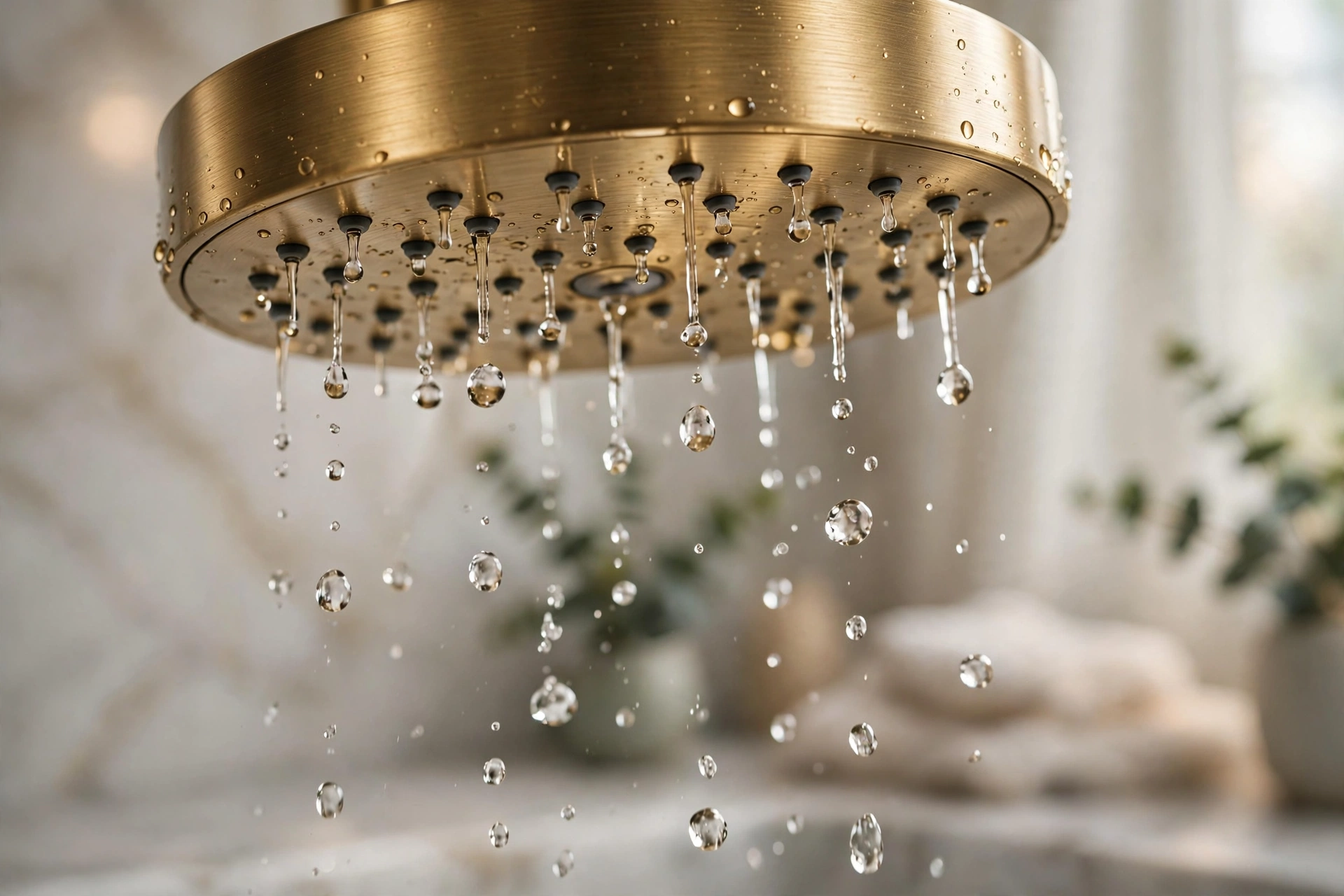
What Do Rain Shower Heads Cost?
Real-world ranges, head only:
- Budget ($40–$80): Decent 8-inch chrome heads, usually ABS plastic with a chrome finish. They work. The finish may not fool anyone up close, and the arm hardware is often the weak point.
- Mid-range ($80–$180): The sweet spot. Solid construction, good silicone nozzles, real metal options, reliable finishes. Most buyers should land here.
- Designer ($200–$300+): Big names, 12–16 inch faces, premium finishes. You’re paying for looks and brand as much as performance past about $200.
Ceiling-mount installation (if plumbing needs rerouting): add $300–$800 for a plumber, more if tile work is involved. Wall-mount on an existing arm: free, it’s a DIY job.
Installation: Easier Than You’d Think (Mostly)
Wall-mount rain head on an existing arm: unscrew the old head, wrap the threads with Teflon tape (3–4 wraps), screw on the new head, hand-tighten plus a quarter turn with a wrench. Ten minutes, no special skills. If you’re swapping the arm too, same process — the arm unscrews from the wall fitting.
Ceiling-mount: unless the ceiling supply is already there, call a plumber. Opening the ceiling, extending the supply line, supporting the head’s weight — not a beginner DIY project.
One thing most guides skip: check your shower’s drainage before upgrading. A rain head dumps water faster and wider — if your drain is already slow, you’ll be standing in a puddle.
Related: Shower Drains Guide — how to make sure your drain can handle the extra flow from a rain head.
Frequently Asked Questions
Do rain shower heads use more water?
They can. The head is capped at the same 2.5 GPM as any shower head, but the luxurious feel encourages longer showers. If you’re on a well or watching the water bill, know your habits will probably stretch.
Can I install a rain shower head myself?
Wall-mount on an existing arm: absolutely, it’s a 10-minute job. Ceiling-mount requiring new plumbing: hire a plumber. Know which situation you’re in before you buy.
Will a rain shower head work with low water pressure?
Honestly, no — not well. Rain heads need solid pressure (ideally 50+ PSI) to feed that wide face; with weak pressure you get a sad drizzle. Check your pressure first — a $10 gauge, five minutes.
Are rain shower heads good for washing hair?
They’re slower at rinsing than a concentrated spray — the gentle flow takes longer to work shampoo out, especially with long or thick hair. This is exactly why the rain + handheld combo is so popular: soak under the rain, rinse with the wand.
How do I clean a rain shower head?
Rub silicone nozzles with your fingers every few weeks to dislodge mineral buildup. For a deeper clean, bag the head in white vinegar for an hour. Avoid harsh chemicals on specialty finishes.
The Bottom Line
A rain shower head is the closest thing to a spa you can bolt onto your existing plumbing — but only if your water pressure can feed it. Check your pressure, pick an 8-inch head from the mid-range unless your flow justifies bigger, get silicone nozzles, and seriously consider the handheld combo. Do that, and every shower feels like a small vacation. Skip the pressure check, and you’ve bought an expensive disappointment.
Pingback: Shower Arms, Hoses & Extensions: The Parts Guide