
You step into the shower expecting to feel alive, and instead you get a lukewarm drizzle. You turn in circles waiting for the water to do its job, and by the time you’re rinsed, the hot water’s half gone and your morning’s already off.
So you google “high pressure shower head” and every box screams “3X PRESSURE!” “POWERFUL BLAST!” Here’s what I wish someone had told me before my first one: no shower head creates pressure. Not one. Anyone promising otherwise is selling marketing, not physics.
That doesn’t mean they’re useless — far from it. A good high pressure shower head can genuinely transform a weak shower, but only if you understand what it actually does and your plumbing isn’t the real problem. This guide covers the honest truth: how they work, when they help, what to buy, and the 10-minute install.
The Honest Truth: What a High Pressure Shower Head Actually Does
Your water pressure is decided by your home’s plumbing — the supply, your pipes, the valves. A shower head sits at the very end of that chain; it can’t add pressure any more than a smaller hose nozzle adds pressure to your spigot.
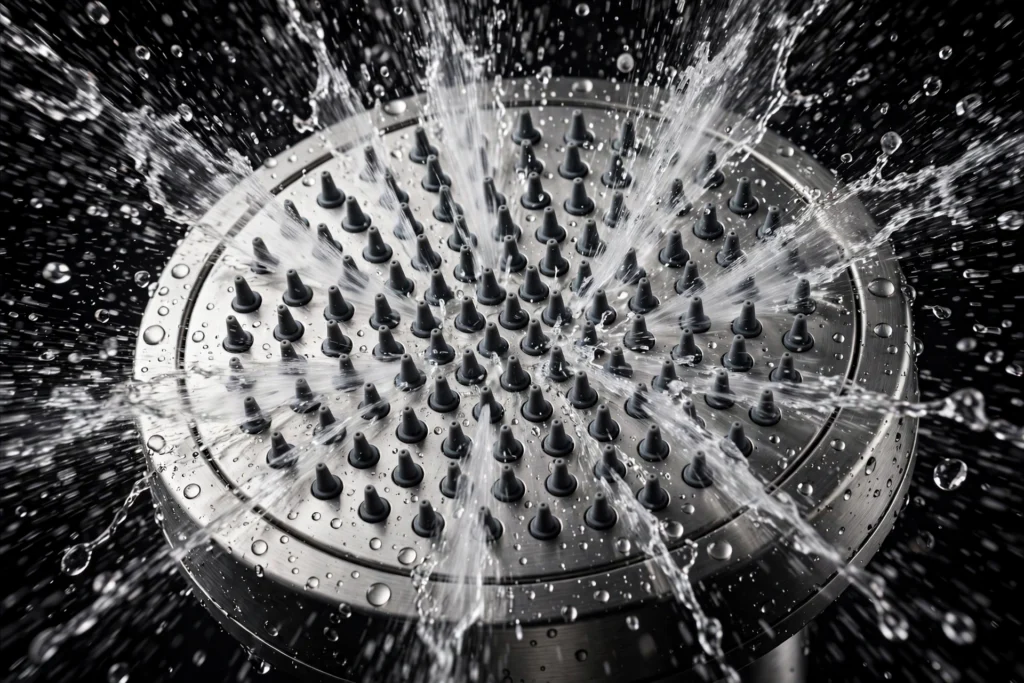
What it CAN do is make the pressure you have feel stronger — like putting your thumb over a hose end: same water, more force through a smaller opening. High pressure heads use that principle, concentrating your existing flow through smaller, precisely engineered nozzles.
The honest version of “3x pressure” is “feels up to 3x stronger.” When your shower is a sad trickle, that’s exactly what you’re buying — just don’t expect it to fix problems upstream of the head.
How They Work: The Three Tricks
Smaller, Engineered Nozzles
The core trick: force flow through narrower, carefully shaped nozzles. Less opening, more velocity. Good ones balance this so the spray feels powerful without turning into a needle-thin sting.
Air Injection
Some heads mix air into the water stream (the Venturi effect), so each droplet carries a little air bubble — the spray feels bigger and more forceful than the water volume alone would suggest.
My honest take: this is the tech behind most heads people actually love — it makes 2.0 GPM feel like 2.5. The catch? It feels slightly softer than a pure concentrated jet: full and drenching rather than needle-sharp. Most prefer it; some want the sting.
Pressure Chambers
A few designs route water through an internal chamber that releases it in pulses. Less common — the marketing outruns the results here. Nozzles and air injection do most of the real work.
When a High Pressure Head Helps — and When Your Plumbing Is the Problem
This is the section that saves people money. A high pressure head helps when the problem is the HEAD: clogged with mineral buildup, a cheap builder-grade model with lazy nozzles, or a low-flow head that was always anemic.
It does NOT help when the problem is the PIPES. So before you buy, do this 5-minute detective work:
1. Check your home’s water pressure. A $10 gauge on an outdoor hose bib tells you in a minute. Normal is 40–80 PSI, and high pressure heads work great in that range. Under 40? The head isn’t your problem — keep reading.
2. Test other fixtures. Kitchen faucet weak too? Bathroom sink? If the whole house is sluggish, no shower head fixes that — you might have a partially closed main valve, a failing pressure regulator, or old galvanized pipes choked with scale. Plumber territory.
3. Check if it’s just this shower. If everything else is fine but the shower dribbles, the culprit is usually right there: a clogged head (vinegar soak — free fix), an overly aggressive flow restrictor, or a kinked shower arm.
4. Look at the flow restrictor. Here’s what most guides won’t tell you: every modern head has a little plastic restrictor disc inside, limiting it to 2.5 GPM (1.8 in some states). Sometimes removing it is all the upgrade you need. (Check local codes first — some places legally require them.)
If your pressure reads fine (45+ PSI) and other fixtures are strong, a high pressure head will very likely make you happy. If the whole house is weak, save your money for the plumber.
Types of High Pressure Shower Heads
Fixed High Pressure Heads
Screws onto the shower arm and stays put — no moving parts, nothing to break. The spray angle adjusts at the ball joint.
Best for: anyone who wants a stronger shower with zero fuss. Fewer parts, fewer failure points, usually the cheapest option.
Handheld High Pressure Heads
A head on a flexible hose with a wall bracket or slide bar — hold it, aim it, bring it close for real rinsing power.
Why people love them: versatility — rinse shampoo, wash kids, clean the walls, bathe the dog. And the hose lets you hold the spray six inches from your skin, which multiplies perceived pressure dramatically. Honestly, a handheld is the single most effective “pressure upgrade” for the money, because proximity does what nozzles alone can’t.
Combo Units (Fixed + Handheld)
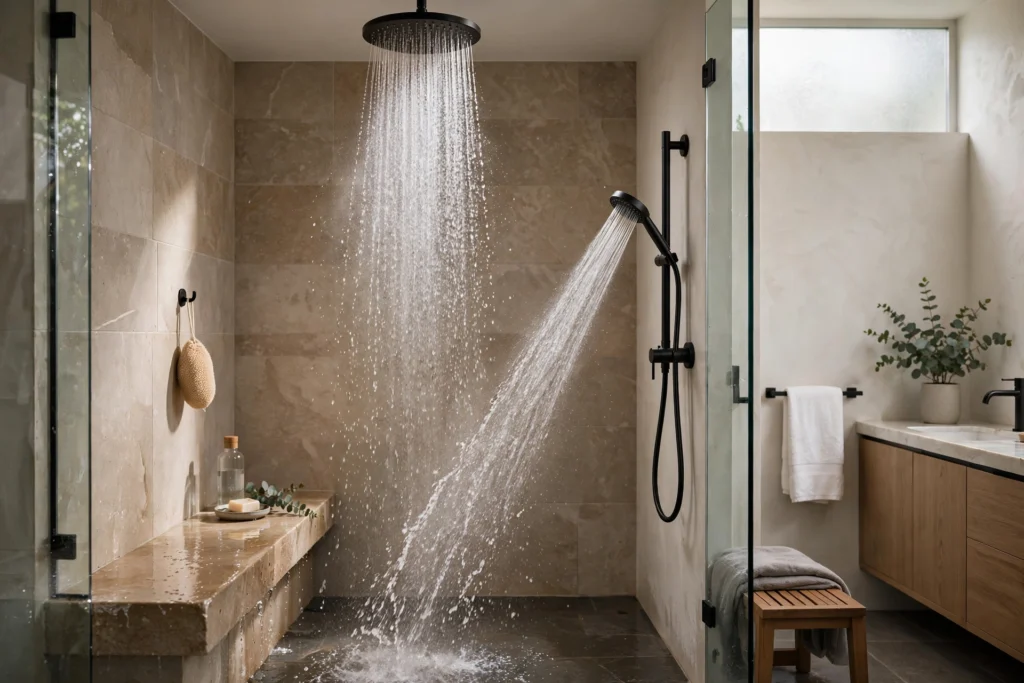
Both heads on one fixture with a diverter — run either or both. Fixed head for the hands-free soak, handheld for the targeted blast.
My take: if this is your main shower and the budget stretches, the combo is the best all-around answer — daily-driver fixed head plus problem-solver handheld. It’s what I’d put in my own bathroom.
Related: Dual Shower Heads — a deeper look at fixed + handheld combo setups and how to choose one.
What to Look For When Buying
Metal beats plastic. Brass or stainless ($60–$150) lasts years longer than ABS plastic ($25–$50) — plastic threads strip, bodies crack, cheap chrome-over-plastic peels. Buying once? Buy metal. Renting? Plastic is fine.
Nozzle material matters more than you’d think. Silicone nozzles: rub with a finger and mineral buildup flakes right off — essential with hard water. Hard plastic or metal jets clog and need vinegar soaks. Silicone is the right answer for most people.
Spray settings: useful, not decisive. Most heads offer 3–6 patterns (rain, massage, mist, jet…). You’ll use two. Don’t pay extra for 9 modes — just make sure it has a focused “massage/jet” mode, because that’s the one that delivers the pressure feeling.
Check the GPM. US federal max is 2.5 GPM; some states cap at 1.8. A well-designed 1.8 GPM head with air injection can feel stronger than a lazy 2.5 — design matters more than the number. Know your local limit before removing restrictors.
Hose quality (for handhelds). Look for stainless steel hoses with brass connectors — cheap plastic ones kink and crack. A 60–72 inch hose gives real reach without feeling restrictive.
DIY Install: 10 Minutes, No Plumber
One of the easiest upgrades in your whole house:
- Unscrew the old head. Usually hand-tight — twist counterclockwise. If it’s stuck, wrap a cloth around it and use pliers gently.
- Clean the threads — pick off old Teflon tape and wipe away gunk.
- Wrap with Teflon tape. 3–4 wraps clockwise (as you face the pipe) — this is what prevents drips, don’t skip it.
- Screw on the new head. Hand-tighten, then a quarter-turn with a wrench (pad the jaws with a cloth).
- Run the water and check for leaks. A drip at the joint means more tape or a tighter turn — not a broken head.
For handhelds, there’s one extra step: screwing the hose between the bracket and the head. Same tape-and-tighten routine. Total time: still about 10 minutes.
What Do High Pressure Shower Heads Cost?
- Budget ($25–$50): Plastic-body heads with decent nozzle design that genuinely improve a weak shower. Expect 2–4 years of life.
- Mid-range ($50–$100): The sweet spot. Better materials, silicone nozzles, nicer finishes, handhelds with proper metal hoses.
- Premium ($100–$150): Solid brass or stainless construction, excellent finishes, refined spray engineering. Buy-it-for-a-decade territory.
Past $150 you’re mostly paying for designer branding — the performance gains flatten out.
And if you’re torn between a pressure-focused head and the wide drenching style, they’re not mutually exclusive — some heads blend both approaches.
Related: Rain Shower Heads — when you’d rather have a wide, gentle drench than a focused blast.
Don’t Forget the Arm and Hose
A great head on a bad arm is a wasted purchase. If your shower arm is old, corroded, or too short, replace it — a solid brass arm costs $15–$30 and takes five minutes. Same for handheld hoses: a $20 stainless replacement fixes kinks and connector leaks.
Related: Shower Arms & Hoses — sizing, materials, and how to pick the right reach for your shower.
Frequently Asked Questions
Do high pressure shower heads actually increase water pressure?
No — nothing at the end of the pipe creates pressure. They concentrate and optimize the flow you have so it feels significantly stronger. Under 40 PSI home-wide? Fix the plumbing first.
Will a high pressure shower head use more water?
Not necessarily — they’re capped at the same 2.5 GPM (1.8 in restricted states) as any head. Air-injection models can make a lower flow feel like more, which is the closest thing to a free lunch in plumbing.
What’s the best high pressure shower head for low water pressure?
First verify your home’s pressure with a $10 gauge. At 40+ PSI, a metal handheld with silicone nozzles and air injection is the most effective pick — holding it close multiplies the effect. Under 40 PSI throughout the house? The head isn’t the fix; check your main valve and pressure regulator.
Can I remove the flow restrictor for more pressure?
Physically, yes — it’s usually a small plastic disc inside the head’s inlet. Legally, it depends on your state; some jurisdictions require it. Practically, removing it increases water usage without always improving the feel. Try the head as designed first.
How long does a shower head last?
Plastic: 2–5 years before threads wear or finishes peel. Metal: 8–15+ years with basic cleaning. Silicone nozzles extend any head’s life in hard-water areas because they don’t clog permanently.
The Bottom Line
A high pressure shower head won’t fix your plumbing — but if your pressure is decent and your current head is the weak link, it’s the best $50–$100 you’ll spend on your bathroom all year. Check your PSI first, buy metal with silicone nozzles, and don’t believe the “3x pressure” hype. Ten minutes with a wrench, and your morning shower finally feels like it’s on your side.