
Tile is beautiful. Tile is also grout lines that turn orange, a weekend of thinset under your fingernails, and a contractor quote that makes you sit down. Shower wall panels exist for everyone who looked at that deal and said: there has to be another way.
There is. Panels have quietly become one of the most popular ways to finish shower walls — and the quality gap between “cheap plastic” and “looks like stone” has never been wider. This guide covers the types of shower wall panels and surrounds, how they compare to tile, what they cost, and how to pick the right one.
Related: Shower Drains: Types, Sizes & Installation Guide — the drain is the one part you choose before the walls go up.
What Are Shower Wall Panels?
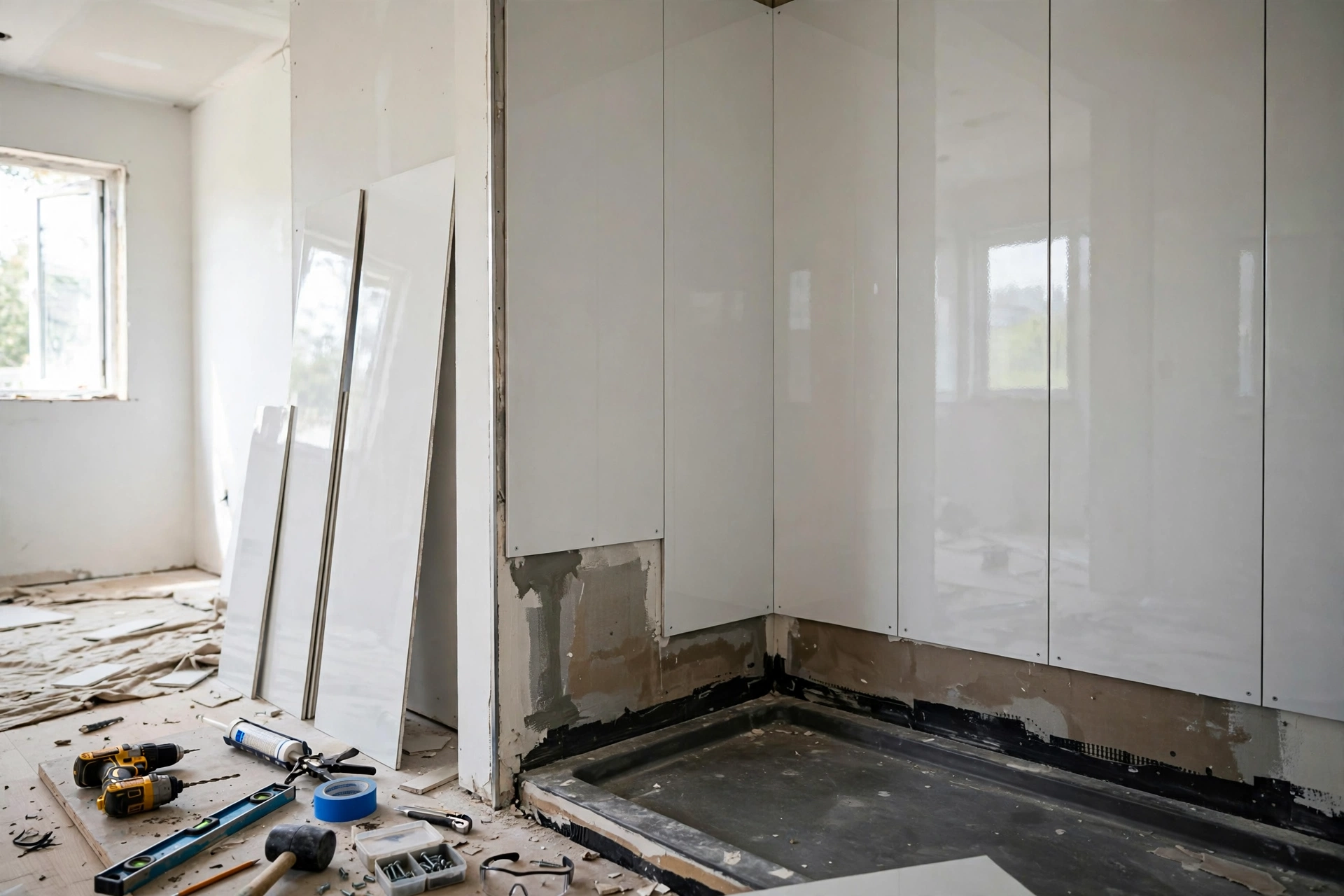
Shower wall panels are large waterproof sheets that cover your shower walls in a handful of pieces instead of hundreds of tiles. Most systems use three to five panels — back wall, two side walls, sometimes corner trims. No grout lines (or very few), and installation takes hours instead of days.
A “shower surround” is essentially the same idea — the term usually refers to a complete kit (walls + sometimes base) sold as one package. If someone says “surround,” they mean panels. If someone says “panels,” they might mean the individual sheets. Same family.
Types of Shower Wall Panels
Acrylic Shower Wall Panels
The most common type. Acrylic panels are lightweight, glossy, warm to the touch, and come in more colors and patterns than you’d expect — including convincing marble and stone looks.
Why people love them: affordable, easy to clean, and they don’t feel cold like tile does on a winter morning. A full acrylic surround kit can cost less than the tile alone for the same shower.
Watch out for: cheap acrylic scratches. Not “ruined forever” scratches — surface scuffs that dull the finish over time. Buy from a reputable brand with a decent thickness, and avoid abrasive cleaners.
PVC Shower Wall Panels
PVC panels are the budget champion. They’re waterproof by nature (it’s plastic, after all), lightweight, and the easiest panels to cut and install yourself.
Best for: rental bathrooms, basement showers, anyone prioritizing cost and speed. Honest caveat: they look like what they cost. Fine for utility, not the choice for your dream master bath.
Fiberglass Panels
Often sold as one-piece or multi-piece surrounds. Fiberglass is the “contractor special” — cheap, fast, everywhere in new construction.
The reality: fiberglass surrounds work fine but they flex, they can feel hollow, and the gelcoat finish yellows with age. If your house came with one, there’s no emergency. If you’re choosing new, acrylic is usually worth the small step up.
Solid Surface Panels
Think Corian-style material in large sheets. Seamless (panels can be joined invisibly), repairable (scratches sand out), and available in genuinely beautiful stone patterns.
Best for: high-end remodels where you want the stone look without stone’s maintenance. The catch: price — solid surface panels cost several times more than acrylic, and you want a pro installing them.
Laminate / Composite Panels
Newer players — high-pressure laminate or mineral composite cores with waterproof surfaces. Some look remarkably like real tile or concrete.
Worth knowing: quality varies wildly by brand. Stick to products specifically rated for shower/wet-area use, not repurposed kitchen backsplash panels.
Shower Wall Panels vs Tile: An Honest Comparison
Let’s do this straight, because most articles on this topic are secretly selling you one or the other.
Panels win on: cost (usually 30–50% less installed), speed (a day vs. a week), maintenance (no grout to scrub or reseal), and DIY-friendliness.
Tile wins on: design flexibility (any pattern, any mosaic, any niche detail), resale perception (buyers still swoon over good tile), and repairability (one cracked tile vs. one damaged panel).
The tie-breaker most people ignore: waterproofing. A tiled shower is only as good as the waterproofing behind it — and that’s the part you can’t see. Panels are inherently waterproof on their face, which removes the biggest hidden risk in a shower build. For a lot of homeowners, that peace of mind settles it.
My take: if you love the craft of tile and your budget allows a proper waterproofed install, tile is gorgeous. If you want a great-looking shower without the grout maintenance and the five-figure quote, modern acrylic or solid-surface panels are not a compromise — they’re just a different (and very sensible) choice.
How to Choose the Right Panels
1. What’s the bathroom’s role? Master bath → invest in acrylic or solid surface. Guest bath or rental → PVC or basic acrylic is plenty.
2. What’s behind the walls? Panels install over cement board or existing tile (yes, you can panel over old tile — that’s a whole renovation shortcut). Whatever’s back there needs to be flat and solid.
3. Do you want the stone look? Printed acrylic and solid-surface panels do marble, travertine, and concrete convincingly now. Order samples — photos lie, samples don’t.

4. DIY or pro? PVC and acrylic panel kits are genuinely DIY-friendly: measure, cut with a fine-tooth saw, adhesive, trim. Solid surface and large-format panels — get a pro.
Installation: What to Expect
A typical panel install goes: prep the walls (flat, clean, dry) → dry-fit and trim panels → apply adhesive → set panels → seal seams and edges with silicone → install trim pieces. Most DIYers finish in a day; pros in half that.
The two things people mess up: measuring around fixtures (measure twice, cut once is never more true than with a $200 panel) and skimping on silicone at seams. The panels are waterproof; the seams are where water wins if you let it.
Cleaning and Maintenance
This is where panels really earn their keep. No grout means no grout cleaner, no resealing, no mildew colonies in tiny crevices. Warm water, mild soap, soft cloth — done. Avoid abrasive scrubbers on acrylic (micro-scratches are the enemy) and never use harsh solvents.
What Do Shower Wall Panels Cost?
Rough installed ranges (US, typical 3-wall alcove shower):
- PVC panels: $300–$800 for materials; DIY-friendly
- Acrylic panels/surrounds: $800–$2,500 installed
- Fiberglass surrounds: $500–$1,500 installed (often cheapest pro option)
- Solid surface: $2,500–$6,000+ installed
- Tile (for comparison): $3,000–$10,000+ installed
Labor varies wildly by market, but panels consistently land well under tile for comparable coverage.
Frequently Asked Questions
Can you put shower wall panels over existing tile?
Yes — it’s one of the best renovation shortcuts there is. The old tile needs to be solid (no loose pieces) and the surface reasonably flat. You gain a fresh shower without demolition.
Are shower wall panels waterproof?
The panels themselves, yes. The system is only as waterproof as its seams and edges, so silicone work matters. Done right, a paneled shower is arguably more reliably waterproof than a tiled one.
Do shower panels look cheap?
Cheap ones do. Good acrylic and solid-surface panels genuinely fool people — I’ve seen visitors tap a “marble” panel convinced it was stone. Samples are free or cheap; judge in person.
How long do shower wall panels last?
Acrylic and solid surface: 15–25+ years with basic care. PVC: 10–15. Fiberglass: 10–20, though the finish usually ages visibly before the structure fails.
The Bottom Line
Shower wall panels aren’t the “budget fallback” they used to be — they’re a legitimate choice that trades tile’s artistry for speed, savings, and zero grout maintenance. Pick the material that matches the bathroom’s importance, don’t cheap out on the seams, and order samples before you commit. Your future self, sponge in hand, will thank you.
Pingback: Shower Pan Guide: Sizes, Types & How to Choose